
Plants
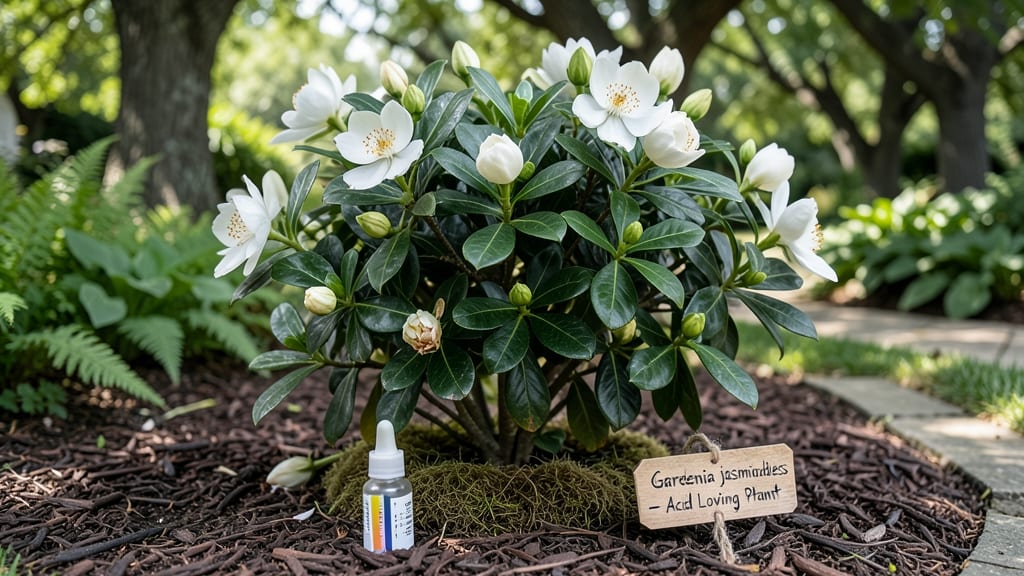
Gardenias are acid-loving plants that thrive in soil with a pH range of 5.0 to 6.5, mimicking their natural tropical habitats. Their delicate blooms require consistently acidic conditions to absorb essential nutrients like iron and manganese, which become unavailable in alkaline soil.
Gardenias absolutely love acidic soil because their native environments—think Southeast Asia and tropical regions—have naturally low pH levels. 🌿 When soil pH rises above 6.5, these plants struggle to access critical micronutrients, leading to yellowing leaves or poor flowering.
I've seen gardenias in alkaline soil develop iron deficiency (chlorosis) within weeks—the leaves turn pale green while veins stay dark. The good news? Simple amendments like sulfur or pine needles can restore the right balance.
Many gardeners swear by regular soil testing to catch pH shifts early, especially in container gardens where drainage affects acidity faster.
What's fascinating is how these plants signal their needs. 💛 Gardenias often drop buds or produce smaller blooms when stressed by improper pH, giving you a clear warning to adjust your care routine. The key is consistency—acidic conditions aren't just a one-time fix but an ongoing requirement for their health.
I recommend testing soil every spring before the growing season begins, as seasonal rains can naturally raise pH levels over time.
💡 In This Article
- How Soil pH Affects Gardenia Growth and Flowering
- Testing and Adjusting Soil pH for Gardenias
How soil pH affects gardenia growth and flowering
Gardenias thrive in acidic soil because their root systems have evolved to efficiently absorb nutrients only available at low pH levels. In their natural tropical habitats—where rainfall naturally maintains soil acidity—they access essential micronutrients like iron (Fe) and manganese (Mn) that become chemically locked in alkaline conditions.
When soil pH rises above 6.5, these nutrients form insoluble compounds, making them inaccessible to the plant's roots. 🌱 This is why gardenias often develop iron chlorosis in alkaline soil, where leaves turn pale yellow between veins while the veins themselves remain green—a classic deficiency symptom.
The root zone plays a critical role in this process. Gardenia roots secrete organic acids that help solubilize nutrients in acidic soil, creating a microscopic nutrient-rich zone around each root hair.
At pH 5.0-6.5, this natural chemistry works optimally, allowing the plant to uptake 10-15% more iron than in neutral soil. In contrast, at pH 7.0 or higher, iron becomes oxidized and precipitates out of solution, leaving the plant starved despite the nutrient being present in the soil.
I've seen gardenias in pH 7.5 soil develop severe deficiency within 4-6 weeks, with new growth showing dramatic yellowing before the plant weakens entirely.
Flowering is particularly sensitive to pH imbalances. Gardenias require consistent nutrient availability to produce their signature fragrant blooms, which demand high energy and resource investment.
When soil pH drifts outside the ideal range, the plant diverts energy toward survival rather than reproduction. 🌸 This often manifests as bud drop—where the plant forms buds but aborts them before opening—or smaller, less vibrant flowers.
In my experience, gardenias in pH 6.8 soil (marginally alkaline) may still produce some blooms, but they're typically 30-50% smaller than those grown in optimal pH 5.5-6.0 conditions.
Another critical factor is how pH affects soil microbial activity. Beneficial mycorrhizal fungi, which form symbiotic relationships with gardenia roots to enhance nutrient absorption, thrive in acidic conditions. At pH 5.5, these fungi can increase nutrient uptake by up to 40%, while alkaline soil suppresses their activity.
This microbial partnership is crucial for gardenias, which have relatively shallow root systems compared to other shrubs. Without proper microbial support, the plant struggles to access even the nutrients that remain technically available in alkaline soil.
Visual symptoms often provide early warnings. Beyond chlorosis, gardenias in non-acidic soil may develop stunted growth, dark green or purplish leaves (a sign of phosphorus deficiency), or premature leaf drop.
The plant essentially signals distress through its foliage long before flowering is affected. 💚 What's less obvious is how pH impacts the plant's overall vigor—even if it survives, gardenias in suboptimal conditions are more susceptible to pests and diseases due to weakened immune responses.
This is why maintaining proper pH isn't just about aesthetics but about the plant's long-term health.
For container gardeners, this becomes especially critical because potted soil can become alkaline faster than in-ground soil. The limited volume means amendments get diluted quickly, and watering with tap water (often slightly alkaline) can gradually raise pH levels.
I recommend testing container soil every 3 months during the growing season, as the pH can shift significantly in just a few waterings. The good news is that once you establish the right pH, gardenias become remarkably resilient—consistently producing blooms for years with minimal intervention beyond proper acidification.