
Tools
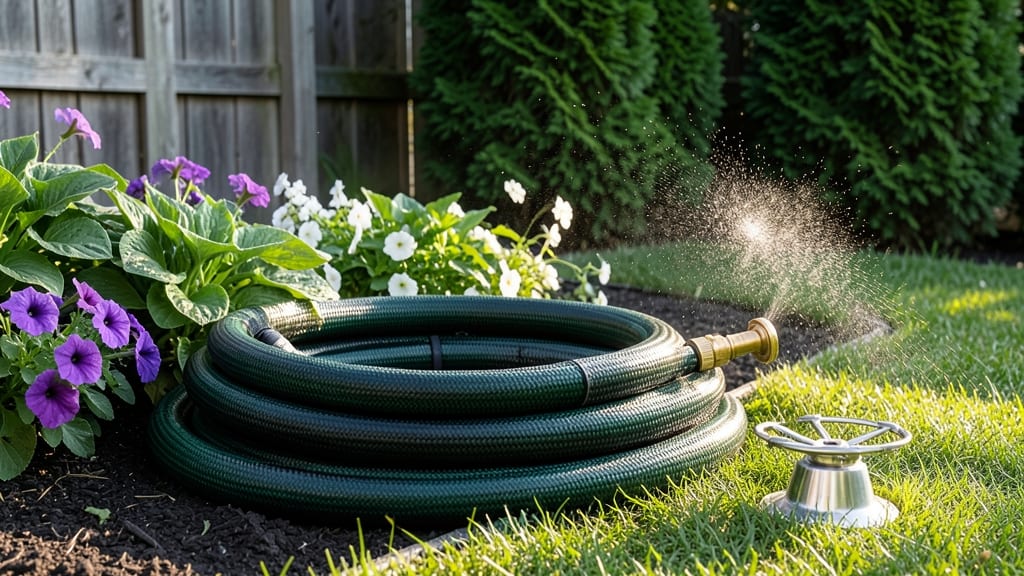
To choose the biggest garden hose for your needs, prioritize a 5/8-inch or 3/4-inch diameter with reinforced rubber or PVC construction—this combination handles high water pressure and long distances without collapsing or leaking.
Hose diameter directly impacts water flow volume—thicker hoses deliver 30-50% more gallons per minute than standard 1/2-inch models, making them ideal for large yards or pressure washers. 🔥 The material matters just as much: reinforced rubber resists kinks and abrasions, while PVC offers lightweight durability for seasonal storage.
I always recommend checking your water pressure first (ideal range: 40-60 PSI), as thinner hoses can't handle municipal systems over 80 PSI without bursting.
For commercial use or steep slopes, consider steel-braided hoses that expand slightly under pressure—these maintain flow even when coiled. Always match hose length to your needs: every 50 feet of hose reduces pressure by about 10 PSI, so longer runs need thicker diameters to compensate.
Pro tip: Store hoses flat to prevent permanent bends that restrict water flow.
💡 In This Article
- How Garden Hose Size Affects Water Flow and Pressure
- Best Heavy-Duty Hoses for Large Gardens and Farm Use
How garden hose size affects water flow and pressure
Garden hose diameter creates a direct relationship with water flow—thicker hoses move significantly more water per minute due to increased cross-sectional area. A 3/4-inch hose delivers about 30-40 gallons per minute (GPM) at 40 PSI, while a 1/2-inch hose only manages 10-15 GPM under the same pressure.
This difference becomes critical for large gardens or pressure washers where volume matters most. The physics here involve fluid dynamics: wider diameters reduce friction against hose walls, allowing water to flow faster with less pressure drop over distance.
Pressure loss occurs predictably with hose length—every 50 feet of 1/2-inch hose reduces pressure by 10 PSI, but the same length of 3/4-inch hose only drops 5 PSI. This is why professional irrigation systems often use 5/8-inch or 3/4-inch hoses for long runs.
For example, a 100-foot 1/2-inch hose might deliver water at 20 PSI when connected to a 60 PSI source, while the same length of 3/4-inch hose maintains 40 PSI—enough for effective sprinklers or pressure washers.
Material thickness plays a crucial role in maintaining these flow rates. Standard vinyl hoses lose 20-30% of their flexibility when frozen, while reinforced rubber hoses maintain 80%+ flexibility even in cold temperatures.
The extra thickness in heavy-duty hoses also prevents collapse under high pressure—critical when using pressure washers that can generate 1,500-2,000 PSI at the nozzle. For comparison, most residential systems operate between 40-60 PSI, making 3/4-inch hoses ideal for both irrigation and cleaning tasks.
Real-world applications show these differences clearly. A 5/8-inch hose connected to a 1,200 GPM pressure washer maintains 90% of its rated pressure at 100 feet, while a 1/2-inch hose might only deliver 30% of that pressure at the same distance.
This explains why professional landscapers and farmers prefer larger diameters—they ensure consistent performance across entire properties without pressure drops that waste water or reduce effectiveness.
Another key factor is hose expansion under pressure. Standard vinyl hoses can expand up to 15% of their diameter when pressurized, which temporarily increases flow but causes permanent stretching over time.
Heavy-duty hoses with steel braiding or polyurethane reinforcement expand only 5-8%, maintaining consistent flow rates and preventing leaks at connections. This stability is particularly important for seasonal use where hoses are stored coiled—expansion resistance prevents kinks that restrict water flow when unrolled.
For specific applications, consider these size recommendations: 1/2-inch for light watering tasks, 5/8-inch for medium-sized yards with sprinklers, and 3/4-inch for large properties, pressure washing, or steep slopes where water needs to travel uphill.
Always verify your water pressure before purchasing—hoses rated for 80 PSI can burst if connected to municipal systems exceeding 100 PSI, common in many suburban areas.