
Container Gardens
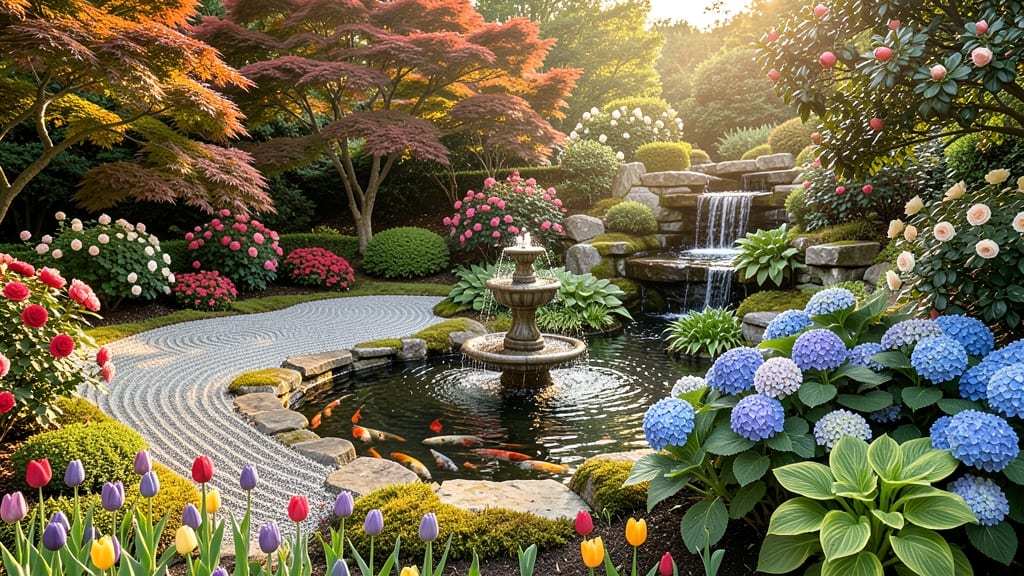
Butchart Gardens in Victoria, British Columbia, Canada, showcases over 900 acres of stunning floral displays, themed gardens, and rare plant collections, blending natural beauty with meticulous horticultural design year-round. Founded in 1904, it remains one of North America’s most visited botanical attractions, featuring seasonal blooms, glasshouses, and family-friendly exhibits like the Sunken Garden and Japanese Garden.
This iconic garden isn't just a visual feast—it's a masterclass in climate-resilient horticulture. 🌸 Located on Vancouver Island's temperate coast, Butchart Gardens thrives by leveraging Victoria's mild winters and abundant rainfall, while its glasshouses extend growing seasons for tropical plants.
The gardens' famous Sunken Garden alone contains over 500 varieties of flowers, meticulously arranged to bloom sequentially throughout the year, creating a rainbow of color from spring through fall.
What makes it truly special is how it balances natural beauty with conservation efforts, like its sustainable water management systems that recycle rainwater for irrigation.
The experience goes beyond the famous Rose Garden and Japanese Garden—think of the Night Garden, where fireflies create magical evenings, or the Butterfly Conservatory, where thousands of winged visitors flutter through tropical blooms.
Pro tip: Visit in May for the tulip festival or September for the orchid display, when the gardens host their most spectacular transformations. The family-friendly layout makes it perfect for all ages, with accessible paths and educational exhibits that reveal the science behind each bloom.
💡 In This Article
- The Science Behind Butchart Gardens’ Year-Round Blooms
- Hidden Gems and Seasonal Highlights at Butchart Gardens
The science behind butchart gardens’ year-round blooms
Butchart Gardens achieves its legendary year-round blooms through a combination of microclimate engineering and precise botanical timing. Victoria's coastal climate provides mild winters (rarely dropping below 32°F) and abundant rainfall (50 inches annually), but the gardens enhance these conditions.
Their glasshouses, including the iconic Sunken Garden, create controlled environments where tropical plants like orchids and bromeliads thrive even in winter. The glass structures trap solar heat during the day and release it slowly at night, maintaining temperatures 10-15°F warmer than outside.
The secret lies in sequential planting—a technique where flowers are arranged to bloom in overlapping waves. For example, daffodils begin in February, followed by tulips in April, then roses in June, and finally chrysanthemums in September. This creates a continuous color palette rather than seasonal spikes.
The gardens also use mycorrhizal fungi in the soil to improve nutrient absorption, allowing plants to grow 20-30% faster than in untreated soil. Water conservation is another key factor: drip irrigation systems deliver moisture directly to roots, reducing waste by 40% compared to traditional sprinklers.
What most visitors don't realize is how light manipulation plays a role. The Sunken Garden's south-facing orientation maximizes sunlight exposure, while strategic pruning extends bloom cycles. For instance, deadheading roses (removing spent blooms) can prolong their flowering by 3-4 weeks.
The gardens even use shade cloths in summer to protect delicate plants from Victoria's occasional 80°F+ heatwaves. This blend of natural advantages and human intervention creates the illusion of perpetual bloom.
Another fascinating aspect is the pollinator strategy. Over 50 species of bees and butterflies are attracted to the gardens, which helps maintain genetic diversity in the plant populations.
The Butterfly Conservatory, for example, uses heat lamps and humidity controls to create a tropical environment where butterflies can thrive year-round. This not only supports biodiversity but also ensures consistent pollination for the garden's plants. The result?
Flowers that stay vibrant longer and plants that grow stronger season after season.
Consider these key horticultural techniques that make the magic happen:
- Climate zoning: Divides the gardens into 6 microclimates with varying sun exposure and moisture levels
- Soil science: Uses compost-rich, well-draining mixes tailored to each plant's needs
- Seasonal rotation: Replaces 20-30% of plants annually to prevent soil depletion
- Technology integration: Employs weather stations that adjust irrigation in real-time
The gardens' ability to maintain such vibrant displays in Victoria's USDA Zone 8a climate serves as a model for sustainable horticulture worldwide. What's particularly impressive is how they've adapted these techniques over 120 years while maintaining their original charm.
The combination of scientific precision and artistic design creates an experience that feels both natural and meticulously crafted. 🌿