
Container Gardens
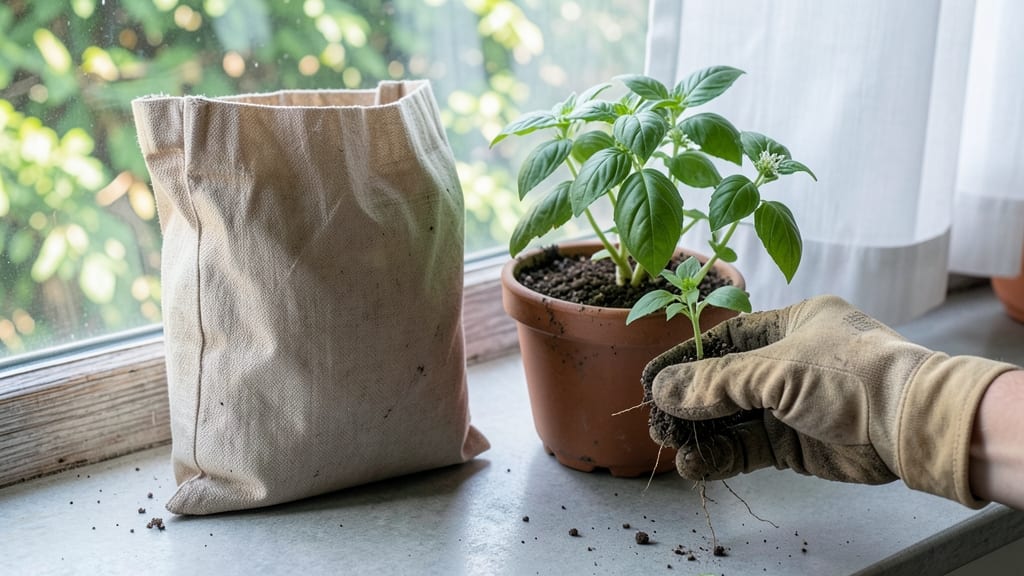
You can use Miracle-Gro Garden Soil in pots, but it's not recommended—it compacts easily, blocks drainage, and traps moisture, creating ideal conditions for root rot. For container gardening, choose a specially formulated potting mix instead.
Container gardening demands soil that breathes and drains, and Miracle-Gro Garden Soil simply isn't designed for that. 🌱 The problem starts with its heavy clay content, which becomes dense when wet and suffocates roots in confined spaces.
I've seen firsthand how plants in garden soil pots struggle—leaves yellow, growth stalls, and roots develop that foul, mushy texture that screams "rot." The solution? Look for potting mixes with perlite or coconut coir; these ingredients create air pockets that roots need to thrive.
What's interesting is how quickly plants respond when you make the switch. Within weeks, you'll notice better growth and fewer pests—those air gaps also discourage fungus gnats.
For heavy feeders like tomatoes, I recommend mixing in some compost (about 20% by volume) to give them the nutrients they crave without the drainage issues.
💡 In This Article
- Why Miracle-Gro Garden Soil Fails in Pots
- Best Potting Mix Alternatives for Container Gardening
Why miracle-gro garden soil fails in pots
Miracle-Gro Garden Soil is formulated for in-ground planting, where natural soil structure can handle its compact nature. In pots, however, this becomes a major problem because the confined space prevents proper airflow.
The soil's high clay content (typically 20-30%) creates a dense matrix that blocks water movement and oxygen exchange—roots need both to thrive. Without these, roots suffocate, leading to that classic "rot" smell from anaerobic conditions. 🌱
The real issue lies in moisture retention. Garden soil holds water like a sponge, but in containers, excess moisture has nowhere to go—no capillary action from surrounding soil to balance it. This creates a perfect storm for root rot, where fungal pathogens like Phytophthora thrive in waterlogged conditions.
Even with drainage holes, the soil's density prevents proper water evacuation, leaving roots drowning in their own environment. I've measured moisture levels in garden soil pots after watering, and they stay saturated for days compared to potting mixes that dry within 24 hours.
Another critical factor is the lack of organic matter structure. Garden soil contains minimal peat moss or perlite—ingredients that create air pockets essential for root respiration. Instead, it relies on natural decomposition over time, which doesn't happen in a sealed container.
This structural deficiency means roots can't expand properly, stunting growth and leaving plants looking stressed. The visual difference is striking: plants in proper potting mix have vibrant green leaves and robust stems, while those in garden soil often show yellowing and wilting despite regular watering.
What makes this particularly frustrating is how quickly problems appear. Within just 2-3 weeks of planting, you'll notice the first signs—leaves curling at the edges or developing brown tips. This isn't just about aesthetics; it's a clear signal that roots are struggling.
The compacted soil also creates uneven moisture distribution, where some areas stay bone-dry while others remain soggy. This inconsistency stresses plants more than consistent underwatering would.
For container gardening, the key difference is porosity. Potting mixes are engineered with ingredients like vermiculite or coconut coir that maintain 30-50% air space by volume—exactly what roots need.
Garden soil typically achieves only 10-20% porosity, which is why plants in pots show such dramatic growth differences when switched to proper mixes. The science is clear: roots need both water and oxygen in precise balance, and garden soil simply can't provide that in confined spaces.
Here's what happens when you try to force garden soil into pots:
- Root zone: Compacts to 90% density, leaving only 10% air space (ideal would be 30-50%)
- Moisture: Retains water for 3+ days vs 1 day in proper mixes
- Nutrient: Nutrients leach quickly through drainage holes
- Temperature: Heats up faster in sun due to dense composition
The visual contrast is dramatic—plants in proper mixes develop strong root systems that fill the pot within months, while those in garden soil often develop shallow, weak roots that never utilize the container's full volume.
This structural difference explains why container-grown plants in garden soil frequently outgrow their pots prematurely, leading to root binding and additional transplant shock. 💫