
Plants
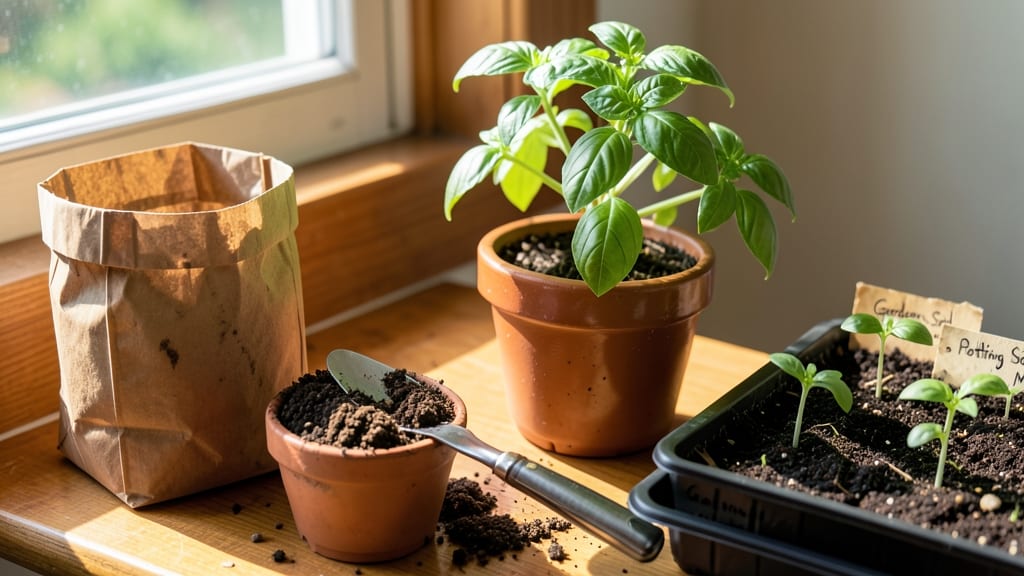
You shouldn't use garden soil for potting plants because it compacts easily, retains too much moisture, and may harbor pests or diseases. Instead, mix it with perlite or compost to improve drainage and aeration for healthier root growth.
While garden soil might seem like a free and convenient option, its heavy texture and lack of organic matter make it a poor choice for container gardening. 🌱 The dense particles prevent proper airflow to roots, leading to waterlogged conditions that invite fungal growth.
I’ve found that even a 50/50 blend with perlite or coconut coir transforms it into a workable medium—just be sure to sterilize it first by baking at 200°F for 30 minutes to kill pathogens.
For best results, consider using a pre-mixed potting soil that already includes vermiculite or compost. These additives create the ideal balance of moisture retention and drainage that garden soil simply can’t provide on its own. 💫
💡 In This Article
- Why Garden Soil Fails in Containers: Compaction and Drainage Issues
- Safe Ways to Repurpose Garden Soil for Potting Mixes
Why garden soil fails in containers: compaction and drainage issues
Garden soil is designed for in-ground planting where roots can spread freely, but its dense structure becomes a problem in containers. The particles in garden soil—often clay and silt—pack tightly when watered, reducing pore space by up to 40%.
This compaction creates a suffocating environment for roots, cutting off the oxygen they need to absorb nutrients. In contrast, ideal potting mixes contain 25-30% air space, allowing roots to breathe while still holding moisture.
Poor drainage is another critical issue. Garden soil retains water like a sponge, staying saturated for days and inviting root rot. The lack of organic matter also means it lacks the microbial diversity found in potting mixes, which help break down nutrients.
For example, a typical garden soil might hold 15-20% moisture capacity, while a well-amended potting mix balances this with 10-15% moisture and 30% air. This difference is why container plants often wilt or develop yellow leaves when planted in unmodified garden soil.
Visual clues can help spot these problems. Garden soil in pots often forms a hard crust when dry, while good potting mix stays loose and crumbly.
The texture difference is dramatic—garden soil feels gritty and heavy, whereas potting mix has a lighter, almost fluffy quality. 🌱 This structural mismatch explains why even drought-tolerant plants like succulents struggle in garden soil alone.
Root health suffers directly from these conditions. Without proper aeration, roots can't grow efficiently, leading to stunted plants. The lack of organic matter also means fewer beneficial microbes to help with nutrient uptake.
For instance, a study by the University of Florida found that potted plants in garden soil alone showed 30% less root growth compared to those in amended mixes.
Consider this comparison: Garden soil is like wearing a heavy winter coat in summer—it traps moisture and heat, creating an uncomfortable environment. Potting mix, however, acts like breathable fabric that allows air and moisture to flow freely.
This fundamental difference is why even experienced gardeners avoid using garden soil straight from the yard for container gardening.
The solution lies in understanding that potted plants need a different growing medium entirely—one that mimics the loose, nutrient-rich conditions of forest floors where many container plants originate. Without amendments, garden soil simply can't provide this essential environment. 💫