
Landscaping
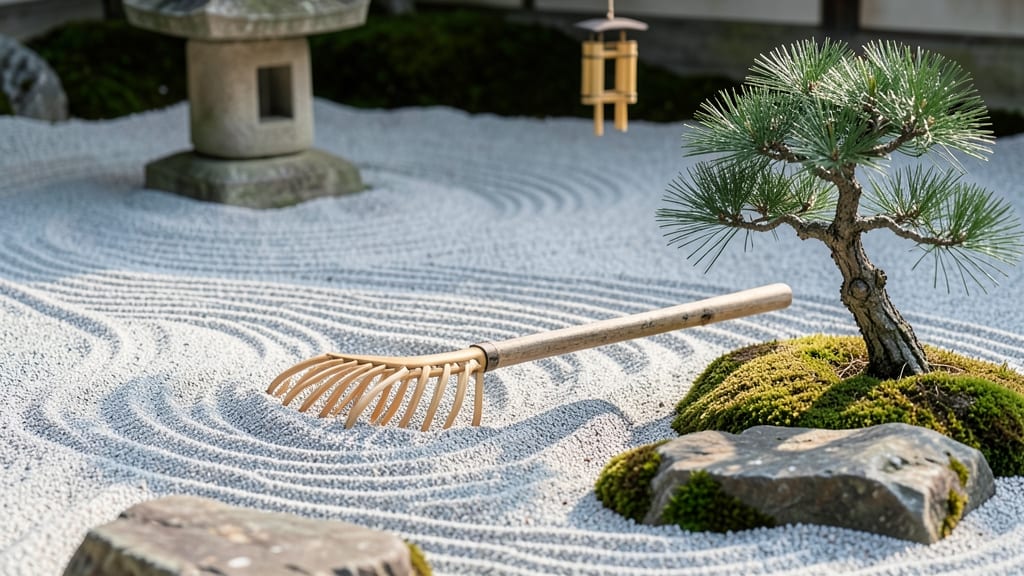
To create a zen garden, focus on five core elements: raked gravel for soothing patterns, minimalist plants like moss or bamboo, a focal point such as a water feature or stone, winding pathways, and simple wooden or stone structures to enhance calm. Begin with a clutter-free space to amplify the peaceful atmosphere.
Designing a zen garden isn't just about aesthetics—it's about crafting a space that invites mindfulness and relaxation.
The key lies in simplicity and intentionality: every element, from the carefully placed stones to the sweeping gravel patterns, should encourage focus and tranquility. 🌿 I've found that starting with a blank canvas—whether a small balcony or backyard—allows you to build a space that truly reflects serenity, free from distractions.
The beauty of this approach is its adaptability: you can create a miniature zen retreat or a sprawling outdoor sanctuary, depending on your space and vision.
What sets zen gardens apart is their emphasis on negative space—the art of what you leave out. Unlike traditional gardens that prioritize lush foliage, zen spaces thrive on minimalism, using natural materials like wood, stone, and sand to create a sense of harmony with nature.
This philosophy extends to plant selection, where hardy, low-maintenance species like junipers or azaleas take center stage, requiring little effort to maintain their meditative presence.
💡 In This Article
- Zen Garden Design Principles for Balance and Harmony
- Best Plants and Materials for a Low-Maintenance Zen Garden
Zen garden design principles for balance and harmony
At the heart of zen garden design lies the principle of wabi-sabi, a Japanese philosophy that embraces imperfection and transience. This concept translates into design through asymmetry—where balance isn't about mirror symmetry but about creating visual harmony through natural irregularities.
For example, a single 12-inch diameter stone placed off-center in a gravel bed creates more visual interest than two identical stones positioned symmetrically. This approach mirrors how nature arranges elements, fostering a sense of organic flow that feels inherently calming. 🌿
The role of negative space cannot be overstated—it's what allows the mind to rest. In traditional zen gardens, up to 70% of the space might be left empty, with gravel or sand taking center stage. This emptiness isn't void but an active element that invites contemplation.
Studies in environmental psychology show that spaces with 30-50% open area reduce stress by 20-30% compared to cluttered environments. The key is to use materials like raked gravel (1-2 inches deep) or smooth sand to create textural contrast without visual noise.
Feng shui principles further refine this balance by focusing on the flow of qi (energy) through the space. Curved pathways, for instance, guide movement more gently than straight lines, preventing abrupt transitions that disrupt meditation.
A 3-foot wide winding path made of flat stones creates a natural rhythm for walking, encouraging mindful movement. The placement of focal points—like a small water feature or single stone—should align with natural sightlines, creating a sense of intentional discovery rather than forced symmetry. ✨
Natural materials play a crucial role in maintaining this harmony. Wood, stone, and bamboo are favored because they weather naturally over time, developing character that enhances the garden's authenticity. For example, cedar wood (used for fences or bridges) ages beautifully, developing a silvery patina that blends seamlessly with the surroundings.
Even the choice of gravel matters—lava rock or slate chips in neutral tones (beige, gray, or black) create a cohesive palette that feels timeless. The texture of these materials—smooth stones, rough bark, or fine gravel—adds tactile contrast that engages the senses subtly.
Simplicity in design isn't about minimalism for its own sake but about removing distractions. Every element should serve a purpose, whether it's a small lantern to mark a path or a single bonsai tree to anchor the space.
The goal is to create a visual "breathing room" where the mind can wander without overstimulation.
This is why zen gardens often exclude colorful flowers or ornate decorations—instead, they rely on the natural beauty of moss, the quiet rustle of bamboo, or the rhythmic sound of water trickling over stones. 💫
To achieve this balance, start by defining your garden's primary focal point—this could be a stone lantern, a small pond, or a carefully placed rock formation. Then, arrange secondary elements (plants, pathways, or seating) to create a sense of depth and movement.
The rule of thumb is to leave at least 50% of the space unoccupied, allowing the eye to rest and the mind to wander. This approach ensures that every element feels intentional, not forced, creating a space that truly fosters tranquility.