
Blooming
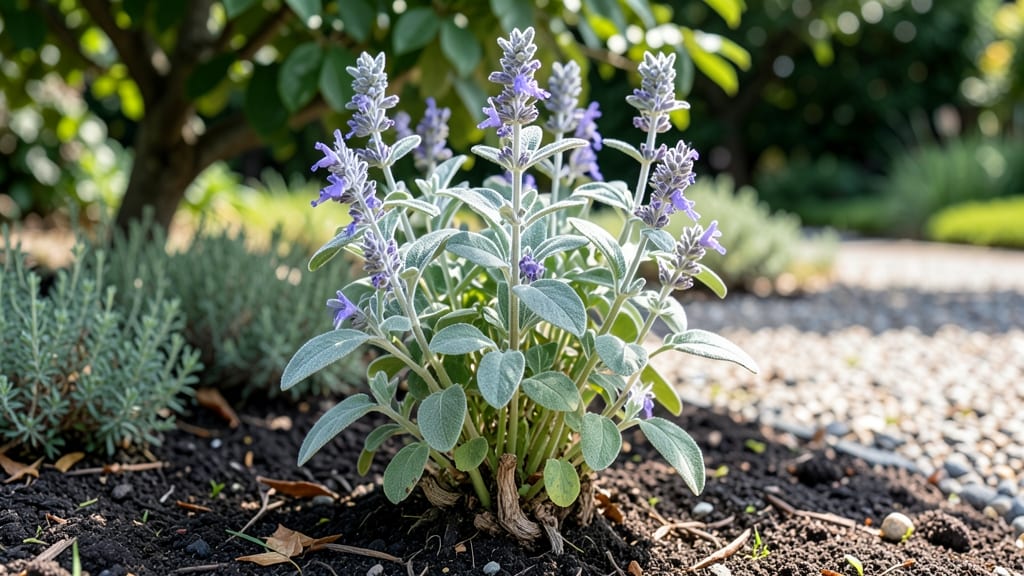
Garden sage does bloom, but only under ideal conditions—it naturally focuses energy on leaf growth, not flowers. To encourage blooms, prune in early spring, ensure full sun exposure, and avoid nitrogen-heavy fertilizers. Removing spent flowers also prompts new growth.
Most gardeners plant sage for its aromatic leaves, not its flowers, which explains why so many plants skip blooming entirely. 🌿 The plant's survival instinct prioritizes foliage production, especially in cooler climates where flowering would divert energy from leaf growth.
However, with the right care—like pruning to shape the plant and providing consistent sunlight—you can trigger those delicate lavender blooms. I’ve found that even a small change, like switching to a balanced fertilizer, can make a noticeable difference in flowering frequency.
Here’s the key: sage blooms are a secondary priority. When conditions are perfect—think 6+ hours of sunlight daily, well-draining soil, and minimal stress—the plant will reward you with clusters of small, fragrant flowers. These blooms might appear in late spring or early summer, but they’re often short-lived.
The real magic happens when you combine proper pruning with deadheading (removing faded flowers), which signals the plant to redirect energy toward new growth—and sometimes, new blooms.
💡 In This Article
- Why Sage Plants Focus on Leaves Instead of Flowers
- Step-by-Step Guide to Promoting Sage Blooms
Why sage plants focus on leaves instead of flowers
Sage plants are hardwired to prioritize leaf production over flowering because their survival depends on maximizing photosynthesis. In the wild, sage (Salvia officinalis) grows in rocky, nutrient-poor Mediterranean climates where energy conservation is critical.
The plant allocates up to 70% of its energy to developing dense, aromatic foliage—this is why commercial sage is harvested primarily for its leaves, not flowers. The flowers, while beautiful, are secondary and only appear when the plant feels secure enough to "afford" the energy cost of reproduction.
The botanical mechanism behind this prioritization involves auxin hormones, which regulate growth patterns. High auxin levels near the tips of sage stems promote leaf expansion while suppressing flower buds.
This is why over-pruning or excessive nitrogen fertilizer (which boosts leafy growth) can delay or prevent blooming entirely. 🌿 Even temperature plays a role: sage typically blooms in late spring to early summer when daytime temperatures consistently reach 65-75°F, signaling the plant that conditions are stable for reproduction.
Light exposure is another critical trigger. Sage requires 6+ hours of direct sunlight daily to produce flowers, as photosynthesis generates the energy needed for blooming. Without sufficient light, the plant defaults to leaf production—a survival strategy that ensures it can continue photosynthesizing even in less-than-ideal conditions.
This is why shade-grown sage often remains leafy but rarely flowers, even after years of growth.
Pruning also influences this balance. When you trim sage in early spring, you remove old growth that competes for nutrients, allowing the plant to redirect energy toward new shoots—and potentially flowers.
However, if you prune too late in the season (after June), you risk cutting off flower buds before they can develop. The key is timing: prune just as new growth begins, typically when you see 1-2 inches of fresh green shoots emerging from the base.
Stress factors like drought or poor soil can further delay blooming. Sage is drought-tolerant but thrives in well-draining, slightly alkaline soil (pH 6.0-7.5). Waterlogged roots or compacted soil force the plant into survival mode, diverting all energy to root and leaf maintenance.
Only when these basic needs are met will sage shift focus toward flowering—a delicate balance between growth and reproduction.
What most gardeners don’t realize is that sage’s flowering cycle is also influenced by its age. Younger plants (1-2 years old) often skip blooming entirely, focusing instead on establishing a robust root system.
It’s only after 3-4 years of maturity that sage typically produces its first significant flowers, provided all other conditions are ideal. This delayed blooming is another survival tactic—ensuring the plant has enough reserves to support both foliage and flowers.