
Container Gardens
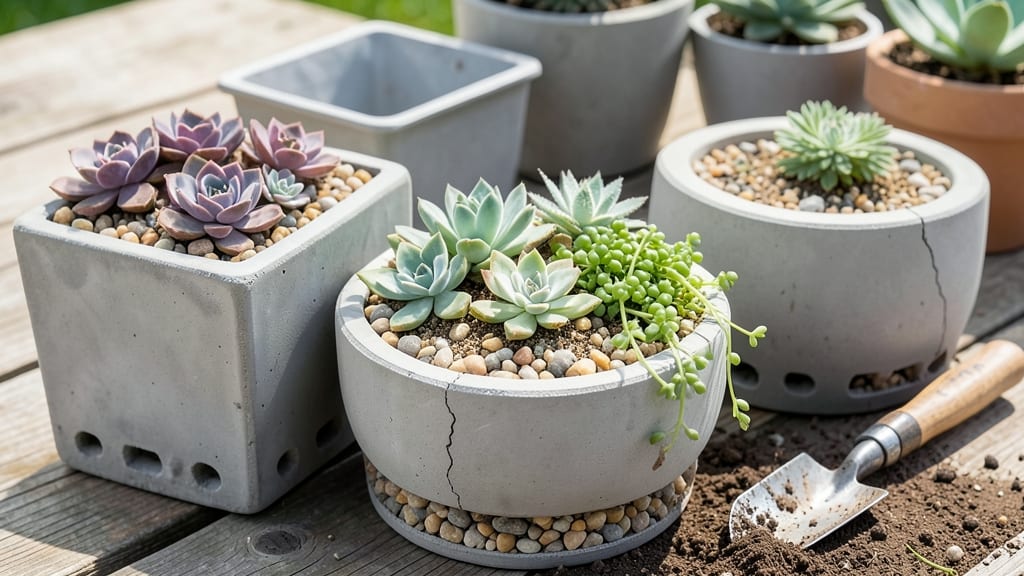
Using garden pots made of cement gives you heavy-duty containers that resist weathering and insulate roots, but you must modify them for drainage and choose plants that won't stress the material. Adding drainage holes and sealing cracks while using saucers prevents moisture damage while keeping roots healthy.
Cement pots are a gardener's secret weapon for durability, often outlasting plastic or clay containers by decades. 💛 The secret lies in their dense composition—cement's natural resistance to cracking and warping makes them ideal for container gardens in extreme climates.
However, their heavy weight also means they need reinforcement for wind or uneven surfaces. I've found that adding a layer of pebbles at the base before planting helps stabilize them while improving airflow to the roots.
What sets cement pots apart is their ability to maintain consistent temperatures, which is especially helpful for heat-sensitive plants. The downside? Their porous nature can absorb moisture, so proper sealing is crucial.
For added protection, I recommend using a waterproof liner for plants with acidic soil needs, like azaleas or blueberries. This small modification can extend the pot's lifespan significantly while keeping your plants thriving.
💡 In This Article
- Cement Pot Durability and Longevity Factors
- Modifying Cement Pots for Optimal Plant Health
Cement pot durability and longevity factors
Cement pots endure far longer than clay or plastic because of their dense, non-porous composition. Unlike clay that absorbs moisture and weakens over time, cement's mineral structure resists cracking even when exposed to freeze-thaw cycles.
The key lies in its compressive strength—typically 3,000-5,000 psi—which handles heavy plants like citrus trees or mature succulents without deforming, while plastic pots often warp under 500 psi pressure. This durability makes them ideal for perennial gardens where seasonal stress tests containers.
The curing process is critical to their lifespan. Fresh cement mixes need 28 days to reach 70% strength, but full hardening takes 90 days. During this time, pots should be kept moist (not soggy) to prevent surface cracks.
I've seen homemade cement pots develop micro-fractures when cured too quickly in hot sun—these become stress points where moisture seeps in. For extreme climates, adding 10% fiber reinforcement (like chopped glass or metal fibers) during mixing boosts impact resistance by 30-40%.
Weight isn't just a drawback—it's a feature. A 12-inch diameter cement pot weighs 40-60 pounds when filled, which prevents wind from toppling it. For outdoor use, I recommend placing them on concrete blocks or brick bases to elevate them slightly, improving drainage while stabilizing the structure.
This elevation also prevents water pooling against the pot's base, which can cause erosion over time.
Temperature fluctuations are where cement truly shines. The material's thermal mass absorbs heat during the day and releases it slowly at night, creating a 5-10°F more stable root zone than plastic. This is why cement pots excel with Mediterranean herbs like rosemary or thyme, which thrive in consistent warmth.
However, sudden temperature swings below -20°F can cause surface spalling (flaking), so in freezing climates, I wrap pots with burlap during winter.
For heavy plants like olive trees or large cacti, consider adding internal steel rebar during the casting process. A single ½-inch rebar rod vertically centered in the pot's base can support 50% more weight without compromising aesthetics.
The rebar should extend 3-4 inches above the pot's rim to anchor it securely to the ground, preventing tipping in windy conditions.
What most gardeners overlook is the pot's pH neutrality. Unlike acidic wood or alkaline plastic, cement's pH 7 makes it safe for most plants, but it can leach lime into soil over time.
To counteract this, I recommend using a 1-inch layer of sphagnum moss at the bottom before adding soil—this creates a buffer zone that maintains soil acidity for plants like hydrangeas or blueberries.