
Tools
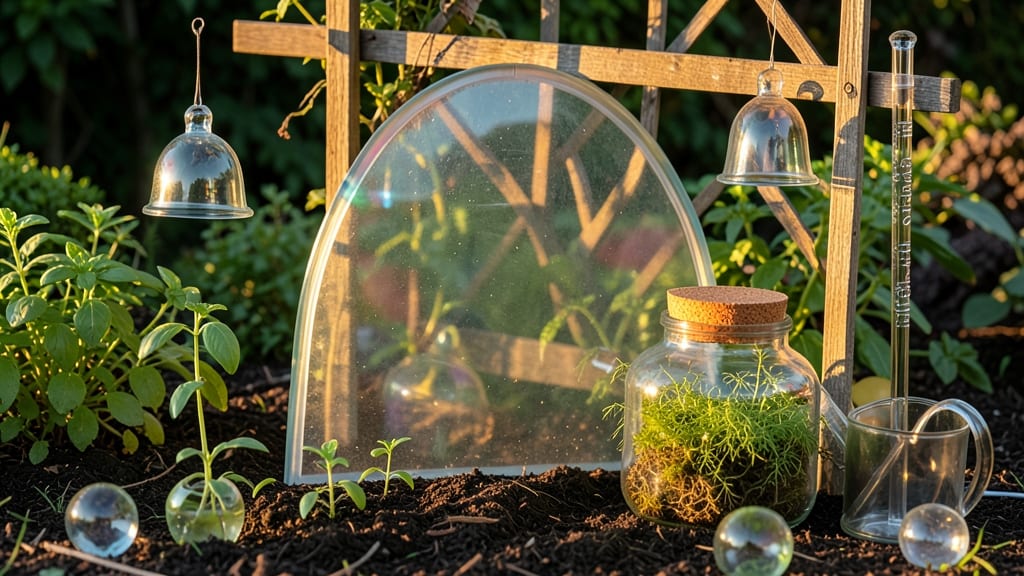
Incorporating glass in garden decor transforms outdoor spaces with stylish, durable accents that resist weather when properly treated. Upcycled bottles serve as planters, glass jars organize tools, and decorative panels add privacy while filtering sunlight.
Glass brings a modern, reflective quality to gardens that plastic or metal can't match—think of the way sunlight dances through colored bottles or how frosted panels soften harsh light. 🌿 The key to longevity lies in choosing tempered or borosilicate glass, which resists cracking from temperature shifts and impacts.
I’ve found that sealing edges with silicone or epoxy prevents moisture damage, while UV-resistant coatings keep colors vibrant for years. Even thrift-store finds can become statement pieces with a little sanding and sealing.
Beyond aesthetics, glass offers practical benefits like lightweight portability and easy cleaning. For example, repurposed jars make perfect herb planters because they’re transparent (so you can monitor soil health) and stackable.
The possibilities are endless—whether you’re a DIY novice or a seasoned crafter—once you understand the basics of weatherproofing and creative repurposing.
💡 In This Article
- Weatherproofing Glass for Outdoor Garden Use
- DIY Glass Garden Projects for Every Skill Level
Weatherproofing glass for outdoor garden use
Glass in garden settings faces three major threats: thermal shock, moisture damage, and UV degradation.
The key to durability lies in selecting the right type of glass and applying protective treatments. Tempered glass, which is heated and rapidly cooled to increase strength, can handle up to 4 times the stress of regular glass before cracking.
Borosilicate glass, like Pyrex, expands only 30% as much as standard glass when heated, making it ideal for containers exposed to temperature swings. 🔥
Sealing edges with UV-resistant silicone or marine-grade epoxy creates a moisture barrier that prevents water from seeping into seams. For example, a wine bottle planter with unsealed edges may develop mold within weeks, but sealing with a two-part epoxy can extend its lifespan to 3-5 years.
UV-resistant coatings, applied as a clear spray, block 99% of harmful UVA/UVB rays, preventing yellowing and maintaining color vibrancy in stained-glass panels or colored bottles.
Temperature fluctuations are the silent killer of outdoor glass. A sudden drop from 90°F to 50°F can cause standard glass to crack due to uneven contraction. To mitigate this, avoid placing glass containers directly on soil or pavement—use insulated coasters or ceramic bases to create a thermal buffer.
For glass trellises or large panels, consider flexible silicone seals at joints to absorb minor movements without stressing the material.
Another critical factor is the glass's thickness. ¼-inch thick glass is the minimum for outdoor use, while ½-inch thick glass is ideal for heavy-duty projects like privacy screens. Thin glass (like soda bottles) should be reinforced with metal armatures or resin backing to prevent shattering from wind or impacts.
For example, a 12-inch diameter bottle planter made from a standard wine bottle may last only a season without reinforcement, but the same bottle wrapped in fiberglass mesh can endure for years.
Even with proper materials, regular maintenance is essential. Clean glass containers with a mild vinegar solution (1:3 ratio) every 2-3 months to remove mineral deposits and algae. For stained-glass panels, a soft microfiber cloth with isopropyl alcohol prevents scratches while removing dirt.
The payoff? Glass that stays clear, functional, and beautiful—just like the hand-blown lanterns I’ve seen in coastal gardens that glow for decades without fading.
What most people overlook is the role of glass texture in weather resistance. Sandblasted or etched glass diffuses light more evenly than smooth glass, reducing hot spots that can cause thermal stress.
For instance, a frosted glass jar used as a solar-powered lantern will distribute heat more evenly than a clear one, preventing cracks from localized heat buildup. This subtle detail can mean the difference between a 1-year and a 5-year lifespan for your project.