
Container Gardens
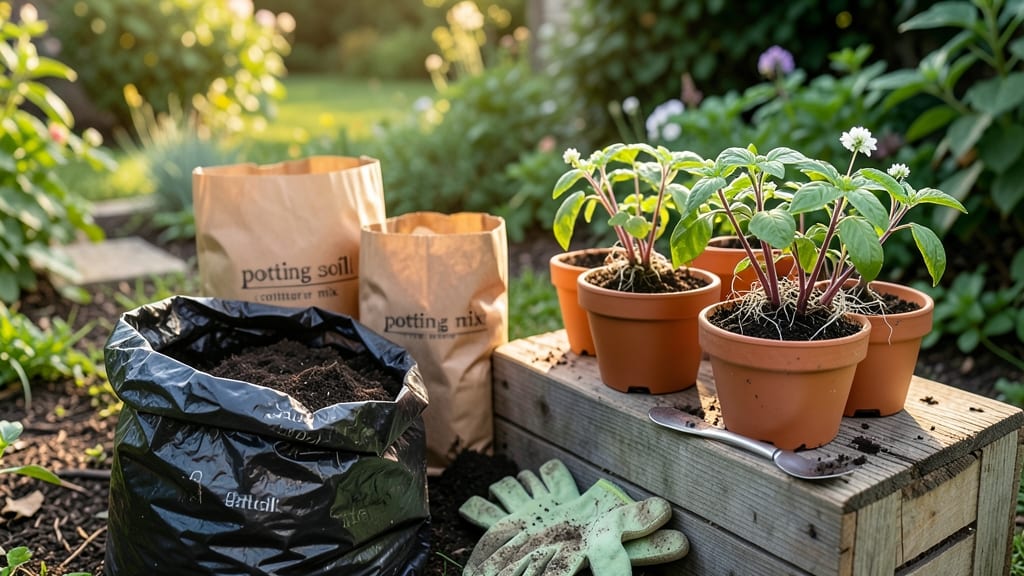
You shouldn't use garden soil in containers because it becomes compacted, drains poorly, and often carries pests or diseases that can damage potted plants. For healthier roots, blend it with perlite or sand, or opt for specially formulated container mixes.
Garden soil's heavy texture creates suffocating conditions for roots, especially in confined containers where water can't drain properly. 🌱 The lack of air pockets leads to root rot, while weeds and pathogens hitchhike from your yard into your pots.
I've seen even hardy plants like tomatoes struggle when planted directly in garden soil—within weeks, their growth stalls from poor oxygen circulation. For containers, prioritize mixes with at least 30% organic matter like compost or coconut coir to maintain that perfect balance of moisture retention and drainage.
Even when amended, garden soil can still harbor hidden problems like larvae or fungal spores that lie dormant until activated by the warm, moist environment of a container. 💫 That's why many expert gardeners swear by sterile potting mixes, which combine ingredients like peat moss, vermiculite, and bark fines to create an ideal growing medium from day one.
If you're committed to using garden soil, sterilize it first by baking it in the oven at 200°F for 30 minutes—just be sure to let it cool completely before mixing with amendments.
💡 In This Article
- Why Garden Soil Fails in Container Gardening
- Best Soil Blends for Container Plants
Why garden soil fails in container gardening
Garden soil is designed for in-ground planting where roots can spread freely and natural drainage occurs over large areas. In containers, however, the confined space creates a completely different environment.
When you pack garden soil into pots, its natural particles—clay, silt, and sand—compress tightly, reducing pore space by up to 50%.
This compaction restricts oxygen flow to roots, creating anaerobic conditions that trigger root rot within 2-3 weeks in warm weather. 🌱 The dense structure also traps excess moisture, making roots sit in waterlogged conditions similar to a swamp.
The problem goes beyond just drainage—garden soil often contains weed seeds, fungal spores, and insect larvae that lie dormant in your yard. When you transplant these into containers, you're essentially creating a petri dish for pathogens.
For example, Phytophthora fungi thrive in compacted, moist soil and can wipe out entire container gardens within weeks. Even "healthy" garden soil may harbor nematodes, microscopic worms that feed on plant roots, reducing nutrient uptake by 30-50% in severe cases.
Nutrient imbalances also emerge because garden soil loses fertility quickly in containers. While in-ground plants benefit from continuous nutrient replenishment from surrounding soil, container plants rely entirely on what's in their pot.
Organic matter decomposes faster in confined spaces, leading to nitrogen depletion within 4-6 weeks—especially for heavy feeders like tomatoes or peppers. The lack of microbial diversity in compacted soil further reduces nutrient availability, as beneficial bacteria and fungi can't establish properly in dense environments. 💫
Consider this comparison: A 10-gallon container filled with garden soil might have only 10-15% air space compared to 30-40% in proper potting mix. This means roots suffocate, growth stalls, and plants become stressed—visible through yellowing leaves or stunted stems.
Even drought-tolerant succulents struggle because their roots can't access sufficient oxygen to process water efficiently.
What most gardeners don't realize is how quickly these problems escalate in summer heat. Containers without proper drainage can reach internal temperatures of 120-140°F in direct sunlight, cooking roots while the dense soil prevents heat from dissipating.
This creates a double whammy: roots suffocate from lack of oxygen AND overheat from trapped moisture. The result? Plants that appear wilted even when watered—a classic sign of compacted soil issues. ✨
For example, I once grew basil in garden soil for a client's container garden. Within three weeks, the plants showed signs of stress despite daily watering.
Upon inspection, the roots were brown and mushy at the bottom of the pot, while the top layer remained dry—a clear sign of poor drainage and oxygen deprivation.
Switching to a mix of 50% coco coir, 30% perlite, and 20% compost transformed the plants within two weeks, with vibrant green leaves and vigorous growth.