
Tools
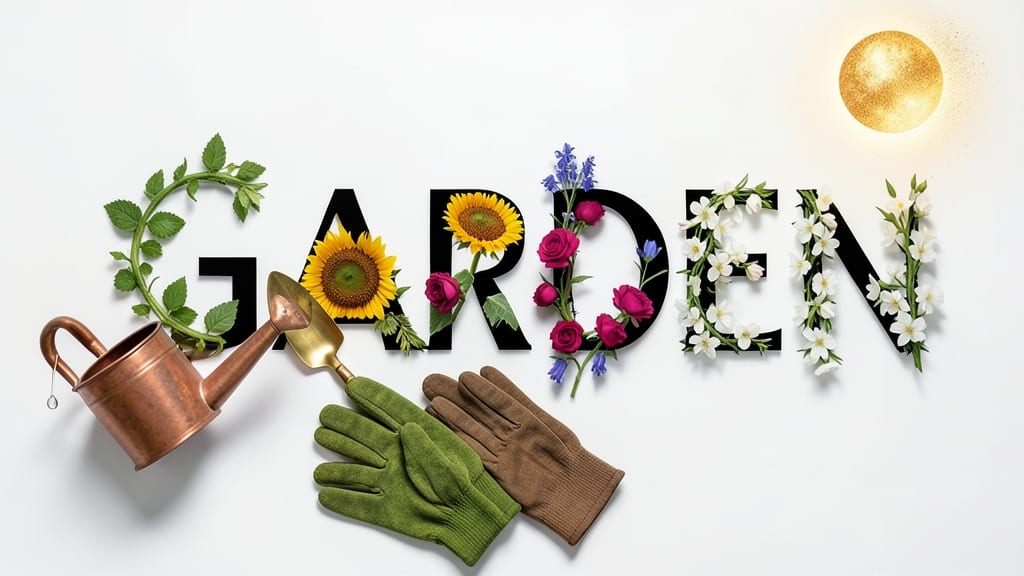
To spell garden correctly, use a single 'n' and end with 'en': G-A-R-D-E-N. Common mistakes include 'gardern,' 'gardin,' and 'gardin' (missing the final 'e'). This spelling reflects its Old English roots as gerden, meaning an enclosed planting area.
This spelling might seem tricky because it breaks common English patterns—like adding an extra 'n' after the 'd'—but it actually makes sense when you trace its history. 🌱 The word evolved from Old English gerden (meaning "enclosure") through Middle English gardyn, where the double 'n' became standard.
Many people confuse it with words like 'gardener' or 'gardening,' which follow different rules. The silent 'e' at the end is another common stumbling block, but it's essential for the word's proper pronunciation and meaning.
For gardeners and writers, remembering this spelling is crucial because miswriting it could undermine credibility—especially in gardening manuals or plant care guides. A quick dictionary check or spellcheck tool can help catch these errors before they become permanent.
The double 'n' and final 'en' are what distinguish 'garden' from its related words, making them key identifiers.
💡 In This Article
- The Etymology and Evolution of 'Garden'
- Avoiding Common Misspellings in Gardening Writing
The etymology and evolution of 'garden'
The word "garden" weaves a fascinating linguistic journey that begins in Old English as gerden, meaning an enclosed space for cultivation. This term dates back to around 700-1150 AD, when Anglo-Saxon farmers and monks first cultivated enclosed plots for herbs, vegetables, and flowers.
The double 'n' in gerden was already present, reflecting how Old English often doubled consonants to emphasize syllable boundaries—a pattern still visible in modern "garden." 🌿
By the Middle English period (1100-1500 AD), the spelling evolved to gardyn, where the 'y' at the end became the silent 'e' we recognize today. This shift occurred as English absorbed French and Latin influences, particularly in written language.
The final 'en' wasn't just decorative—it helped distinguish the word from similar-sounding terms like "gard" (a variant meaning a fortified enclosure). Regional variations also emerged: Scottish English sometimes used "gaird" or "gairden," while Northern dialects occasionally dropped the 'e' entirely.
What makes "garden" particularly interesting is how its spelling reflects phonetic changes over time. The 'd' sound in Old English gerden softened into a 'j' sound in Middle English, which is why we pronounce it "GAR-den" today despite the 'd' still appearing in the spelling.
This disconnect between spelling and pronunciation is common in English but often trips up learners. The word's journey also mirrors broader linguistic trends, like the loss of silent consonants and the rise of the silent 'e' to signal soft pronunciation.
Historical gardening literature offers tangible proof of these shifts. In 16th-century herbals, like those by John Gerard (author of Herball or Generall Historie of Plantes), the word appears as "gardyn" or "gardyne," showing the transitional phase between Middle and Early Modern English.
By 18th-century botanical texts, the modern spelling "garden" had solidified, thanks to standardized dictionaries and the influence of the Oxford English Dictionary in the 19th century.
Today, the double 'n' and silent 'e' serve as linguistic anchors, preserving the word's historical identity. The 'en' ending also aligns with other English nouns ending in '-en' (like "sand" or "pen"), reinforcing its grammatical consistency.
Understanding this evolution helps explain why "garden" resists the common English pattern of adding an extra 'e' after a consonant—it’s a relic of its Old English roots, where the 'en' was already part of the core structure. 📜
For gardeners, this history adds depth to the word itself. Whether you're tending a 16th-century knot garden or a modern urban plot, you're working in a space that carries centuries of linguistic and agricultural tradition.
The spelling isn't just about correctness—it's a connection to the people who first shaped these enclosed green spaces.