
Companion Plants
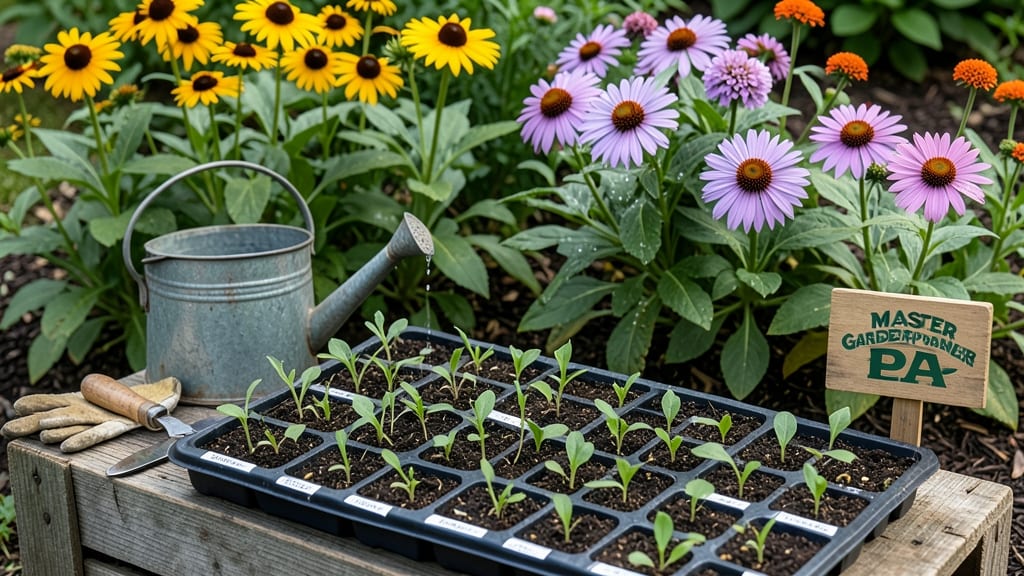
The Pennsylvania Master Gardener Program trains volunteers in horticulture to strengthen local communities, requiring a fee, background check, and basic gardening knowledge. The 120+ hour training program concludes with 50 hours of annual volunteer service.
This program, offered through Penn State Extension, transforms passionate gardeners into community educators. 🌱 The curriculum covers everything from soil health to pest management, blending classroom learning with real-world applications.
Many participants find the hands-on field trips to nurseries and research farms particularly valuable, as they provide practical skills beyond textbook knowledge.
What sets this program apart is its focus on immediate community impact. After certification, volunteers work with schools, parks, and food banks to promote sustainable gardening practices. The annual service requirement ensures ongoing engagement, while regional variations allow participants to tailor their expertise to local climate challenges and plant varieties.
💡 In This Article
- Pennsylvania Master Gardener Training Curriculum
- How to Apply for Pennsylvania Master Gardener Program
Pennsylvania Master Gardener training curriculum
The Pennsylvania Master Gardener training curriculum is designed to transform enthusiastic gardeners into science-backed horticulture experts.
The program dives deep into three foundational pillars: soil science (covering pH testing, organic matter analysis, and regional soil types), plant pathology (identifying diseases like powdery mildew and bacterial spot), and entomology (distinguishing beneficial insects from pests).
Each topic includes practical demonstrations—like dissecting plant samples under microscopes or analyzing soil textures with hands-on kits.
What makes this training stand out is its 60% hands-on component. Participants spend 30 hours in labs conducting experiments—such as testing water drainage rates or identifying plant nutrients through leaf analysis—while 20 hours are dedicated to field trips to research farms, botanical gardens, and urban agriculture sites.
The final 10-hour exam tests both theoretical knowledge (multiple-choice questions) and practical skills (identifying plant diseases from photographs). 🌱 This rigorous approach ensures graduates can confidently diagnose garden problems and provide evidence-based solutions to community members.
The curriculum also emphasizes local adaptation, with modules tailored to Pennsylvania's diverse microclimates—from the humid Appalachian region to the drier western plains. For example, participants learn how to modify irrigation practices for 12 inches of annual rainfall in the southeast versus 30 inches in the northeast.
The program even covers seasonal timing, teaching when to plant cool-season crops like kale (best sown 4-6 weeks before last frost) versus warm-season tomatoes (planted 2-3 weeks after).
One unique feature is the "Master Gardener Toolkit" provided to trainees—a $150-value kit containing a soil pH meter, magnifying lens, plant disease identification guide, and seedling trays. This equipment becomes essential during the 50-hour volunteer requirement, where graduates apply their skills in community gardens or school programs.
The hands-on training ensures they're not just memorizing facts but developing the tactile expertise needed to solve real-world gardening challenges.
For those with specialized interests, the program offers elective modules in organic gardening, pollinator-friendly landscapes, or urban agriculture. These optional sessions allow participants to deepen their knowledge in areas that align with their volunteer goals.
For instance, someone passionate about bees might spend extra time learning to identify native pollinators and design garden layouts that support their life cycles.
The training culminates in a certification ceremony where graduates receive their official Master Gardener pin—a symbol of their commitment to evidence-based gardening.
This pin isn't just a badge; it's a promise to the community that the wearer has undergone 120+ hours of rigorous training and will continue learning through the program's annual workshops. 💫 The first-year retention rate for volunteers is an impressive 85%, thanks to the strong support network built during training.