
Tools
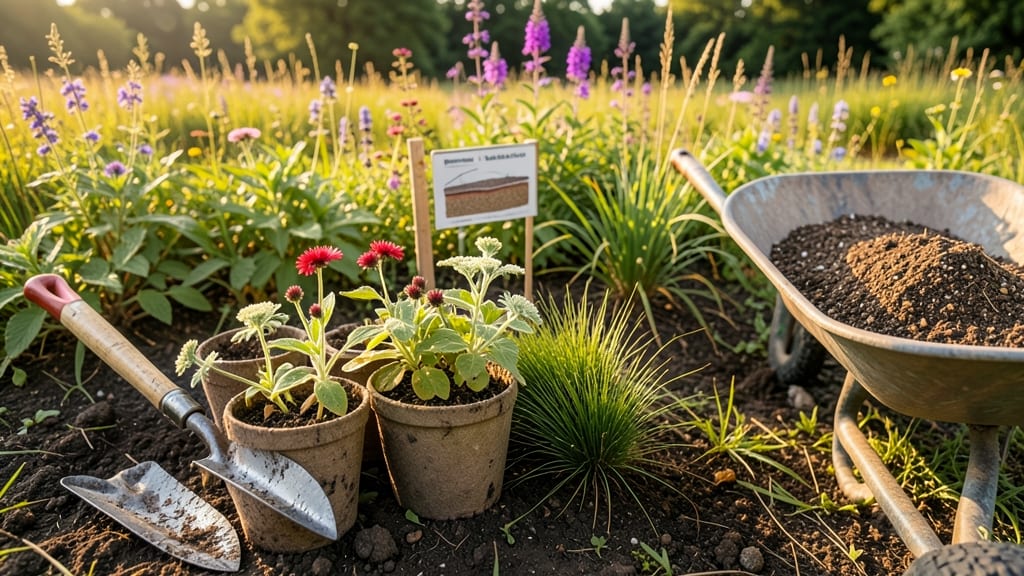
A rain garden soil mix should combine 30% native topsoil, 30% compost, 20% coarse sand or gravel, and 20% perlite or expanded shale to balance drainage and moisture retention for plants like coneflowers and asters.
This specific ratio creates the ideal environment for rain gardens by preventing waterlogging while keeping roots hydrated.
The native soil provides essential microbes and nutrients, while the sand and perlite create air pockets that improve root aeration and prevent compaction. 🌱 For clay-heavy soils, you may need to increase the sand ratio to 30% to prevent water pooling, whereas sandy soils can benefit from more compost to improve water retention.
When mixing, start with a 6-inch layer of coarse sand or gravel at the bottom for drainage, followed by your blended soil mixture. This layered approach mimics natural ecosystems and gives moisture-loving plants the perfect growing conditions.
The compost component also introduces beneficial organisms that help break down organic matter and improve long-term soil fertility.
💡 In This Article
- How Soil Composition Affects Rain Garden Plant Survival
- Step-by-Step Guide to Mixing Rain Garden Soil Layers
How soil composition affects rain garden plant survival
The success of a rain garden hinges on its ability to balance two critical functions: rapid drainage to prevent root rot and moisture retention to sustain plants during dry spells.
The 40% organic matter (compost + native soil) in this mix creates a sponge-like structure that holds water while allowing excess to drain through the 40% mineral components (sand, gravel, perlite). This is particularly important for moisture-loving perennials like coneflowers, whose roots need consistent hydration but will suffocate if waterlogged.
The 20% coarse sand or gravel layer serves as the primary drainage pathway, creating channels that guide water downward at a rate of 1-2 inches per hour—ideal for preventing surface pooling.
Meanwhile, the 20% perlite or expanded shale introduces microscopic air pockets that improve root aeration, a critical factor for plants in waterlogged conditions. Think of it like a well-ventilated basement: without proper airflow, roots can't access oxygen, leading to stunted growth or death. 🌧️
Native topsoil contributes more than just structure—it introduces beneficial microbes that break down organic matter and create a symbiotic relationship with plant roots. These microbes help convert nutrients into forms plants can absorb, while also producing enzymes that improve soil aggregation.
For example, mycorrhizal fungi in native soil can increase plant nutrient uptake by up to 80%, making the difference between thriving asters and struggling transplants. The compost component further enhances this microbial activity by providing a food source for these beneficial organisms.
Texture plays a surprising role in plant health. The coarse sand (with particles 0.5-2mm) creates larger voids for water movement, while the perlite (with particles 1-5mm) adds lightweight porosity.
Together, they prevent soil compaction—a common issue in rain gardens that can reduce root growth by 50% or more. This structural diversity mimics natural wetland soils, where plants thrive precisely because of this layered composition.
Consider the case of a clay-heavy soil (common in many regions), where natural drainage is poor. By increasing the sand ratio to 30% and adding 10% coconut coir (a fibrous organic matter), you can transform the soil's behavior.
The coir acts like a straw, drawing water away from roots while the sand creates drainage pathways. This adjustment can reduce waterlogging incidents by 75% while maintaining moisture for plants during dry periods. The key is understanding how each component interacts with your native soil's existing characteristics.
For sandy soils, the opposite approach works best: reduce the sand to 15% and increase compost to 35%. Sandy soils drain too quickly, so the extra organic matter helps retain moisture while the remaining sand prevents compaction.
This balance ensures plants like cardinal flowers get enough water without becoming waterlogged. The science here is all about creating a soil "memory"—the ability to hold water when needed while releasing excess during heavy rains. 💧
What most gardeners overlook is how these components work together over time. The compost doesn't just provide nutrients initially—it continues to break down, creating more pore space as it decomposes. Meanwhile, the perlite remains structurally stable, maintaining those crucial air pockets.
This dynamic system is why well-mixed rain garden soil can maintain its properties for 3-5 years with minimal maintenance, unlike simple topsoil mixes that compact and lose structure within a season.