
Size
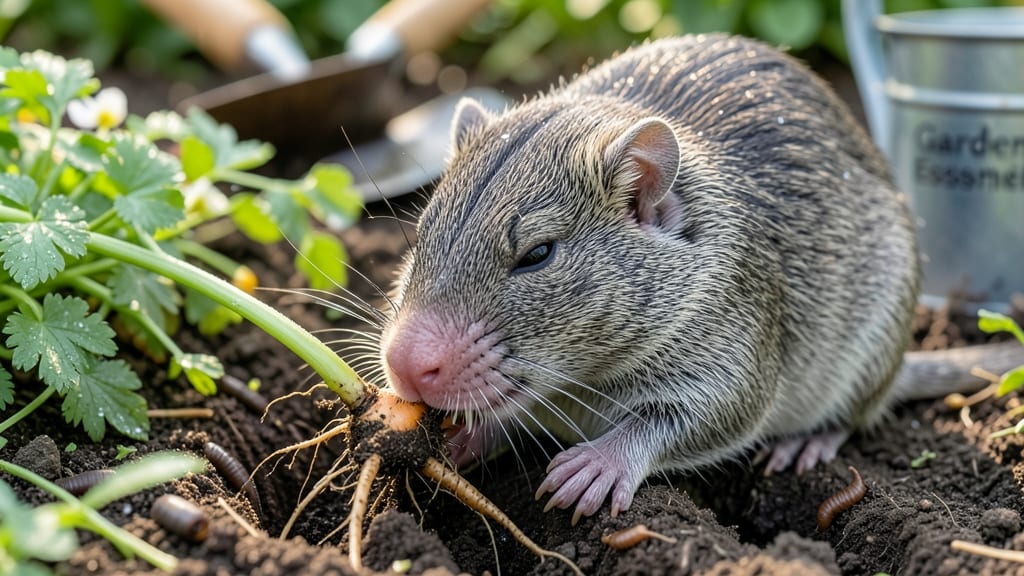
When growing a garden, moles primarily eat earthworms, grubs, and insect larvae, while occasionally damaging plant roots, bulbs, and tubers. Their tunneling disrupts soil structure and can harm garden plants.
What do moles eat in a garden? While they help by targeting pests like grubs and beetle larvae—common lawn and crop threats—moles also consume earthworms, which are often seen as beneficial for soil health. This can create an imbalance in your garden ecosystem.
The real concern arises when they switch to digging for plant roots, particularly in vegetable gardens where tubers like potatoes become prime targets. Their tunneling, though it aerates the soil, leaves unsightly mounds and weakens plant stability.
Understanding their seasonal patterns helps too—moles are most active during spring and fall when soil-dwelling insects are abundant. This knowledge lets gardeners time protective measures effectively, whether through natural deterrents or strategic planting choices.
💡 In This Article
- Mole Diet Breakdown: Soil-Dwelling Prey vs Plant Damage
- Garden Protection Strategies: Humane Mole Repellents and Barriers
Mole diet breakdown: soil-dwelling prey vs plant damage
Moles are specialized insectivores with a diet primarily consisting of earthworms, grubs, and insect larvae—about 70-90% of their consumption. Their keen sense of smell and touch helps them detect these prey items buried up to 6-8 inches below the surface.
Earthworms, though beneficial for soil aeration, are a major target because moles can locate them using vibrations and chemical cues. Grubs, particularly those from Japanese beetles, are another favorite due to their high fat content, which provides energy for the mole's high-metabolism lifestyle.
The key difference between beneficial and harmful consumption lies in their seasonal feeding patterns. During spring and fall, when soil-dwelling insects peak, moles focus on grubs and larvae, acting as natural pest controllers.
However, in late summer or drought conditions, they may shift to plant roots and tubers when insect populations decline. This shift explains why gardeners notice mole damage in vegetable patches, especially around potatoes, carrots, and onions, whose roots are softer and easier to excavate.
Moles have a unique feeding mechanism: they use their powerful front claws to dig U-shaped tunnels while consuming prey on the go. Their tunneling creates 1.5-2 inch wide pathways that disrupt plant roots and compact soil, reducing water absorption.
The irony? While they help control pests like beetle grubs, their root consumption can outweigh these benefits in vegetable gardens where tubers are the main crop. 🌱
Understanding this balance is crucial for gardeners. Moles may eat up to 70% of their body weight daily—about 50-100 earthworms or grubs per day—but their impact shifts dramatically when they target plant matter.
The damage becomes visible through raised soil mounds (from tunnel collapse) and wilted plants where roots have been severed. This is why their presence is often a double-edged sword in garden ecosystems.
Another critical factor is their territorial nature. A single mole can maintain a 1/4-acre territory, meaning their tunneling and feeding can affect large garden areas. Their diet isn't just about food—it's about maintaining their underground network, which they use for both hunting and shelter.
This territorial behavior explains why mole damage often appears in concentrated patches rather than scattered randomly across a garden.
For gardeners concerned about mole activity, monitoring their diet clues can help. Look for freshly turned soil mounds (indicating recent tunneling) and chewed plant roots near the surface. These signs suggest a shift from beneficial insect consumption to harmful plant damage, signaling it's time to implement protective measures.
The key is timing—intervening during peak insect seasons can often deter moles from turning to garden crops.