
Size
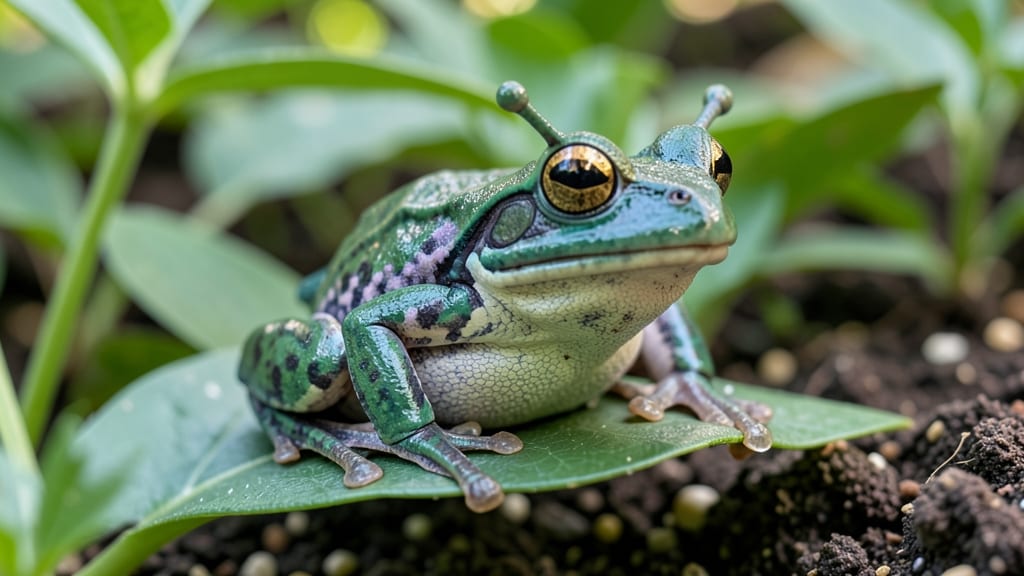
The frog pet in Grow a Garden serves as a virtual pollinator, hopping between flowers to spread pollen and enriching soil with natural fertilizers from its waste. This mimics real-world pollination, boosting plant health and growth in the game’s ecosystem.
In Grow a Garden, the frog pet plays a dual role that directly impacts your virtual harvest. 🐸 By navigating flower beds, it mimics how real pollinators like bees transfer pollen, ensuring stronger blooms and fruit production.
The frog’s waste also acts as organic fertilizer, improving soil quality over time. This dual function makes it one of the most effective pets for maximizing plant yields without requiring extra resources.
What’s interesting is how the game replicates real-world biology—just like in nature, pollination timing matters.
The frog’s activity patterns (day vs. night) can influence which flowers receive pollen first, creating a cascading effect on plant maturity. 🌱 For players focused on efficiency, positioning the frog near high-value crops early in the game can accelerate growth cycles significantly.
💡 In This Article
- How the Frog Pet Enhances Pollination in Virtual Gardens
- Maximizing Plant Growth with Frog Pet Techniques
How the frog pet enhances pollination in virtual gardens
The frog pet in Grow a Garden mimics real-world pollinators by physically tapping flowers to release and transfer pollen. When the frog hops from bloom to bloom, its movement causes the flower's anthers to brush against its body, collecting pollen grains.
As it moves to the next flower, some of these grains stick to the stigma, completing the fertilization process. This mechanism is remarkably similar to how bees or butterflies pollinate in nature, but with a unique twist: the game simplifies the process to focus on efficiency rather than biological realism.
Timing plays a crucial role in this virtual ecosystem. Flowers in Grow a Garden often bloom at specific times of day, and the frog’s activity patterns can be adjusted to match these cycles.
For example, positioning the frog near morning-blooming flowers (like sunflowers) during its active hours ensures maximum pollen transfer early in the day. 🌞 Night-blooming flowers, such as moonflowers, benefit from the frog’s nocturnal activity if enabled.
This synchronization mimics how real pollinators like moths or bats time their visits to match flower availability, creating a balanced ecosystem in the game.
The frog’s role extends beyond pollination—its waste also acts as a natural fertilizer. As the frog moves through the garden, it leaves behind nutrient-rich droppings that enrich the soil, much like how real animals contribute to soil fertility in ecosystems.
This dual function makes the frog one of the most efficient pets for players aiming to boost plant growth without manually adding fertilizers. The game’s design cleverly combines two critical ecological processes into one pet, making it a standout feature for gardeners in the virtual world.
Comparing the frog to real-world pollinators highlights its unique advantages.
Unlike bees, which are limited to daytime activity and specific flower types, the frog can be programmed to visit any flower at any time, offering unparalleled flexibility. 🐝 While bees rely on complex navigation skills to locate flowers, the frog’s movement is guided by the player, allowing for strategic placement based on flower maturity and growth needs.
This blend of realism and customization makes the frog a powerful tool for optimizing garden productivity.
One key difference is the frog’s lack of social behavior, unlike bees that communicate through dances. In Grow a Garden, the frog operates independently, focusing solely on pollination and fertilization. This simplicity makes it easier for players to manage, especially those new to the game’s mechanics.
The absence of competition for resources (like nectar) also means the frog can dedicate all its energy to pollinating and fertilizing, maximizing its impact on plant growth.
For players who want to dive deeper, observing the frog’s path reveals how its movement patterns affect pollination efficiency. A straight-line path between flowers may miss some blooms, while a zigzag route ensures broader coverage.
Experimenting with different paths can help players discover the most effective strategies for their specific garden layouts. This trial-and-error approach mirrors real-world pollinator behavior, where efficiency depends on the pollinator’s movement and the spatial arrangement of flowers.