
Tools
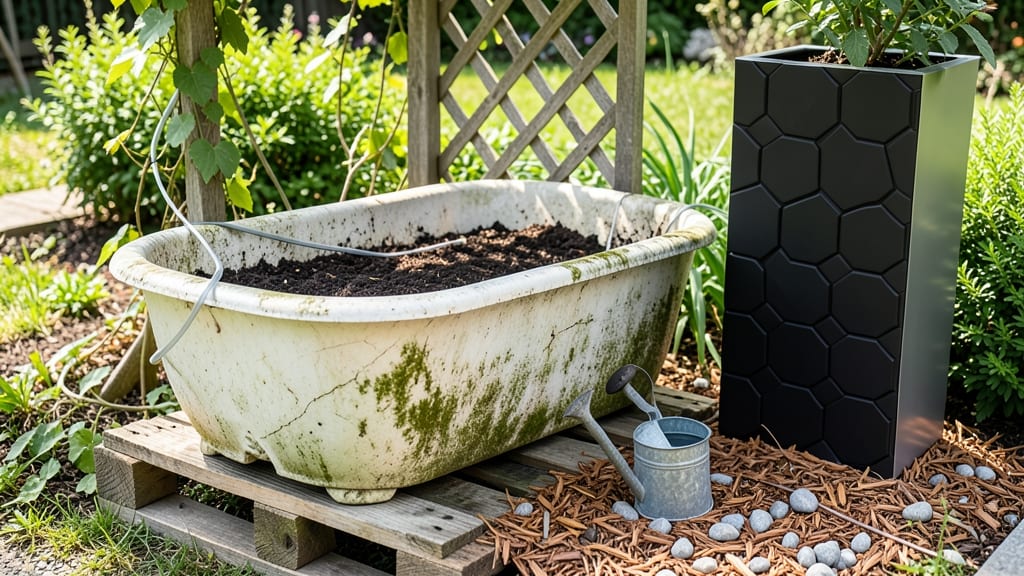
A garden bathtub is a repurposed bathtub used for planting flowers, herbs, or vegetables, offering a space-saving and decorative way to grow plants in small yards or urban gardens. These containers maximize vertical space and add rustic charm to outdoor spaces.
A garden bathtub turns an old fixture into a stylish planter that solves two problems at once: limited space and creative reuse. 🌿 These tubs are perfect for urban gardens where square footage is tight, as they can be stacked or mounted on walls to create vertical growing areas.
The enamel coating on vintage tubs also protects against weathering, making them ideal for outdoor use year-round. Plus, their unique shape adds character to patios or balconies while keeping soil contained and drainage efficient.
For beginners, the best part is how easy they are to customize. You can drill drainage holes at the bottom, line the tub with landscape fabric, and fill it with well-draining soil perfect for herbs like basil or thyme.
The shallow depth works surprisingly well for shallow-rooted plants, and the tub's weight helps stabilize it against wind. Just avoid heavy clay soils that might crack the enamel over time.
💡 In This Article
- How Repurposed Bathtubs Transform Urban Gardening
- DIY Garden Bathtub Planting Guide for Beginners
How repurposed bathtubs transform urban gardening
The magic of garden bathtubs lies in their dual-purpose design, blending functionality with rustic charm. These repurposed containers solve two critical urban gardening challenges: space constraints and soil containment.
The enamel coating on vintage tubs creates a non-porous surface that prevents soil erosion and water runoff, while the curved shape naturally channels excess water toward drainage holes. This design feature makes them ideal for areas with limited flat surfaces, where traditional planters might tip or leak.
Material science plays a key role in their longevity. Cast iron tubs with porcelain enamel (like those from the 1950s-70s) can last decades outdoors due to their corrosion-resistant properties, while fiberglass models offer lightweight alternatives for balconies.
The enamel's smooth surface also makes cleaning effortless—just scrape out debris and rinse with water. What's surprising is how well these tubs regulate soil temperature: the metal conducts warmth during sunny days but retains coolness better than plastic containers, creating optimal growing conditions for Mediterranean herbs like rosemary or oregano.
Drainage is where these tubs truly shine in urban settings. Most gardeners drill ¼-inch holes along the bottom edge, then line the tub with landscape fabric to prevent soil from washing out. This system mimics natural drainage while preventing root rot—a common issue in sealed containers.
The tub's weight (typically 30-50 pounds when empty) also helps stabilize it against wind, unlike lightweight plastic pots that may topple. For rooftop gardens, this stability is particularly valuable where gusts can be unpredictable.
Psychologically, garden bathtubs create what designers call "visual anchors"—their familiar shape immediately draws the eye and adds personality to small spaces. The curved form also makes them perfect for growing trailing plants like nasturtiums or creeping thyme, which spill over the edges to create a lush, cascading effect.
Unlike geometric planters, the tub's organic shape feels more integrated with natural landscapes, blending seamlessly with stone pathways or wooden decks.
Consider this comparison: A standard 18-inch diameter garden bathtub holds about 1.5 cubic feet of soil—enough for 6-8 herb plants—while occupying only 2 square feet of floor space. That's 75% more growing capacity than a similar-sized square planter.
The vertical stacking potential means you could grow three layers of plants in the space of one traditional garden bed, making them ideal for apartment balconies or tiny backyards.
The material choice also affects plant health. Enamel tubs maintain consistent moisture levels better than plastic because they don't absorb water, preventing the soil from becoming waterlogged. This makes them perfect for drought-tolerant plants like lavender or sedum, which prefer well-draining conditions.
The tub's depth (12-16 inches deep) accommodates small shrubs like dwarf boxwood or even dwarf fruit trees with proper support.
What most people don't realize is how these tubs can be customized for specific climates. In hot, dry regions, painting the exterior with light-colored latex paint reflects sunlight, keeping roots cooler.
In cooler climates, wrapping the tub in burlap during winter provides insulation. The possibilities are limited only by your creativity—and the tub's original condition!