
Size
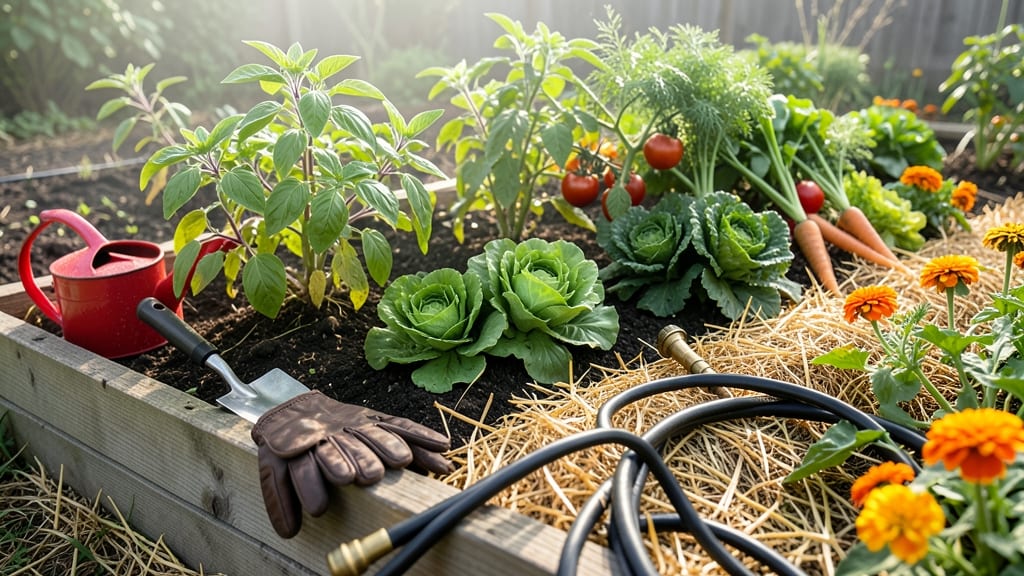
To grow plants in a garden, you'll need to prepare nutrient-rich soil, select plants suited to your local climate, ensure they receive adequate sunlight, maintain a consistent watering schedule, and incorporate organic fertilizers to support healthy development. Beginners should start with hardy varieties like basil or spinach.
Starting a garden is easier than you think when you focus on these five fundamentals.
The soil you use acts as the foundation for your plants' health—poor drainage or incorrect pH can stunt growth, while well-aerated, nutrient-dense soil helps roots establish quickly. 🌱 I recommend testing your soil's pH before planting; most vegetables thrive in slightly acidic to neutral conditions (6.0-7.0).
Pairing the right plants with your garden's natural sunlight patterns (full sun, partial shade, or full shade) makes all the difference in their success rate.
Once you've prepped the soil, proper spacing and mulching become critical. Overcrowding leads to competition for nutrients and increases disease risk, while mulch preserves moisture and regulates soil temperature. For beginners, I suggest planting in rows with 12-18 inches between plants—this gives them room to grow without sacrificing yield.
Watering consistently (about 1 inch per week) and using organic fertilizers like compost or worm castings keeps your garden thriving without harsh chemicals.
💡 In This Article
- Essential Soil and Climate Conditions for Plant Growth
- Step-by-Step Planting Guide for Garden Beginners
Essential soil and climate conditions for plant growth
Soil isn't just dirt—it's a living ecosystem where roots breathe, nutrients dissolve, and microbes work to break down organic matter into plant-available forms. The two most critical factors are pH balance and drainage capacity.
Most vegetables prefer a pH between 6.0 and 7.0, where nutrients like nitrogen, phosphorus, and potassium become soluble and accessible. For example, tomatoes thrive at pH 6.0-6.8, while blueberries need acidic soil (pH 4.5-5.5).
You can test your soil's pH using a simple home kit (costing around $10) or send a sample to your local agricultural extension office for professional analysis.
Drainage is equally vital—roots suffocate when submerged in waterlogged soil, leading to root rot. Sandy soils drain too quickly, while clay holds water like a sponge. The ideal texture is loamy: roughly 40% sand, 40% silt, and 20% clay, which balances moisture retention and aeration.
To improve drainage, mix in 2-3 inches of compost or organic matter like leaf mold. For clay-heavy soil, consider raising beds with a 6-inch layer of gravel at the bottom before adding topsoil. 🌱
Sunlight exposure determines which plants will thrive in your garden. Full-sun plants (like peppers or tomatoes) need 6-8 hours of direct sunlight daily, while partial shade (3-6 hours) suits leafy greens like spinach or lettuce.
Observe your garden throughout the day—shade from trees or buildings creates "microclimates" where some areas receive only morning sun. This is why a 3-foot-tall garden trellis can transform a shady corner into a productive space by lifting vining plants above ground-level shadows.
Climate also dictates planting timing. In cooler regions, frost-sensitive crops (like basil) should wait until soil temperatures reach 55°F at 6 inches deep, while hardy greens can handle light frosts. Heat-loving plants like okra need soil temps above 70°F to germinate properly.
A soil thermometer (around $15) helps track these conditions accurately. Even in the same city, microclimates can vary by 5-10°F—a south-facing wall stores heat during the day, creating a warmer niche ideal for tender plants.
Wind exposure matters too. Strong winds dry out soil and damage delicate stems. If your garden faces 10+ mph winds, install a 6-foot-tall windbreak fence or plant tall hedges (like sunflowers) as natural barriers.
These physical shields can increase humidity near plants by 10-15%, reducing stress during dry spells. The right wind protection lets you grow more sensitive varieties without worrying about transplant shock.
One often-overlooked factor is soil temperature. Seeds won't germinate until soil reaches their minimum threshold—carrots need 50°F, while cucumbers require 70°F. A cold frame (a clear plastic cover over seedlings) can raise soil temps by 10-15°F in early spring, extending your growing season.
This simple technique lets you plant 2-3 weeks earlier than your last frost date, giving heat-loving crops more time to mature before fall temperatures drop.