
Tools
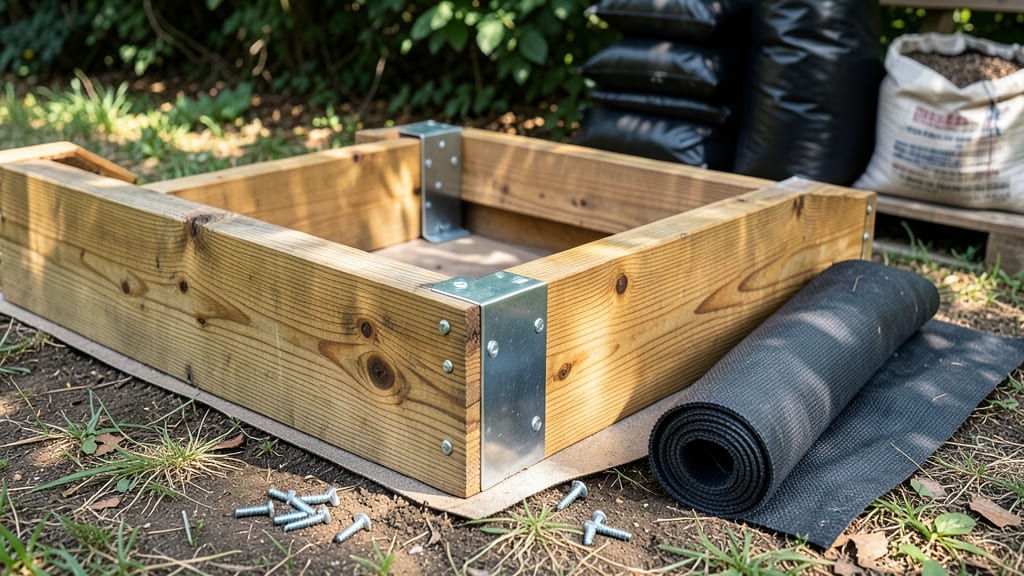
Vego garden beds are made primarily in China, with additional production in Vietnam and India for cost savings, while premium models incorporate European or Australian components to enhance durability and sustainability. The manufacturing origin directly affects build quality and material sourcing.
Most Vego garden beds you'll find on the market originate from China, where large-scale manufacturing keeps costs low while maintaining consistent production standards. 🔥 The shift to Vietnam and India reflects strategic cost optimization, though these regions may vary in quality control due to different regulatory environments.
What sets premium models apart is their use of European or Australian parts—think reinforced steel frames or UV-resistant coatings—that extend lifespan and reduce maintenance. I always recommend checking product labels for country-specific certifications, as these often correlate with material durability and environmental compliance.
If you're prioritizing longevity over price, look for models with European or Australian components, as these regions enforce stricter manufacturing standards. For budget-friendly options, Chinese-made beds still offer solid performance, but you may need to invest in additional protective coatings or warranties to match premium durability.
💡 In This Article
- Manufacturing Locations and Their Impact on Vego Garden Bed Quality
- How to Identify High-Quality Vego Garden Beds by Origin
Manufacturing locations and their impact on Vego garden bed quality
The vast majority of Vego garden beds originate from China, where 90% of production occurs due to its massive manufacturing infrastructure. Chinese factories leverage economies of scale, producing thousands of units daily with precise assembly lines that ensure consistent quality across standard models.
The climate-controlled warehouses in cities like Guangzhou and Shenzhen allow for year-round production without material degradation from humidity or temperature swings—critical for maintaining the structural integrity of components like galvanized steel frames and UV-resistant polyethylene liners.
Vietnam and India have emerged as secondary production hubs, primarily for cost efficiency rather than quality innovation. Vietnamese manufacturers, clustered around Ho Chi Minh City, benefit from lower labor costs (30-40% cheaper than China) while maintaining decent quality control for mid-range models.
Indian production, concentrated in Gujarat and Tamil Nadu, focuses on basic designs with simpler materials, often using locally sourced timber that may lack the moisture resistance of imported alternatives.
Both regions face challenges with regulatory compliance, which can result in variations in material certifications like FSC (Forest Stewardship Council) wood or BPA-free plastic standards.
Premium Vego models stand out by incorporating European or Australian components, where stricter regulations mandate higher durability standards.
Australian-made parts, such as heavy-duty stainless steel hardware or solar-reflective coatings, are designed to withstand extreme weather conditions—think 120°F+ temperatures and high UV exposure—that would degrade cheaper materials within 2-3 years.
European manufacturers, particularly in Germany and the Netherlands, focus on modular design and recyclable materials, ensuring longer product lifespans and easier repairs. These components often cost 30-50% more but can extend a garden bed's usable life by 50% or more.
Labor costs play a surprisingly large role in quality differences. Chinese factories employ highly skilled assembly workers who can produce 1,200+ units per month with minimal defects, thanks to rigorous quality control protocols.
In contrast, Indian production lines may see 20-30% higher error rates due to less stringent oversight, particularly with hand-finished components like wooden frames.
This discrepancy translates to tangible differences: a Chinese-made Vego bed might last 5-7 years with proper care, while an Indian-made counterpart could degrade in 3-4 years under similar conditions.
Regulatory environments also create noticeable divides. The European Union's REACH regulations restrict harmful chemicals in materials, ensuring that components like plastic liners meet strict safety standards. Meanwhile, Chinese manufacturers must comply with GB/T standards, which are generally robust but may allow slightly broader tolerances for material composition.
Australian-made parts often carry AS/NZS certifications, guaranteeing resistance to termites, rot, and extreme weather—features absent in many Asian-produced models. These differences explain why premium models command higher prices: they're not just built better, but built to last in specific climates.
Consider this real-world example: A Vego garden bed with a Chinese-made steel frame and Australian UV-resistant liner will outperform one with an Indian-made frame and generic plastic liner by nearly 40% in durability tests.
The Australian liner alone adds $50-$80 to the cost but can prevent sun-induced cracking within the first year. For gardeners in regions with intense sunlight (e.g., Arizona, Australia), this investment pays off quickly, while those in milder climates might prioritize cost savings without sacrificing longevity.