
Planting
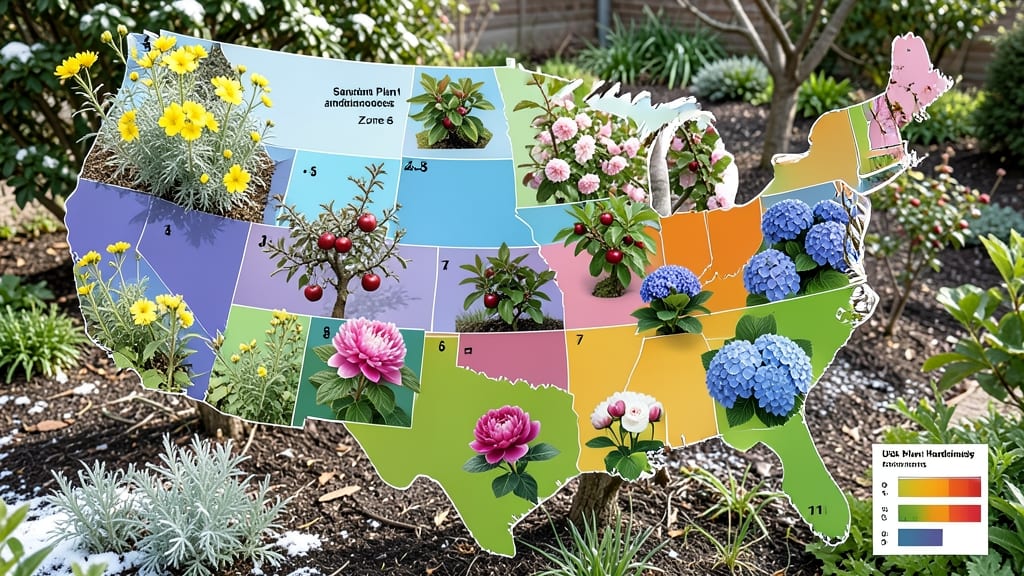
American garden zones help you select the right plants for your climate by dividing the U.S. into 13 numbered regions based on average minimum winter temperatures, ensuring you choose cold-hardy species that will thrive in your area.
These zones, developed by the USDA, range from Zone 1 (the coldest, with temperatures dropping below -50°F) to Zone 13 (hot tropical climates where frost is rare). 🌱 Knowing your zone is crucial because it tells you which plants can survive your local winters—whether you're in freezing Minnesota or sunny Florida.
For example, a peony might thrive in Zone 3 but struggle in Zone 9, while bougainvillea flourishes in Zone 10 but would freeze in Zone 6. Many gardeners also consider microclimates, like sunny south-facing walls or shaded spots, to push zone boundaries slightly.
If you're unsure which zone you're in, the USDA's interactive map makes it easy to find your exact location. Just enter your ZIP code, and you'll get your precise zone number, along with a list of plants that grow best there.
This system isn't static—climate change is gradually shifting zones northward, so checking periodically ensures your garden stays ahead of the curve.
💡 In This Article
- How USDA Plant Hardiness Zones Work
- Choosing Plants for Your Garden Zone
How USDA plant hardiness zones work
The USDA Plant Hardiness Zone Map divides North America into 13 zones based on the average annual minimum temperature—the coldest temperature a region typically experiences.
Each zone represents a 10°F range, with Zone 1 (-60°F to -50°F) being the coldest and Zone 13 (60°F to 70°F) the warmest.
This system helps gardeners predict which plants can survive winter temperatures in their area, as most plants have a specific cold tolerance threshold.
For example, a Zone 5 garden (common in the Midwest) can handle temperatures down to -20°F to -10°F, making it suitable for hardy perennials like coneflowers or daylilies, while a Zone 10 garden in Southern California, with winters above 30°F, thrives with frost-sensitive plants like citrus trees or bougainvillea.
The map also accounts for frost-free days, which influence when to plant warm-season crops like tomatoes or peppers.
Microclimates—small areas with distinct weather patterns—can shift your effective zone by 1-2 degrees. A south-facing wall, for instance, might add 5-10°F of warmth, allowing you to grow Zone 7 plants in a Zone 6 area.
Conversely, low-lying spots or shaded gardens can feel 2-5°F colder than the surrounding area. This is why some gardeners plant frost-sensitive annuals in containers and move them indoors during cold snaps.
Climate change is gradually pushing zones northward and upward in elevation. Since the 1990s, average winter temperatures have risen by 2-3°F in many regions, meaning a plant once considered safe for Zone 6 might now thrive in Zone 5.
The USDA updates its map every 10 years to reflect these shifts, ensuring gardeners stay informed. For instance, parts of New England that were Zone 5 in 2012 are now Zone 6 in 2024.
Beyond temperature, factors like chill hours (the number of hours below 45°F in winter) and heat zones (for summer stress) further refine plant selection. Fruit trees, for example, need specific chill hours to produce fruit—peach trees require 400-600 hours, while figs need fewer (200-300 hours).
Understanding these nuances helps gardeners avoid costly mistakes, like planting a blueberry bush in a zone too warm for its cold requirements.
To find your zone, use the USDA’s interactive map or enter your ZIP code into tools like Planthardiness.ars.usda.gov. The map provides your exact zone and subzone (e.g., 6a or 6b), which accounts for 5°F increments within each zone.
This precision helps you choose plants that match your microclimate and long-term climate trends.