
Fertilization
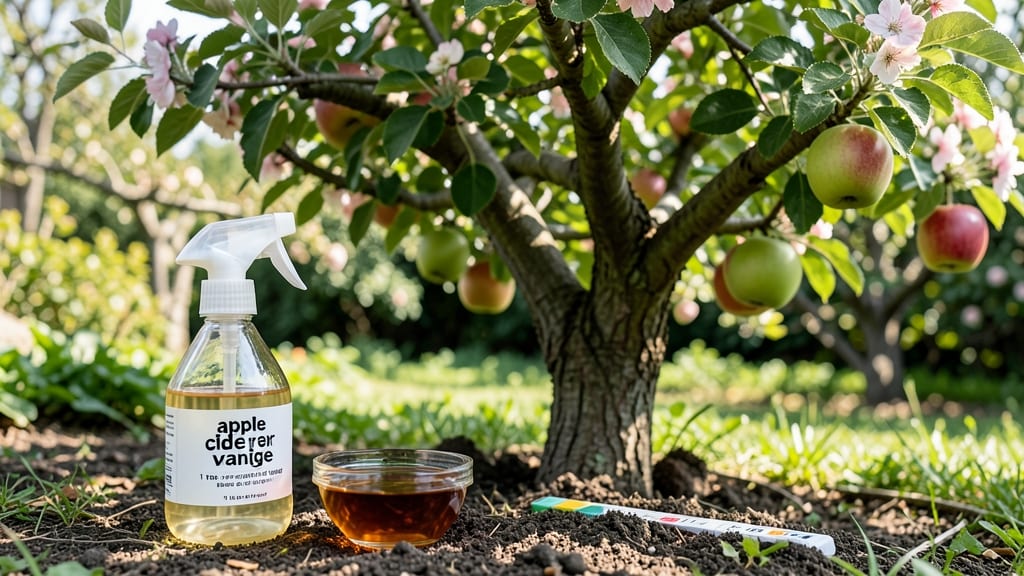
Apple cider vinegar gardening balances soil pH, deters pests, and provides nutrients when used correctly. Diluted to 1-2 tablespoons per gallon of water, it functions as a natural fertilizer and fungicide—but requires careful application to prevent plant damage.
Apple cider vinegar gardening taps into its acidic nature to create an environment where plants thrive. 🌱 The acetic acid helps break down minerals in the soil, making them more accessible to plant roots while also discouraging fungal growth.
I've noticed the biggest benefits with acid-loving plants like blueberries and azaleas, where a slightly lower pH can dramatically improve growth. However, the key is moderation—overuse can acidify the soil too much, harming sensitive plants or even burning foliage.
For best results, I recommend mixing 1 tablespoon per gallon of water for most applications, then spraying it on leaves or pouring it around the base of plants. Early morning applications work best, as the vinegar solution needs time to absorb before the sun intensifies.
Always test a small area first, especially on delicate plants, to ensure they tolerate the treatment well.
💡 In This Article
- How Apple Cider Vinegar Improves Soil and Plant Growth
- Safe Ways to Use Apple Cider Vinegar in Your Garden
How apple cider vinegar improves soil and plant growth
Apple cider vinegar (ACV) works its magic primarily through its acetic acid content, which ranges from 4% to 7% in most commercial varieties.
This acidity helps lower soil pH, making it ideal for plants that thrive in slightly acidic conditions like blueberries (pH 4.5-5.5), azaleas (pH 5.0-6.0), and hydrangeas (pH 5.5-6.2).
The acetic acid also acts as a natural chelator, breaking down mineral compounds in the soil into simpler forms that plant roots can absorb more efficiently. Without this process, nutrients like iron, manganese, and zinc might remain locked away in the soil, even if they're present in adequate amounts.
Beyond pH adjustment, ACV's antifungal properties come into play by inhibiting the growth of common garden pathogens.
The vinegar creates an environment where harmful fungi, like powdery mildew or root rot, struggle to establish themselves. 🌱 This happens because the acetic acid disrupts the cell membranes of fungal spores, preventing them from germinating.
Studies show that a 1-2% vinegar solution can reduce fungal growth by up to 80% when applied as a foliar spray. The key is consistency—regular applications maintain this protective barrier, especially during humid conditions when fungal spores thrive.
What's fascinating is how ACV influences microbial life in the soil. While it suppresses harmful fungi, it doesn't eliminate beneficial bacteria entirely. Instead, it creates a more balanced ecosystem where beneficial microbes can outcompete pathogens.
For example, mycorrhizal fungi, which form symbiotic relationships with plant roots, often become more active in slightly acidic soils. This relationship enhances nutrient uptake, particularly phosphorus, which is crucial for root development and flowering. The result is healthier plants with stronger immune systems that can better resist diseases.
However, the benefits aren't universal across all plant types. For instance, vegetables like lettuce, spinach, and beans prefer neutral to slightly alkaline soils (pH 6.0-7.5), where ACV could do more harm than good.
The vinegar's acidity might leach essential nutrients like calcium and magnesium from these plants, leading to deficiencies. 🌿 This is why it's critical to know your plants' pH preferences before applying ACV.
A simple soil test can reveal whether your garden's current pH is too high or just right—if it's already acidic, ACV could push it into a harmful range.
The mineral breakdown process also explains why ACV can act as a mild fertilizer. When applied to the soil, the acetic acid helps dissolve minerals like potassium and magnesium, which are often bound tightly to soil particles.
These dissolved minerals become more available to plant roots, particularly during the growing season when nutrient demand is highest. For example, tomatoes often show improved fruit production when ACV is used as a soil drench, thanks to better magnesium absorption—which is essential for chlorophyll production and overall plant vigor.
One often-overlooked benefit is ACV's ability to improve water penetration in compacted soils. The acidity helps break down clay particles, creating larger pores that allow water and air to move more freely through the soil.
This is particularly helpful in heavy clay soils where roots can suffocate due to poor drainage. 💧 The result is less water runoff and better oxygen availability for roots, which translates to stronger, more resilient plants.
However, this benefit is most noticeable in soils with high clay content—sandy soils, which already drain well, won't see the same improvements.