
Pests
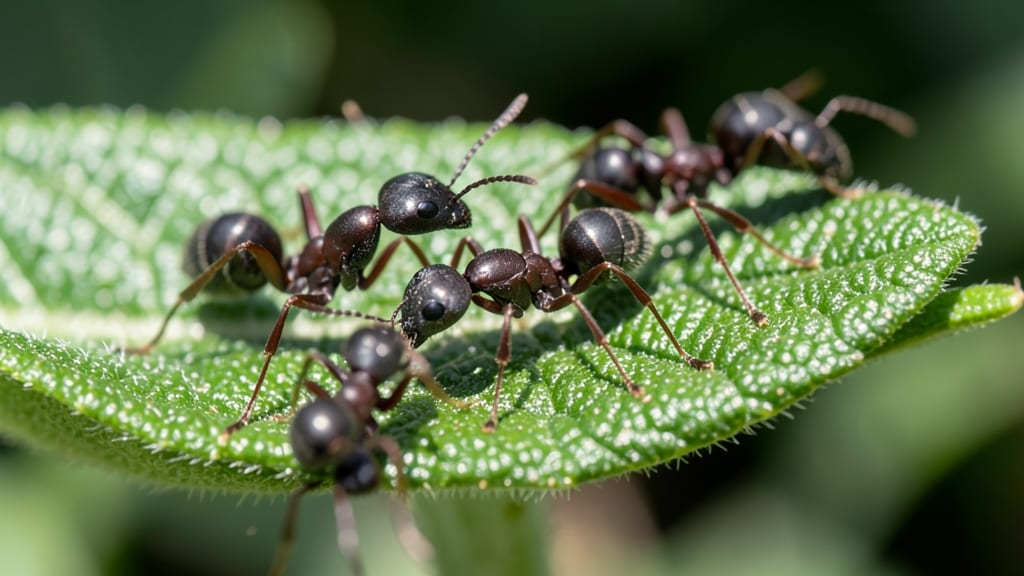
Ants are beneficial to a garden by improving soil aeration, breaking down organic matter, and controlling pests like aphids, though some species may damage plants or disrupt ecosystems if overpopulated.
Ants act as nature's tiny garden engineers, tunneling through soil to create air pockets that boost root growth and water drainage. 🔥 Their decomposition of fallen leaves and plant debris enriches the soil with nutrients, while their predation on aphids and other pests helps maintain a balanced ecosystem.
That said, not all ants are helpful—some species like fire ants can harm plants or even disrupt beneficial insect populations when their numbers spiral out of control.
Understanding which ants are working for you versus against you is key. For instance, harvester ants till the soil while Argentine ants may become invasive pests.
I recommend observing ant trails and activity patterns—if they're carrying away seeds or attacking plant roots, it's time to intervene with natural deterrents like diatomaceous earth or citrus peels.
💡 In This Article
- How Ants Improve Garden Soil and Ecosystems
- Balancing Ant Populations for a Healthy Garden
How ants improve garden soil and ecosystems
Ants act as nature's underground plow, creating intricate tunnel systems that aerate compacted soil. These tunnels improve water infiltration by 30-50%, allowing roots to access oxygen and nutrients more efficiently.
For example, a single colony of harvester ants can create up to 50 feet of tunnels per square yard, which is comparable to manually tilling with a garden fork but without the soil disruption. 🔥 This natural aeration reduces compaction caused by foot traffic or heavy rain, helping plants establish stronger root systems.
Their role in nutrient cycling is equally impressive. Ants transport organic matter like fallen leaves, dead insects, and plant debris to their nests, where it decomposes into nutrient-rich humus. Studies show that ant activity can increase soil organic matter by up to 15% in just one growing season.
This process mirrors composting but occurs naturally underground, releasing essential nitrogen, phosphorus, and potassium that plants can absorb directly. Unlike traditional composting, which requires human intervention, ants perform this service continuously throughout the year.
Ants also serve as seed dispersers, inadvertently planting future generations of plants. When foraging, they carry seeds in their mandibles and often discard them near their nest entrances or along trails.
Research from the University of California found that certain ant species can disperse seeds up to 50 feet from their original location, promoting plant diversity. This behavior explains why some garden areas naturally regenerate with wildflowers or beneficial ground covers without direct human planting efforts.
Beyond soil mechanics, ants maintain ecological balance by controlling pests. They prey on aphids, mealybugs, and other sap-sucking insects that weaken plants by transmitting viruses or extracting sap.
A single colony of Lasius niger (black garden ant) can consume thousands of aphids per day, effectively reducing the need for chemical pesticides. Their predation helps prevent outbreaks that could devastate crops, making them valuable allies in organic gardening systems.
However, not all ant-plant interactions are positive. Some species, like the Argentine ant, form supercolonies that can outcompete native pollinators for food resources. Others, such as fire ants, aggressively attack plant roots with their acidic venom, creating wounds that invite fungal infections.
The key is recognizing which ants are contributing to your garden's health versus those that require management. Observing their behavior—whether they're tunneling, foraging, or attacking plants—can help you determine their impact.
Consider the leafcutter ants in tropical regions, which cultivate fungi gardens underground. While they don't directly benefit temperate gardens, their behavior demonstrates how ants engineer ecosystems.
In your own garden, you might notice ants tending to aphids like farmers, protecting them in exchange for honeydew—a relationship that can become problematic if the aphid population grows unchecked. 💫