
Container Gardens
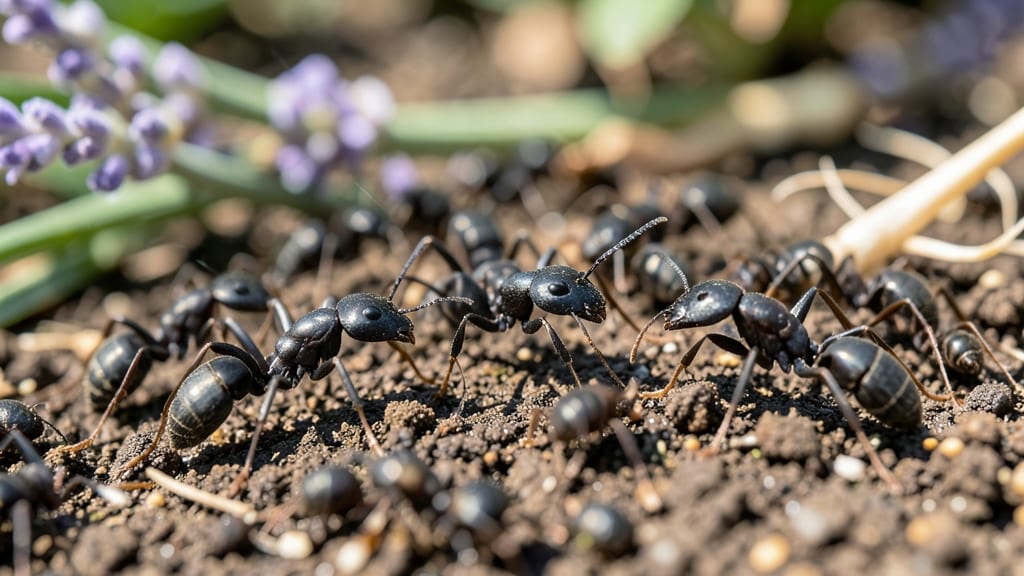
Ants are good for gardens because they aerate soil, break down organic matter, and naturally control pests like aphids by farming them for honeydew, while also dispersing seeds and promoting beneficial microbes in the ecosystem.
Ants act like tiny garden engineers, creating underground tunnels that improve soil drainage and root growth. Their tunneling also brings nutrients to the surface, making them natural composters. 🌱 What's even better is how they regulate pests—by tending to aphids (and other sap-suckers), they keep populations in check without chemicals.
Plus, their seed dispersal helps new plants establish, turning your garden into a thriving ecosystem.
That said, not all ants are created equal. Some species can become invasive, damaging plants or structures, while others are pure garden allies. The key is encouraging the right types—like leafcutter ants that recycle organic waste—while gently managing those that overstay their welcome.
💡 In This Article
- How Ants Aerate Soil and Boost Plant Growth
- Managing Ants in Your Garden: Pros, Cons, and Solutions
How ants aerate soil and boost plant growth
Ants create intricate underground tunnel systems that function like natural plows. A single colony can build up to 100 feet of tunnels per square yard, breaking up compacted soil and improving drainage by 20-30%.
These tunnels also increase oxygen flow to plant roots, which is especially beneficial for heavy clay soils where waterlogging often occurs. The physical disturbance from tunneling loosens the soil structure, making it easier for roots to penetrate deeper—similar to how gardeners use fork cultivation, but on a microscopic scale.
Their tunneling doesn't just improve aeration—it also acts as a nutrient delivery system. As ants move through the soil, they carry organic debris like fallen leaves and dead insects back to their nests, where it decomposes into nutrient-rich compost.
Some species, like the leafcutter ants, harvest fresh plant material to cultivate fungus gardens, which they then consume. This process recycles nutrients back into the soil at a rate 3-5 times faster than natural decomposition alone, effectively turning your garden into a self-fertilizing ecosystem.
Ants also play a crucial role in seed dispersal, particularly for plants that produce small, hard-coated seeds. When ants carry these seeds back to their nests, some get discarded or forgotten, sprouting in nutrient-rich soil.
Studies show that 20-40% of forest plants rely on ants for seed dispersal, including many native garden perennials. This natural propagation method helps maintain plant diversity and fills in gaps where direct sowing might fail.
One of the most fascinating aspects is their relationship with beneficial microbes. Ants cultivate symbiotic bacteria in their nests that break down complex organic compounds, making nutrients like nitrogen and phosphorus more accessible to plants.
For example, harvester ants in arid regions create "soil islands" around their mounds where moisture and nutrients concentrate, supporting plant growth in otherwise harsh conditions. This microbial partnership explains why ant mounds often become hotspots for lush vegetation.
However, not all ant species contribute equally. While most native ants enhance soil health, invasive species like the Argentine ant can disrupt ecosystems by outcompeting native species.
The key difference lies in their tunneling depth and diet—beneficial ants typically work 2-6 inches deep, while invasive species often stay near the surface, creating unstable soil structures. Understanding these distinctions helps gardeners make informed decisions about which ants to welcome.
To encourage beneficial ants, focus on creating habitats they'll find appealing: leave leaf litter in shaded areas, plant native ground covers, and avoid broad-spectrum pesticides that kill both pests and beneficial insects.
A well-balanced ant population can reduce your need for chemical fertilizers by up to 30%, while their pest control services often eliminate the need for insecticides entirely.