
Container Gardens
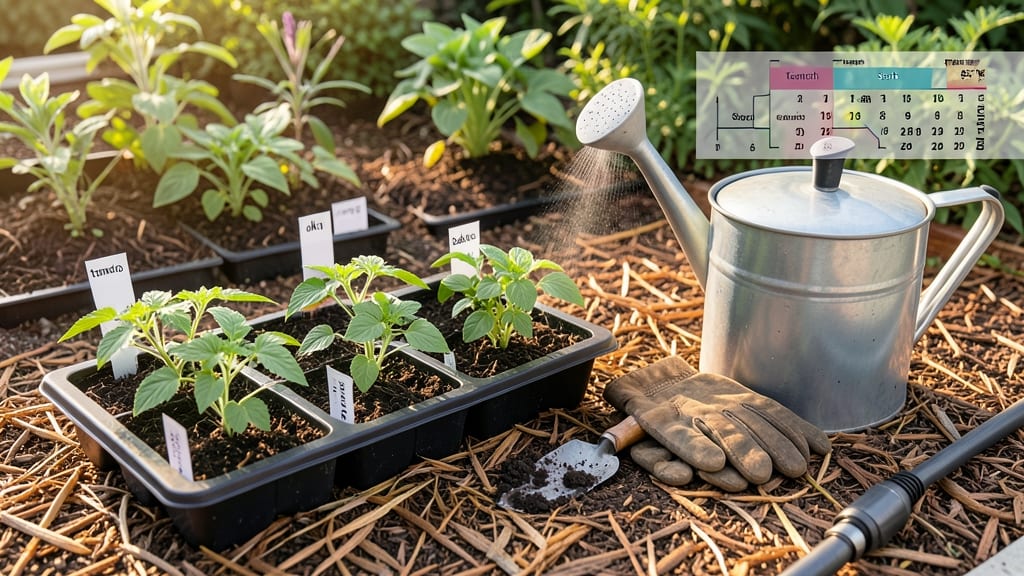
To plant gardens in Texas, timing depends on your region and crop type: cool-season vegetables like lettuce and spinach grow best in fall (September–November) and early spring (February–March), while warm-season crops such as tomatoes and peppers should be planted after the last frost (typically March–April). Central Texas usually sees its last frost between February 15 and March 15, with South Texas allowing some varieties to start as early as January.
Texas's diverse climate means your planting schedule should align with your specific area. The USDA hardiness zones across the state range from 7a in the Panhandle to 9b in the Rio Grande Valley, which directly impacts when you can safely plant.
For example, North Texas gardeners often wait until mid-March for warm-season crops, while South Texas gardeners can start tomatoes in February. Microclimates—like urban areas that trap heat—can also shift your planting window by a few weeks. 🌱
Beyond timing, soil temperature plays a crucial role. Most warm-season crops need soil to reach at least 60°F before planting, which typically happens in late March for Central Texas but can be as early as February in South Texas.
Cool-season crops, on the other hand, thrive when soil temps drop below 75°F, making fall the ideal time to plant greens and root vegetables. Always check local frost date averages and adjust for your specific microclimate to maximize success.
💡 In This Article
- Texas Planting Zones and Frost Dates by Region
- Best Crops for Texas Seasons and Their Ideal Planting Months
Texas planting zones and frost dates by region
Texas spans USDA hardiness zones 7a through 9b, creating dramatic differences in frost timing across the state. The Panhandle (zone 7a) can see frost as late as April 15, while the Rio Grande Valley (zone 9b) rarely experiences frost at all.
This means a tomato planted in February in South Texas might freeze in North Texas if moved just 300 miles north. The transition zone—Central Texas (zones 8a-8b)—is where most gardeners live, with last frost dates typically falling between February 15 and March 15. 🌡️
Frost dates aren't just about the calendar—they're influenced by elevation and geography. Hill Country regions (like Austin) often experience earlier frosts than coastal areas due to cooler nights, while urban heat islands (like Dallas) can delay frost by 7-10 days.
For precision, use the Texas A&M AgriLife Extension frost maps, which account for 30-year averages. These maps show that South Texas's last frost often occurs in January or never, while North Texas can see frost as late as April—critical knowledge for selecting heat-tolerant varieties.
Soil temperature matters just as much as air temperature. Warm-season crops like peppers and cucumbers need soil at 65-70°F to germinate, which typically happens 2-4 weeks after the last frost date. Cool-season crops (broccoli, carrots) thrive when soil temps drop below 75°F, making fall planting ideal.
A soil thermometer is your best tool—planting too early in cold soil can stunt growth or cause rot, while waiting too long may miss the optimal window.
Microclimates create exceptions even within small areas. A north-facing yard stays cooler than a south-facing one, potentially shifting planting by 1-2 weeks. Low-lying areas collect cold air, while slopes warm faster.
Urban areas with concrete and pavement can be 5-10°F warmer than rural fields, allowing earlier planting. Always observe your specific spot for 3-5 years to identify patterns—your microclimate may defy regional averages.
For container gardening, these rules still apply but with added flexibility. Pots warm up faster than soil, so you can plant warm-season crops 1-2 weeks earlier in containers. However, containers also dry out quicker—critical in Texas's 90°F+ summers.
Use self-watering pots and mulch to maintain moisture. In drought-prone areas, drip irrigation becomes essential to maintain consistent soil temps and prevent stress.
Advanced gardeners use frost cloth to extend seasons. A lightweight row cover can protect tender plants from 28°F frosts, allowing you to plant cool-season crops 2-3 weeks earlier in spring or 1-2 weeks later in fall.
This technique is especially valuable in transitional zones where frost dates vary wildly year to year. Pair it with black plastic mulch to warm soil 5-10°F faster in spring.
Remember: Texas's planting windows aren't just about frost—they're about heat tolerance too. Many vegetables (like okra and sweet potatoes) thrive in 90°F+ conditions that would scorch northern crops. The key is matching your crop's heat requirements to your region's summer patterns.
South Texas's long, hot summers suit crops like eggplant and peppers, while North Texas benefits from shorter-season varieties that mature before summer heat peaks. 🌿