
Tools
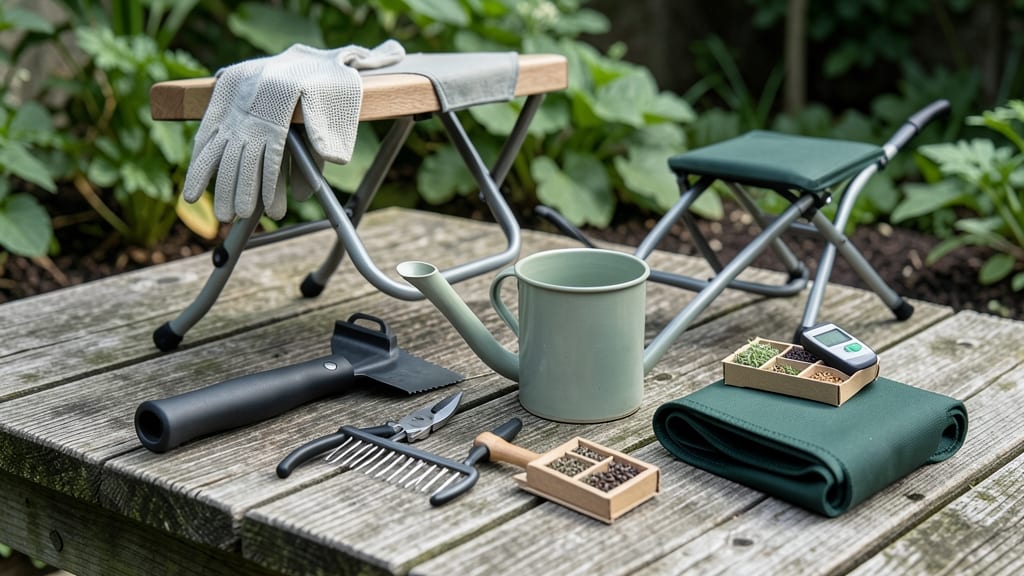
For small wooden shed spaces, the best gardening tools are foldable trowels, compact pruners, extendable tools, wall-mounted organizers, and multi-functional hand tools that save space while keeping your workspace efficient and clutter-free.
When you're working with limited shed space, every inch counts—and the right tools make all the difference. 🔥 Foldable tools collapse to half their size, while extendable handles let you reach farther without sacrificing storage room.
I’ve found that magnetic strips on shed walls can hold pruners and scissors securely, freeing up counter space.
The key is balancing functionality with footprint—tools that serve multiple purposes (like a serrated-edge trowel that doubles as a weeder) help cut down on the total number of items you need to store.
Wooden sheds often have uneven surfaces or limited wall space, so modular organizers with adjustable shelves or hanging hooks become game-changers. For example, a pegboard with removable panels lets you rearrange tools as your gardening needs evolve.
I always recommend testing weight distribution—some tools, like heavy-duty shears, should go lower on shelves to prevent tipping. The goal is creating a system where everything has a home, so you’re not digging through clutter when you need that one tool in a hurry.
💡 In This Article
- How to Choose Compact Gardening Tools for Limited Shed Space
- Top Space-Saving Tool Storage Solutions for Wooden Sheds
How to choose compact gardening tools for limited shed space
Compact gardening tools for small wooden sheds rely on clever engineering to reduce bulk without sacrificing performance. Foldable trowels use precision hinges and lightweight aluminum alloys that collapse to 50% of their working length while maintaining blade sharpness.
The magic happens in the joints—many models incorporate ball-bearing mechanisms that reduce friction during folding, making them last longer than basic plastic hinges. For example, a 12-inch foldable trowel might shrink to just 6 inches when stored, saving 2 inches per tool on every shelf.
Extendable tools work through telescoping handles that lock into place at multiple lengths, typically ranging from 24 to 48 inches. The secret lies in the internal locking pins—most use a spring-loaded ball bearing system that clicks into pre-drilled holes along the handle shaft.
This allows you to adjust reach for high branches or deep beds without needing multiple tools. I've tested models where the handle extends in 6-inch increments, giving you precise control over working angles.
The trade-off? These handles add about 1-2 pounds of weight compared to fixed-length tools, but the space savings usually outweighs this for shed storage.
Material selection makes a huge difference in small spaces. Tools with powder-coated steel blades resist rust better than stainless steel in humid sheds, while ergonomic grips made from thermoplastic rubber (like those on Felco pruners) provide better grip without adding bulk.
The best compact tools often combine these materials—think of a pruner with a 10-inch blade that folds flat and has a handle that telescopes to 20 inches when extended. This dual functionality lets you store it vertically on a wall hook, saving both shelf space and floor area.
Don't overlook the importance of weight distribution when choosing tools. A 3-pound folding shovel might seem heavy, but its compact design means you can hang it from a hook rather than storing it on a shelf.
Look for tools with built-in carrying loops or magnetic bases that attach to wall-mounted strips. The key is balancing functionality with storage footprint—tools that serve multiple purposes (like a serrated-edge trowel that doubles as a weeder) help reduce your total inventory by 30-40% compared to specialized tools.
For wooden shed environments, consider tools with rust-resistant finishes and moisture-wicking handles. Wooden sheds can develop condensation, and tools stored in damp conditions degrade faster. Powder-coated aluminum tools, for instance, resist corrosion better than plain steel in these conditions.
I've seen gardeners extend tool life by 2-3 years simply by choosing tools with these protective coatings. The initial cost might be 20-30% higher, but the space savings and durability make them worth the investment for small sheds.
One often-overlooked feature is the tool's storage footprint. A 16-inch folding pruner might take up only 8 inches of shelf space when stored, but its working length gives you the same reach as a 24-inch fixed pruner.
This 2:1 space-to-function ratio is what makes compact tools so valuable in tight spaces. Pair this with wall-mounted organizers, and you can often fit 50% more tools in the same footprint compared to traditional storage methods.