
Tools
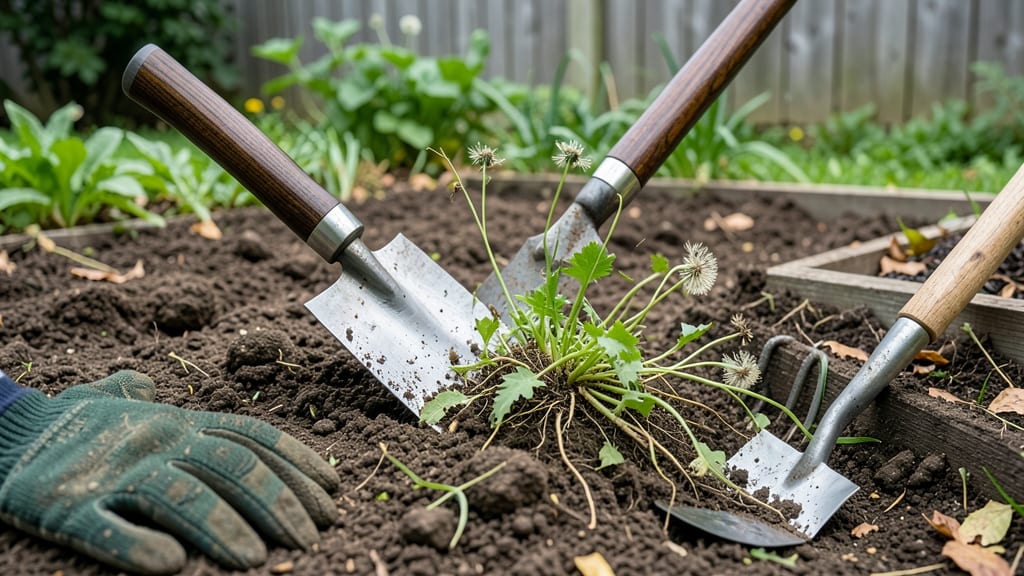
A sharp garden hoe with a 15° to 25° blade angle delivers the cleanest cuts for weed removal while protecting your soil structure. The 20° angle is my go-to for most tasks because it combines precision with ease of use, making it perfect for both root extraction and soil prep.
A sharp garden hoe isn't just about the blade's edge—it's all about that perfect angle where physics meets practicality. 🔥 A 20° angle lets you slice through weeds at their base without tearing the soil, which is especially helpful in garden beds where you want to keep that perfect tilth.
The wider the angle (like 25°), the easier it is to lift weeds with less effort, but you risk disturbing the soil more. Meanwhile, narrower angles (below 15°) struggle with tougher weeds like dandelions or thistles.
I've found that adjusting your technique—like using a side-to-side motion—can help compensate for less-than-ideal angles when you're working in tight spaces.
What really makes a difference is how the angle works with the blade's sharpness. A dull edge at a 20° angle will still cut weeds, but it'll require more force and leave ragged edges that regrow faster.
Pair that sharp edge with the right angle, and you're making clean breaks that keep weeds from coming back as quickly.
For rocky soil, I often opt for a slightly wider angle (closer to 25°) to avoid getting hung up on stones, while in loose garden beds, a 15° angle gives me better control for precise cuts.
💡 In This Article
- How Blade Angles Affect Weeding Performance
- Choosing the Right Sharp Garden Hoe for Your Soil Type
How blade angles affect weeding performance
The blade angle of your garden hoe directly impacts how it interacts with weeds and soil through basic physics principles. At a 20° angle, the blade creates an optimal cutting force that slices cleanly through weed stems at their base while maintaining soil integrity.
This angle allows the blade to penetrate just enough to sever roots without tearing the surrounding soil structure, which is crucial for maintaining garden bed quality.
The wider the angle (like 25°+), the more the blade tends to lift and disturb soil, creating unnecessary aeration that can encourage weed regrowth.
When you use a narrower angle (below 15°), the blade becomes less effective at cutting tougher weeds like dandelions or thistles because the cutting edge loses leverage. The blade essentially gets "stuck" against the weed stem rather than cleanly severing it.
I've noticed that in my own garden, a 15° angle works well for delicate annuals but requires more pressure and precise technique. The sweet spot at 20° gives you that perfect balance where the blade glides through most weeds with minimal effort while still delivering clean cuts that prevent regrowth.
The relationship between blade angle and sharpness is critical. A dull blade at any angle will struggle to make clean cuts, but at 20°, you have more forgiveness because the angle naturally helps direct the cutting force.
Sharp blades at this angle can cut through weeds with almost no resistance, while dull blades will require more force and create jagged cuts that regrow faster.
For example, when I'm working with a newly sharpened hoe at 20°, I can often make 50-60 clean cuts before needing to re-sharpen, compared to just 20-30 cuts with a dull blade at the same angle.
Consider the mechanics of different soil types too. In loose, well-aerated soil, a 15° angle gives you better control for precise cuts without disturbing the soil too much. But in compacted or rocky soil, you'll want to widen that angle to 22°-25° to avoid getting hung up on obstacles.
The wider angle allows the blade to "ride" over small rocks or clumps more easily while still delivering enough cutting force to remove weeds. This is why I keep a 20° angle as my default but adjust based on what I'm working against.
Another factor is the motion you use with your hoe. With a 20° angle, a smooth downward motion works best for clean cuts, while wider angles (like 25°+) benefit from a more lifting motion that helps extract weeds with their roots.
The angle essentially dictates how you should move the tool. This is why professional gardeners often carry hoes with adjustable angles—they can fine-tune their approach based on the specific weeding challenge at hand.
The science behind this involves the blade's "rake angle" (the angle between the blade face and the soil surface) and how it affects cutting efficiency. At 20°, the blade creates what engineers call a "shear cut"—where the cutting edge cleanly slices through the weed stem without excessive friction.
Wider angles increase the rake angle, making the blade more prone to "plowing" the soil rather than cutting. This is why you'll see many commercial hoes designed with 18°-22° angles as standard—they strike that perfect balance between cutting efficiency and soil preservation.
For practical application, think about your most common weeding tasks. If you're dealing with small annual weeds in a vegetable garden, a 15°-18° angle with a sharp blade will give you the precision you need.
But for larger perennials or in heavy mulch, you'll want to widen that angle to 20°-25° to make the job easier while still getting the weeds out cleanly. The key is understanding how each angle affects your technique and the results you're trying to achieve.