
Advice
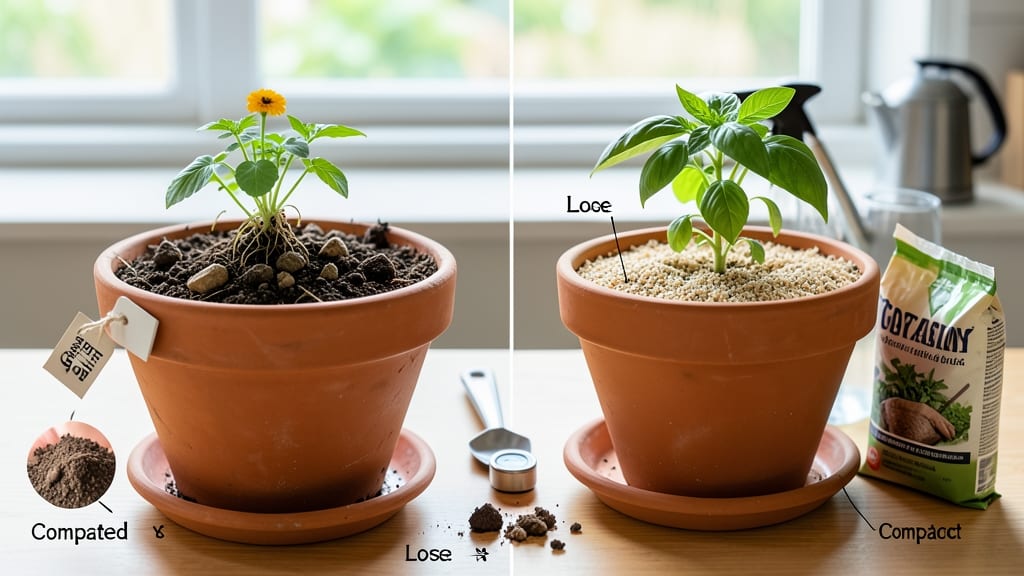
You shouldn't use garden soil as potting soil because it compacts easily, drains poorly, and may harbor pests or diseases. Instead, opt for lightweight, sterile potting mixes designed for airflow and moisture control to prevent root rot and stunted growth.
Garden soil is heavy and dense, packed with clay and organic matter that suffocates roots by limiting oxygen flow. 🌱 This creates a breeding ground for fungal issues and slows water drainage, leaving plants vulnerable to overwatering.
For containers, you need a blend that stays loose and breathable—think of it like giving your plants a fluffy, well-ventilated home instead of a compacted, waterlogged trench.
Commercial potting mixes solve these problems by incorporating perlite, vermiculite, or coconut coir to improve aeration and drainage. Even if you're tempted to use garden soil, mixing in 30% perlite or sand can help, but it’s still not ideal for delicate plants like ferns or orchids.
Always check the label for mixes labeled "for containers" or specific plant types—your plants will thank you with stronger, healthier growth.
💡 In This Article
- Why Garden Soil Fails as Potting Mix
- Best Potting Soil Alternatives for Healthy Container Plants
Why garden soil fails as potting mix
Garden soil is designed for in-ground planting where roots can spread freely and natural compaction occurs over time. However, in containers, this same soil becomes a suffocating environment.
The clay particles in garden soil pack tightly when watered, reducing pore space by up to 50%—this is why your potted plants often feel waterlogged even when you think you're watering appropriately.
The lack of airflow forces roots to struggle for oxygen, leading to a condition called anaerobic stress, which weakens plants and makes them more susceptible to root rot.
The organic matter in garden soil also breaks down unevenly, creating nutrient spikes that can burn tender roots. Unlike controlled potting mixes, garden soil lacks the balanced microbial activity needed for consistent nutrient release.
For example, a 1-gallon container filled with garden soil may deliver too much nitrogen in one burst, followed by a nutrient drought as microbes deplete available sources. This rollercoaster affects plant growth patterns, often resulting in stunted stems or yellowing leaves despite regular watering. 🌱
Another critical issue is pathogen buildup. Garden soil often contains weed seeds, fungal spores, and harmful bacteria that thrive in the dense, moist conditions of pots.
Unlike outdoor beds where these pathogens get diluted in a larger soil volume, container plants have no escape—exposure to just 0.1% infected soil can trigger widespread disease in a small pot. This is why professional growers sterilize potting mixes with heat or pasteurization to eliminate these risks entirely.
Consider the texture difference: garden soil feels gritty and dense when moist, while ideal potting mix crumbles easily between your fingers. This crumbly quality comes from added amendments like perlite or coconut coir, which create air pockets that mimic natural forest floor conditions where container plants often thrive.
Without these amendments, your plants are essentially trapped in a waterlogged, nutrient-chaotic environment that mimics swamp conditions rather than optimal growing mediums.
The drainage issue alone makes garden soil problematic. A standard potting mix drains 3-5 times faster than garden soil due to its porous structure. This means water escapes through drainage holes instead of pooling at root level, preventing the soggy conditions that lead to fungal infections like Phytophthora.
Even if you add sand to improve drainage, it won't address the compaction problem—sand particles actually create their own drainage channels, bypassing the root zone entirely and leaving plants thirsty between waterings. 💧