
Trees
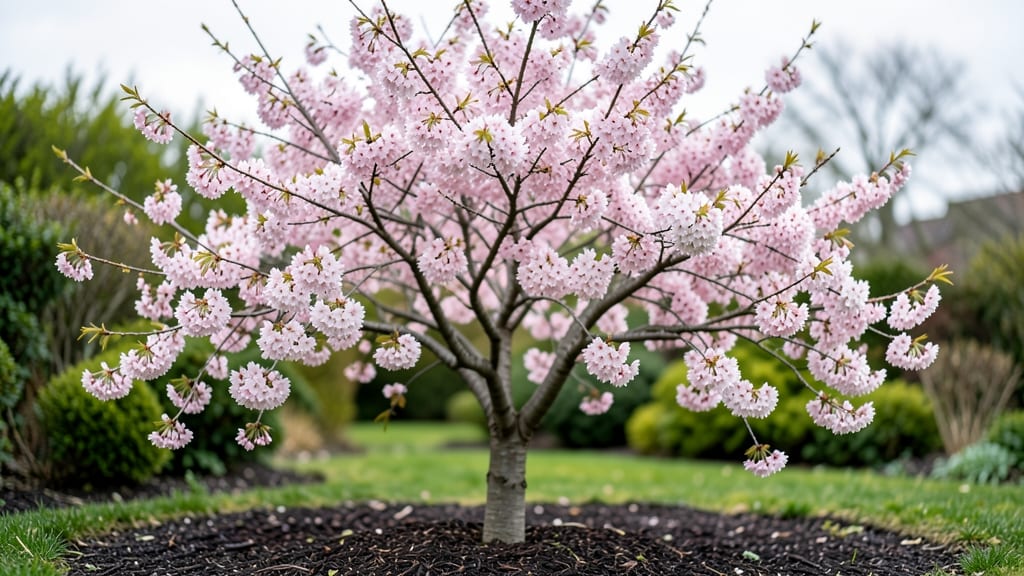
A cherry blossom tree for garden transforms your outdoor space with breathtaking spring blooms in soft pink or pristine white, flourishing in USDA zones 5 through 8. Opt for compact 'Royal Ann' varieties to fit tight spaces or dramatic 'Kwanzan' for expansive landscapes, while ensuring they receive full sunlight and well-draining soil for optimal growth.
These trees aren't just about beauty—they create a focal point that elevates any garden's ambiance. 🌸 The right variety can even extend your blooming season, with some like 'Autumnalis' offering flowers from late winter through spring.
I always recommend testing your soil's drainage first, as soggy roots lead to root rot. For container gardening, 'Stella Pink' thrives in pots, making it perfect for patios or small balconies where space is limited.
What many gardeners overlook is the tree's cultural significance—cherry blossoms symbolize renewal and hope in many traditions. Their delicate petals also attract pollinators early in the season, supporting your garden's ecosystem. Just remember: these trees need consistent moisture during their first two years to establish strong root systems.
💡 In This Article
- Best Cherry Blossom Tree Varieties for Different Garden Sizes
- Planting and Care Tips for Healthy Cherry Blossom Trees
Best cherry blossom tree varieties for different garden sizes
The right cherry blossom variety transforms your garden's scale and aesthetic. Dwarf types like 'Royal Ann' reach only 15-20 feet tall with a 10-15 foot spread, making them perfect for small urban yards or foundation plantings.
Their compact size also means they develop faster—expect 3-5 years to reach full bloom compared to 7-10 years for standard varieties. The 'Stella Pink' cultivar stands out with its 20-foot height and 15-foot spread, but its container-friendly nature lets you grow it in 20-gallon pots on patios.
For larger landscapes, 'Kwanzan' creates dramatic visual impact with its 25-30 foot height and 20-25 foot spread, producing 2-3 inches wide double blooms in vibrant pink. What sets it apart is its prolonged bloom time—up to 2 weeks longer than single-flowered varieties.
The 'Autumnalis' variety offers a unique advantage: it blooms from late winter through spring, giving you 4-6 weeks of continuous color when planted in milder microclimates within USDA zone 6.
When choosing, consider your garden's vertical space too. Standard varieties like 'Amanogawa' grow 30-40 feet tall with a 25-35 foot spread, requiring 40-50 feet of clearance—ideal for large estates but impractical for suburban lots.
The key is matching the tree's mature dimensions to your space: a 'Royal Ann' needs 10 feet of clearance, while a 'Kwanzan' requires 20 feet. Planting too close leads to overcrowding and reduced air circulation, which increases disease risk.
Color preferences also influence variety selection. 'Shirotae' offers pristine white blooms that contrast beautifully with dark foliage, while 'Fugenzo' produces double pink flowers that resemble peonies. The 'Okame' variety stands out with its dark pink buds that open to white flowers, creating a stunning two-tone effect.
For fragrance lovers, 'Yoshino' produces highly fragrant blooms—though its 30-foot height makes it better suited for large properties.
Don't overlook the root system when selecting varieties. Dwarf types develop shallow but wide-spreading roots, while standard varieties grow deep taproots that require 3-4 feet of soil depth.
This affects both planting depth and watering needs—shallow-rooted varieties need 1-2 inches of water weekly, while deep-rooted ones require 2-3 inches. The 'Autumnalis' variety's extended blooming period comes with a tradeoff: it demands consistent moisture throughout the season to maintain flower production.
For container gardening, prioritize varieties with compact growth habits and smaller leaves that reduce water requirements. 'Stella Pink' thrives in 20-gallon containers with well-draining potting mix, while 'Royal Ann' can handle 15-gallon pots.
Remember that container-grown trees need annual repotting to accommodate root growth—typically 1-2 pot sizes every 2-3 years. The tradeoff is worth it for urban gardeners: container planting gives you mobility to move the tree to optimal sun exposure.