
Vegetables
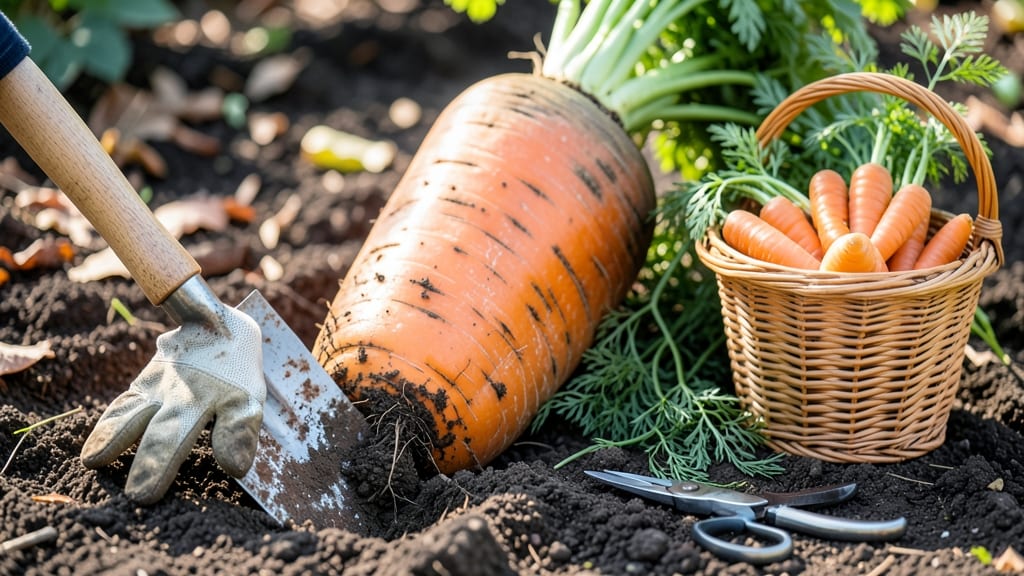
To grow the biggest carrots in your garden, focus on deep, loose soil (at least 12 inches), rich compost, and proper spacing (3-4 inches apart in 18-inch rows). Varieties like 'Mammoth' or 'Autumn King' combined with full sun exposure and consistent moisture deliver maximum yields.
Growing giant carrots isn't just about luck—it's about creating the perfect growing conditions. The key lies in soil depth and texture: carrots need 12+ inches of loose, stone-free soil to develop long, straight roots.
I've found that amending clay-heavy soil with compost or sand breaks up compaction, while maintaining a pH between 6.0 and 6.8 ensures optimal nutrient uptake. 🌱 What's interesting is how even slight soil variations can make the difference between dinner-table carrots and prize-winners—proper prep is everything.
Another game-changer is spacing. While seeds might start close, they need room to grow. Planting 3-4 inches apart in wide rows prevents competition for nutrients and sunlight.
I recommend thinning seedlings to this spacing once they're 2-3 inches tall, which gives each plant enough elbow room to develop those massive roots. The right spacing isn't just about size—it's about preventing disease from overcrowding too.
💡 In This Article
- Soil Science for Giant Carrot Growth
- Proven Spacing and Thinning Techniques
Soil science for giant carrot growth
The secret to growing massive carrots lies in your soil's hidden architecture. Carrots are root vegetables that develop downward, so their growth is directly limited by how deep and loose your soil is.
The ideal soil composition for giant varieties is a 60% sand, 30% silt, 10% clay ratio—this creates just the right balance of drainage and moisture retention.
Too much clay (common in many gardens) creates a dense barrier that stunts root growth, while pure sandy soil drains too quickly, preventing proper nutrient absorption. Think of it like building a skyscraper foundation: you need both stability and space for expansion.
Organic matter plays an equally critical role. Compost or well-rotted manure adds essential nutrients while improving soil structure. Aim for 5-10% organic content in your planting area—this creates microscopic air pockets that allow roots to penetrate easily.
The pH level matters too: carrots thrive in slightly acidic soil between 6.0-6.8. You can test your soil with a simple home kit or send a sample to your local extension office.
What's fascinating is how even a 0.5 pH point difference can affect nutrient availability, directly impacting carrot size and sweetness.
Compaction is the silent growth killer most gardeners overlook. Walking on garden beds or using heavy equipment compresses soil particles, creating invisible barriers that force roots to grow sideways. To test your soil's readiness, simply press your thumb into moist soil—if it springs back slowly, it's too compact.
For giant carrots, you'll need to loosen the top 12-18 inches using a broadfork or by mixing in 3-4 inches of compost before planting. This creates the perfect growing environment where roots can develop their full potential.
One surprising factor is how soil temperature affects early growth. Carrot seeds germinate best when soil reaches 60-70°F—below this, growth slows dramatically. I've found that using black plastic mulch in early spring can raise soil temperatures by 5-10°F, giving seeds the boost they need.
The warmer soil also encourages faster microbial activity, breaking down organic matter into nutrients carrots can absorb immediately. This is why spring-planted carrots often outperform fall plantings in many climates.
For the ultimate giant carrot soil mix, combine:
- 60% topsoil: Provides essential minerals
- 30% compost: Adds organic matter and nutrients
- 10% coarse sand: Improves drainage and aeration