
Watering
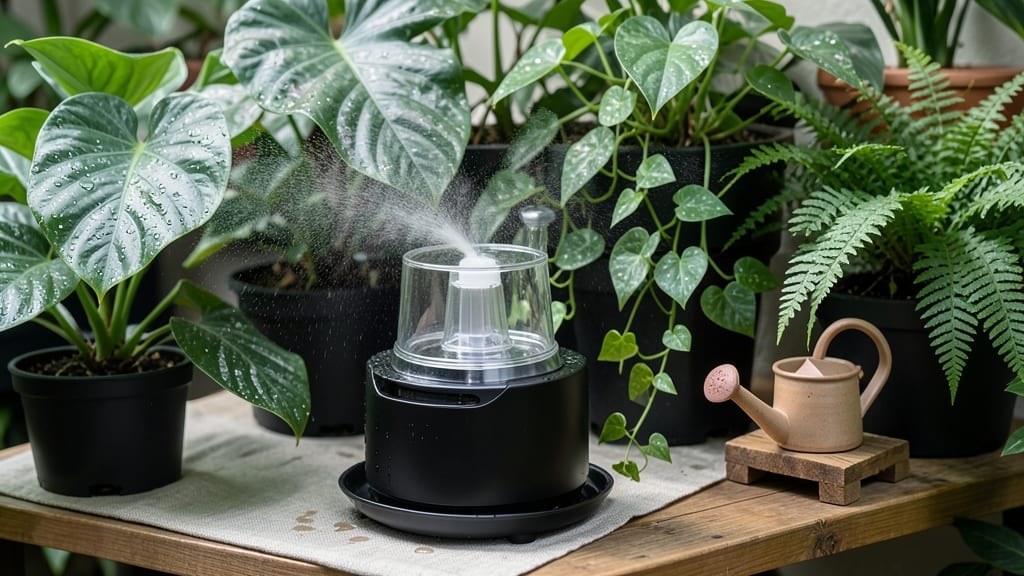
A cool mist garden maintains ideal humidity for tropical plants by using fine sprayers to create a 60-80% humidity environment, perfect for ferns, orchids, and calatheas that need moisture without waterlogging.
A cool mist garden works like a controlled rainforest—tiny water droplets evaporate slowly, raising humidity without drowning roots. 🌿 The key is consistent misting (every 10-30 minutes, depending on climate) to mimic tropical conditions without overwatering.
I've seen ferns and philodendrons thrive in these setups because the fine mist mimics natural dew cycles, while orchids benefit from the high humidity without the risk of fungal issues that come with overhead watering.
These systems are especially valuable in dry climates or during winter when indoor air gets parched. The automated timers let you customize cycles—short bursts for delicate bromeliads or longer intervals for hardier calatheas.
Just avoid placing the garden in direct sunlight, as heat accelerates evaporation and can leave plants thirsty between mistings.
💡 In This Article
- How Cool Mist Systems Maintain Optimal Plant Humidity
- Top 10 Humidity-Loving Plants for Cool Mist Gardens
How cool mist systems maintain optimal plant humidity
The magic of a cool mist garden lies in its ability to replicate tropical humidity through controlled evaporation. When fine water droplets (typically 20-50 microns in diameter) are released into the air, they create a suspended mist that slowly evaporates, releasing moisture into the atmosphere.
This process maintains humidity levels between 60-80%, which is ideal for plants that originate from rainforest environments where air moisture is consistently high.
The science behind this involves evaporative cooling—as water changes from liquid to vapor, it absorbs heat from the surrounding air, creating a cooler microclimate that mimics the shaded conditions of a jungle understory.
Most systems use ultrasonic or pressure nozzles that produce droplets small enough to remain airborne for several seconds, maximizing surface area for evaporation.
For example, a 10-minute misting cycle in a 30-gallon setup can raise humidity by 15-20 percentage points in dry conditions, while the same cycle in a humid environment might only add 5-10%.
Airflow dynamics play a crucial role in how effectively the mist distributes. Many systems incorporate gentle fans or strategically placed vents to prevent water from pooling on leaves, which could lead to fungal issues.
The ideal setup maintains a light breeze (1-3 mph) to carry the mist evenly throughout the garden while allowing excess moisture to escape. This circulation also prevents stagnant air, which can create conditions for harmful pathogens.
Automated timers further refine this process by adjusting misting frequency based on environmental sensors that monitor humidity and temperature.
Different plant types require nuanced misting approaches. Delicate orchids, for instance, thrive with 10-15 minute misting cycles every 2-3 hours, while hardier ferns can handle 20-30 minute cycles every 4-6 hours.
The key is balancing moisture with airflow—too much mist without proper circulation can lead to waterlogged soil or mildew, while insufficient misting leaves plants parched.
I've found that programmable controllers with built-in hygrometers (humidity sensors) are game-changers, as they automatically adjust cycles based on real-time conditions rather than relying on fixed schedules.
One often-overlooked factor is the water quality used in misting systems. Hard water with high mineral content can leave white residue on leaves, clogging nozzles and reducing evaporation efficiency. Using filtered or distilled water ensures clean misting and prevents mineral buildup in the system.
The temperature of the water also matters—cool water (60-65°F) evaporates more slowly, providing longer-lasting humidity, while warmer water (70°F+) evaporates quickly but may not sustain moisture levels as effectively in dry climates.
For those setting up a cool mist garden, consider starting with a pre-assembled kit that includes a reservoir, pump, and misting nozzles. These typically cost $50-$150 and can be scaled up by adding more nozzles or larger reservoirs.
The most effective systems combine misting with under-bench watering to keep roots hydrated without oversaturating the air, creating a balanced ecosystem that mimics nature's perfect humidity regulation. 🌿