
Container Gardens
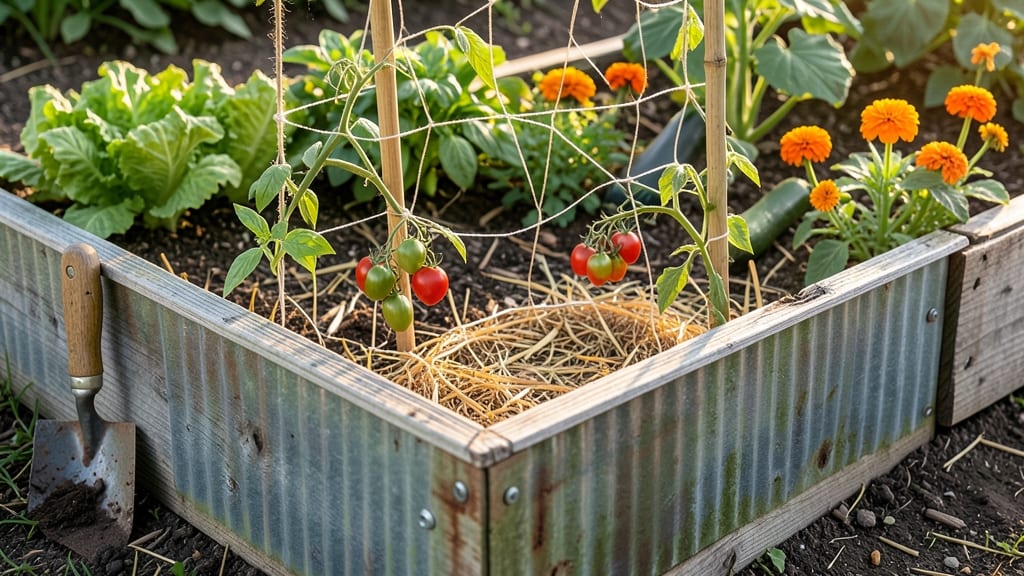
Corrugated metal and wood raised garden beds offer a perfect balance of strength and visual appeal, but each material handles moisture differently. Metal beds resist rust and rot completely, while untreated wood will decay over time without proper sealing. For wood, cedar and redwood are the top choices for lasting performance, while galvanized steel provides modular versatility and weatherproofing.
Choosing between corrugated metal and wood raised garden beds comes down to your priorities—whether you value long-term durability or natural aesthetics.
Metal beds, especially galvanized steel, won't rot or warp, making them ideal for wet climates or heavy use. 🌱 Wood, on the other hand, offers better insulation for plant roots and a classic look, but requires regular sealing to prevent moisture damage.
Cedar and redwood naturally resist decay longer than pine, while pressure-treated wood adds chemical protection at a lower cost. The trade-off? Metal beds often cost more upfront but last decades with minimal maintenance, while wood beds may need replacement every 5-10 years depending on treatment.
For gardeners in humid regions, galvanized steel is the clear winner—it won't rust or corrode, and its corrugated design improves drainage. Wood beds shine in drier climates where they can be sealed annually, but even then, they'll eventually need replacement.
If you're torn between the two, consider hybrid designs that combine metal frames with wood panels for the best of both worlds.
💡 In This Article
- Metal vs Wood Raised Garden Beds: Durability Factors Compared
- Selecting Wood Types for Long-Lasting Raised Garden Beds
Metal vs wood raised garden beds: durability factors compared
The key difference between corrugated metal and wood raised garden beds lies in their molecular reactions to moisture. Galvanized steel beds feature a zinc coating that creates a protective barrier against oxidation, while wood absorbs water like a sponge—expanding when wet and contracting when dry.
This constant swelling and shrinking weakens wood fibers over time, especially in cedar or redwood, which naturally resist decay but still require sealing every 2-3 years for optimal protection. 🌧️
Climate plays a massive role in material performance. In humid regions with 60-80% average humidity, galvanized steel maintains its structural integrity indefinitely, while wood beds may develop mold within 1-2 years without proper treatment.
The corrugated design of metal beds also improves drainage, preventing water pooling that accelerates wood rot. For reference, a 4'x8' galvanized steel bed weighs about 150-200 lbs—heavier than wood but more stable in windy conditions.
Environmental impact differs significantly too. Metal beds are fully recyclable at end-of-life, while wood beds contribute to landfill waste unless composted (which requires untreated, chemical-free wood). The manufacturing process for galvanized steel produces more carbon emissions, but its 50+ year lifespan offsets this over time.
Wood beds, especially cedar, release fewer volatile organic compounds (VOCs) during construction, making them preferable for organic gardeners.
Consider these practical scenarios: A metal bed in a coastal area with salt spray will last decades with zero maintenance, while a cedar wood bed in the same location may need replacement within 7-10 years despite regular sealing.
The trade-off? Metal beds cost $500-$1,500 for a standard size, while cedar beds run $300-$800 but require ongoing upkeep costs.
For gardeners prioritizing root temperature control, wood wins—its natural insulation keeps soil 5-10°F warmer in spring and cooler in summer compared to metal. This makes wood ideal for heat-sensitive crops like lettuce or strawberries. Metal beds, however, heat up rapidly in sunlight, which can stress shallow-rooted plants unless shaded.
Hybrid designs combining metal frames with wood panels offer a middle ground—inheriting metal's structural strength while allowing wood's aesthetic and insulation benefits. These systems typically cost 20-30% more than all-wood beds but extend wood lifespan by 30-50% through improved drainage and reduced ground contact.