
Companion Plants
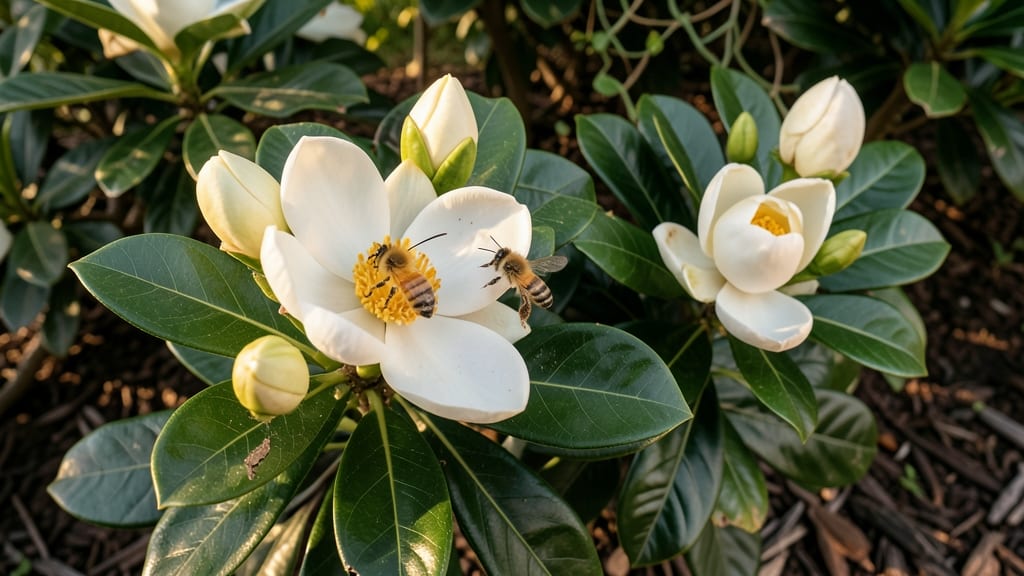
Gardenias rarely attract bees because their heavy, sweet fragrance and tubular flowers are better suited for moths and butterflies, which pollinate at night or dawn. Their nectar is often inaccessible to bees, and their scent lacks the volatile compounds that typically draw them.
Gardenias evolved to charm nighttime pollinators like moths and butterflies, whose senses are drawn to their rich, heavy scent. 🌙 The tubular shape of gardenia blooms makes it difficult for bees to access the nectar, which is usually hidden deep inside.
Unlike open-faced flowers that bees love, gardenias prioritize visual and olfactory cues that work best under moonlight. This adaptation explains why you'll rarely see bees buzzing around them during the day.
If you're looking to support local bee populations while keeping your garden fragrant, consider planting bee-friendly alternatives like lavender, sunflowers, or bee balm. These flowers not only attract bees but also provide essential pollen and nectar, helping to sustain your garden's ecosystem.
The key is choosing plants that bloom at different times to ensure a steady food source for these vital pollinators throughout the growing season.
💡 In This Article
- Why Gardenias Aren’t Bee-Friendly Flowers
- Best Bee-Attracting Alternatives to Gardenias
Why gardenias aren’t bee-friendly flowers
Gardenias have evolved to attract moths and butterflies, not bees, thanks to their unique botanical features.
Their tubular flowers, often 1-2 inches deep, force pollinators to insert their proboscises deep inside to reach nectar—a task that's nearly impossible for bees with their shorter tongues (0.2-0.4 inches). 🌸 Unlike open-faced flowers like lavender, gardenias funnel their nectar into these deep tubes, making it inaccessible to most daytime pollinators.
The scent chemistry plays a critical role too. Gardenias release benzyl acetate and other heavy, sweet-smelling compounds that are more appealing to moths, which have highly sensitive olfactory systems. These compounds are less volatile than the lighter, more aromatic molecules (like linalool) that typically attract bees.
Additionally, gardenias often bloom in the evening or at night when bees are less active, further reducing their appeal.
Bees prefer flowers with open, flat surfaces that expose pollen and nectar easily. Gardenias, with their waxy, crepe-paper-like petals and hidden nectar, simply don't fit this profile. The 1-2 millimeter gaps between petals also make it difficult for bees to land and forage efficiently.
This mismatch in flower structure and pollinator timing explains why you'll rarely see bees visiting gardenias during daylight hours.
Another key factor is the sugar concentration of gardenia nectar. While bees do visit flowers with high sugar content, gardenias produce nectar that's often less than 10% sucrose—too dilute for bees to gather efficiently.
Moths, on the other hand, can extract energy from even lower concentrations, making gardenias the perfect nighttime snack for them. 🌙
For gardeners looking to support bees, understanding these botanical quirks helps explain why gardenias aren't ideal pollinator plants.
The lesson here is that not all fragrant flowers are created equal when it comes to attracting bees—structure, timing, and chemistry all play crucial roles in determining which pollinators a flower will appeal to.