
Tools
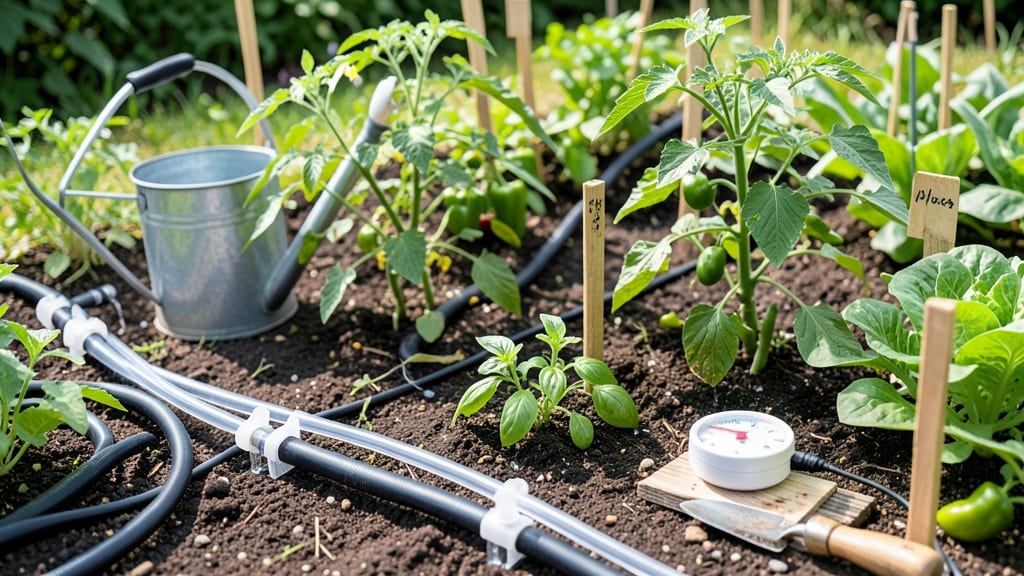
A DIY garden watering system transforms basic materials like PVC pipes and soaker hoses into an efficient irrigation network that delivers water directly to plant roots. These customizable setups eliminate wasted water while adapting to any garden size or plant type.
A DIY garden watering system works by creating a closed loop where water moves either by gravity or through low-pressure pumps. 💧 The key advantage is precise moisture control—you can adjust flow rates to match drought-tolerant succulents or thirsty vegetables.
For example, a simple drip system using repurposed plastic bottles can deliver just 0.5 gallons per hour to each plant, while larger PVC pipe networks handle 2-5 gallons per hour across entire beds.
The beauty of these systems is their adaptability: you can start with a $20 setup using recycled materials and expand as your garden grows.
Most beginner-friendly designs rely on two core principles: water pressure regulation and even distribution. A basic bottle drip system uses gravity to slowly release water through punctured caps, while PVC pipe setups often incorporate valves to control flow. 🌱 The best part?
You don't need plumbing skills—just basic tools like a drill, connectors, and a timer to automate watering cycles. Many gardeners begin with a single zone (like their herb garden) before expanding to full beds, making it a perfect project for gradual improvement.
💡 In This Article
- How DIY Garden Watering Systems Work
- 5 Budget-Friendly DIY Watering System Designs
How DIY garden watering systems work
DIY garden watering systems operate through three fundamental mechanisms: gravity, pressure regulation, and controlled distribution. Gravity-fed systems rely on elevated water sources (like rain barrels or elevated containers) to create a slow, steady drip through punctured containers or porous materials.
The flow rate averages 0.25-1 gallon per hour per emitter, making it perfect for delicate plants like lettuce or herbs.
Pressure-based systems use low-voltage pumps (typically 12V) to push water through PVC pipes or soaker hoses at 1-3 gallons per hour, ideal for larger garden beds where even coverage is critical.
The magic happens in how these systems regulate water delivery. For gravity systems, the height difference between water source and plants determines pressure—raising a container 3 feet higher increases flow by about 15%.
Pressure regulators in pump systems maintain consistent flow despite varying water demands, preventing overwatering or dry spots. Materials like soaker hoses (with 0.005-inch pores) release water evenly along their length, while PVC pipes with drilled holes create targeted delivery points.
The key is matching the emitter type to plant needs: fine holes for seedlings vs. wider gaps for mature shrubs.
What sets DIY systems apart is their ability to minimize waste through precise control. Traditional hose-end sprinklers lose 30-50% of water to evaporation or runoff, while well-designed drip systems achieve 90% efficiency by delivering moisture directly to soil.
The closed-loop design prevents algae growth (common in stagnant water) and reduces weed competition by keeping foliage dry.
For example, a 50-foot PVC pipe network with 10 emitters can water an entire vegetable garden in 30 minutes while using only 5 gallons of water—about half what a sprinkler would consume for the same area.
Timer controls add another layer of sophistication without complexity. Mechanical timers (like the Orbit 62000) cost under $30 and can be programmed for 2-4 watering cycles per day, adapting to seasonal needs.
Smart timers with soil moisture sensors take it further by adjusting cycles based on real-time conditions, though they run $100+. The beauty is that even basic systems can be upgraded later—start with a manual valve, then add a timer when you're ready to automate.
Material choice affects both performance and cost. PVC pipes ($1-$3 per foot) offer durability and customization, while repurposed plastic bottles ($0.10 each) work for small-scale drip systems. Soaker hoses ($0.50-$2 per foot) provide flexibility for curved garden beds.
The secret to longevity lies in proper sealing: use Teflon tape on pipe threads and waterproof connectors for outdoor setups. Even a simple system can last 5-10 years with basic maintenance like annual hose checks and winterizing in freeze-prone climates.
Here's what most gardeners don't realize about flow dynamics: the first 5 minutes of watering delivers 60% of the total moisture to the top inch of soil. For deep-rooted plants, this means longer cycles (like 20-30 minutes every other day) are more effective than short, frequent waterings.
A well-designed DIY system lets you experiment with these cycles without guesswork—just adjust the timer or valve settings until you see optimal results.