
Tools
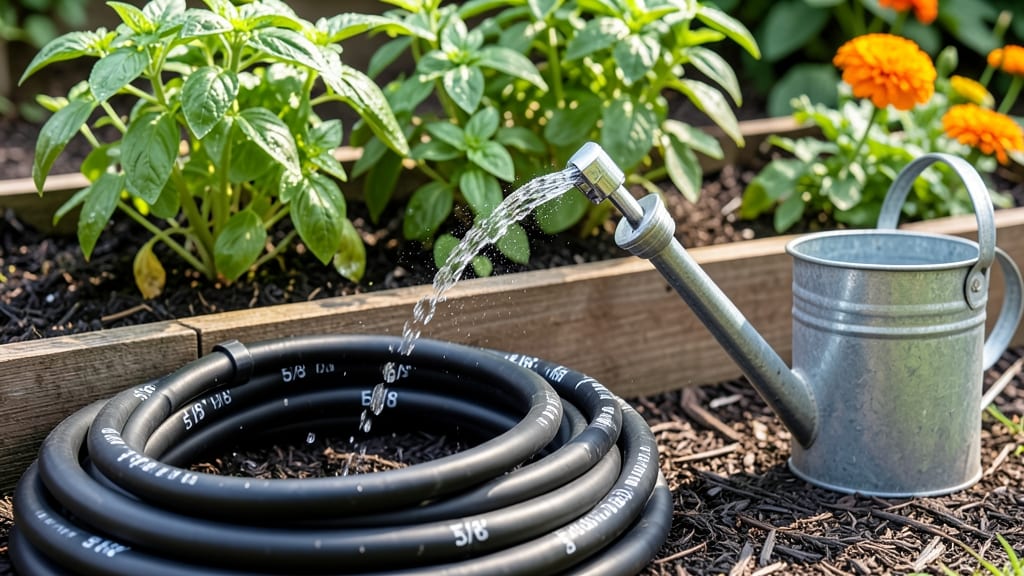
The inside diameter of a garden hose—measured from the inner wall—typically ranges from 1/2-inch to 5/8-inch for most standard models. A larger inner diameter delivers stronger water flow for irrigation, while a smaller diameter suits lighter tasks like filling watering cans or nurturing delicate seedlings.
The inner diameter (ID) of your hose directly impacts water pressure and flow rate, making it a critical factor for efficient gardening. 💦 A 1/2-inch ID works well for small gardens or gentle watering tasks, while a 5/8-inch ID is ideal for larger yards or high-pressure sprinkler systems.
Many gardeners overlook this detail, but even a slight difference in ID can mean the difference between a struggling sprinkler system and one that covers your entire lawn effortlessly.
If you're unsure about your hose's ID, you can measure it by cutting a small section and using a ruler to check the inner opening. This simple step helps you avoid buying the wrong size nozzle or sprinkler head, which could waste water or fail to deliver adequate pressure.
For most homeowners, a 5/8-inch ID offers the best balance of flow and flexibility for various gardening tasks.
💡 In This Article
- How Inside Diameter Affects Water Flow and Pressure
- Choosing the Right Garden Hose ID for Your Plants and Tasks
How inside diameter affects water flow and pressure
The inner diameter (ID) of a garden hose determines how efficiently water moves through it, governed by fluid dynamics principles. A 1/2-inch ID hose restricts water flow significantly, creating higher resistance that reduces pressure by up to 40% compared to a 5/8-inch ID hose.
This happens because water molecules must squeeze through a narrower space, increasing friction against the hose walls. Imagine trying to drink through a thin straw versus a wide straw—the wider opening lets liquid flow faster with less effort! 💦
Pressure loss becomes especially noticeable in longer hoses. A 50-foot 1/2-inch ID hose can lose 20-30 PSI of pressure due to friction, while the same length with a 5/8-inch ID loses only 10-15 PSI.
This explains why sprinkler systems with narrow hoses often struggle to cover large areas—water simply can't travel far enough with sufficient force. The Bernoulli principle comes into play here: wider diameters maintain higher velocity and pressure over distance, while narrow diameters cause turbulent flow and energy loss.
For irrigation systems, this translates directly to coverage efficiency. A 5/8-inch ID hose delivers 1.5-2 times more water per minute than a 1/2-inch hose at the same pressure, making it ideal for lawn sprinklers that need to distribute water evenly across 1,000+ square feet.
The wider ID also prevents "pressure drop" at the end of long hose runs, ensuring consistent watering whether you're at the start or end of your garden. This is why professional irrigation setups almost always use 5/8-inch or larger hoses.
There's a trade-off with hose flexibility, though. Wider IDs require thicker walls to maintain durability, making them slightly stiffer and harder to maneuver around garden beds. However, modern reinforced vinyl hoses with 5/8-inch IDs strike an excellent balance—offering both high flow rates and reasonable flexibility for most gardening tasks.
The key is matching your hose ID to both the length of your watering runs and the pressure requirements of your specific irrigation tools.
You can test your hose's performance by measuring flow rate at 30 PSI (standard household pressure). A 1/2-inch ID hose typically delivers 7-9 gallons per minute (GPM), while a 5/8-inch delivers 12-15 GPM.
This difference means the wider hose can water your lawn 50% faster while using the same water pressure. For precise measurements, use a flow meter or collect water in a 5-gallon bucket for 30 seconds and multiply by 2.
One often overlooked factor is hose material. Rubber hoses maintain their ID better over time than vinyl, which can expand slightly when pressurized, effectively increasing the ID by 1-2 millimeters. This explains why older vinyl hoses sometimes deliver more water than their original specifications suggest.
For consistent performance, choose hoses with double-layer reinforcement, particularly if you're using them with high-pressure sprinklers or soaker hoses.