
Tools
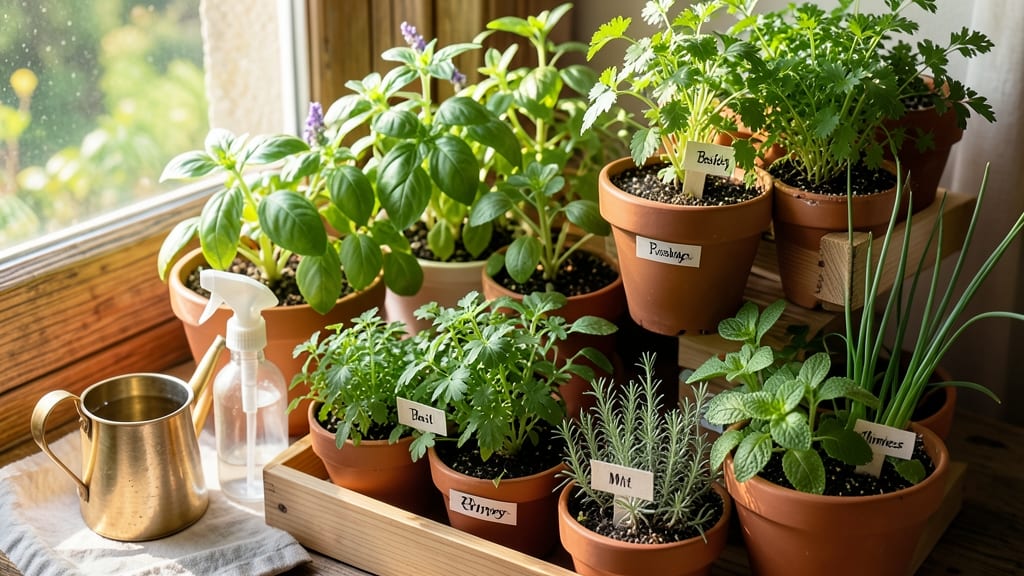
Building a do-it-yourself indoor herb garden requires selecting space-efficient containers, using well-draining potting mix, and providing 6-8 hours of bright light daily—whether from a south-facing window or LED grow lights. Compact herbs like basil, mint, and parsley grow well together in small setups.
Starting an indoor herb garden is easier than you think, especially with the right setup. 🌱 The key is matching your herbs to their needs—basil and parsley love warmth and humidity, while mint thrives in cooler spots.
I recommend starting with just 2-3 herbs to avoid overcrowding, as they all compete for light and nutrients.
For lighting, a simple LED grow bulb (around $20) can work wonders if you don’t have access to natural sunlight, but position it just 6-12 inches above your plants to prevent leaf burn.
What surprises most beginners is how fast herbs grow indoors with proper care. Within 3-4 weeks, you’ll see fresh basil ready for pesto or mint perfect for teas. The trick is consistency—water when the top inch of soil feels dry and rotate pots weekly to ensure even growth.
Once you master the basics, you can expand to more delicate herbs like cilantro or dill.
💡 In This Article
- Selecting the Best Herbs for Small Indoor Spaces
- DIY Indoor Herb Garden Lighting Solutions for Beginners
Selecting the best herbs for small indoor spaces
Not all herbs adapt equally to indoor conditions—some thrive with minimal fuss while others demand more attention.
The best choices for small spaces are those with compact growth habits and moderate light requirements. Basil, for example, grows in bushy clumps that stay under 12 inches tall, making it perfect for windowsills or hanging pots. Its large leaves also make it forgiving for beginners who might overwater.
Meanwhile, mint spreads aggressively but stays low (under 6 inches), ideal for shallow containers or as a ground cover in shared pots.
The secret to pairing herbs indoors lies in their light and humidity needs.
Basil and parsley prefer bright, indirect light (like a south-facing window) and higher humidity—think of them as tropical plants that appreciate misting or a pebble tray. Chives, on the other hand, tolerate cooler temps and lower light, making them a great companion for herbs like thyme that prefer drier conditions. 🌿 The key is grouping moisture-loving herbs together and keeping them separate from drought-tolerant ones to prevent root competition.
Growth habits matter just as much as light needs. Parsley, with its slow, upright growth, won’t outcompete basil’s sprawling leaves, but avoid pairing it with cilantro, which bolts quickly under indoor lights.
For shared containers, use the "one herb, one pot" rule unless you’re using a large tray (at least 12 inches wide) with clear dividers. Even then, monitor roots—herbs like mint can send runners that overtake neighbors in as little as 2 weeks.
Humidity is the silent game-changer for indoor herbs. Most homes have dry air, especially in winter, which causes basil leaves to curl or parsley to wilt.
A simple fix is placing a tray of water near your herb setup or using a humidifier on low. Mint, surprisingly, handles dry air better than basil, which is why it’s often the most resilient choice for beginners. The trade-off?
Mint’s strong aroma can dominate, so keep it away from delicate herbs like dill.
Don’t overlook the role of soil in these pairings. Use a well-draining potting mix (like a 50/50 blend of peat moss and perlite) to prevent root rot, especially for moisture-loving herbs.
For shared containers, add a layer of hydroponic clay pebbles at the bottom to improve drainage between different root systems. This small adjustment can double your success rate when mixing herbs with conflicting water needs.
Pro tip: Rotate your pots weekly to ensure even light exposure—indoor herbs grow toward the light source, leading to lopsided plants. This simple habit keeps your basil and parsley growing upright and lush, not leaning like sun-worshippers. 🌱 The payoff?
Herbs that look as good as they taste, ready to harvest in as little as 3 weeks for basil or 6 weeks for parsley.