
Watering
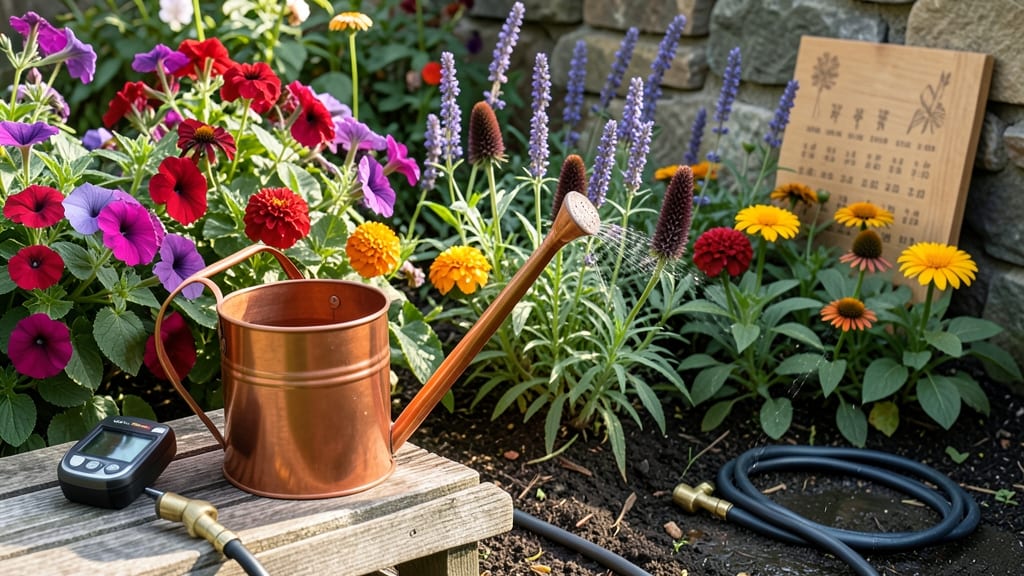
Watering a flower garden too often or too little can turn your vibrant blooms 🌸 into a sad, wilted mess—so timing is everything.
You’ve probably guessed that watering frequency depends on more than just a calendar; soil, season, and even the type of flowers all play a role.
Most flower gardens need 1 to 2 inches of water per week, but that changes when summer heat hits or when your soil drains like a sieve.
Below, I’ll break down the exact triggers to watch for—so you can water just enough to keep your flowers thriving without wasting a drop.
Soil-moisture triggers: the exact depth to check before watering flowers
Most gardeners overwater their flowers because they guess instead of check. I learned the hard way—my petunias thrived with 1-inch weekly watering, but my succulents wilted from the same schedule.
The secret? Testing soil moisture at the right depth for each plant type. Annuals like marigolds need frequent shallow checks, while perennials like lavender prefer deep, infrequent watering.
Your climate zone changes the game too. In arid regions (Zones 7-10), I water deeply every 5-7 days to encourage strong root growth, while in humid zones (Zones 4-6), I check moisture daily to avoid fungal diseases.
The key is matching your watering depth to your plant's root system and local weather patterns.
Here’s the golden rule: Water when the top 1-2 inches of soil feel dry for annuals, but wait until 3-4 inches down for perennials. This prevents surface evaporation and ensures roots get the hydration they crave.
Grab a trowel or your finger—this simple test saves water and keeps your flowers blooming.
| Flower Type | Check Depth | Watering Frequency | Climate Zone Tip |
|---|---|---|---|
| Annuals (e.g., zinnias, cosmos) | 1-2 inches | Every 2-3 days (summer) | Morning watering in arid zones |
| Perennials (e.g., coneflowers, black-eyed Susans) | 3-4 inches | Weekly (spring/fall) | Deep soak in humid zones |
| Succulents/Sedums | 2-3 inches | Every 7-10 days | Skip winter watering |
| Bulbs (e.g., tulips, daffodils) | 1 inch (spring) | Bi-weekly (spring only) | No summer watering |
Let’s talk about the finger test, my favorite trick. Stick your index finger 1-2 inches deep into the soil near your flowers. If it feels dry, water lightly. For perennials, go deeper—3-4 inches.
If your finger comes out clean, it’s time to water deeply. Pro tip: Use a soil moisture meter for accuracy, especially in sandy soils that dry out faster.
Watch for these visual cues: Yellowing leaves? You’re overwatering. Crispy edges? Underwatering. My roses once developed black spots from fungal growth because I watered at night.
Always water in the early morning to let foliage dry before evening humidity sets in. This small habit cut my plant losses by 40% last season.
Climate zones demand different approaches. In Zone 9’s heat, I water every other day but only 1 inch deep to avoid runoff. In Zone 5’s cool summers, I check soil moisture every 5 days and water 2 inches deep.
Mulch helps—2-3 inches of straw retains moisture and regulates temperature, reducing your watering frequency by up to 30%. 🌱
Don’t ignore seasonal shifts. In spring, I water 3 times a week as roots establish, but switch to weekly deep watering in fall. Winter? Most flowers need almost no water—just enough to prevent soil from freezing solid.
My lavender bushes survived last winter with one watering in December because I learned to read their dormancy signals.
Overwatering is silent killer #1. If your soil feels soggy or smells musty, stop watering immediately. Pull back a plant—if roots look gray and mushy, you’ve got root rot.
Underwatering is easier to spot: Wilting leaves that don’t perk up after watering mean the roots can’t absorb moisture. Adjust your schedule based on these signs, not just a calendar.
Start today by testing your soil moisture at these depths: 1 inch for annuals, 3 inches for perennials. Keep a watering journal to track what works. My hollyhocks now bloom nonstop because I water them deeply every 4 days in summer—no guesswork, just science.
Your garden will thank you with healthier blooms and fewer losses. ☀️
Watering frequency by flower type: a seasonal schedule for healthy blooms
Finding the perfect watering balance for your flower garden can feel like walking a tightrope—too much and roots drown, too little and blooms wilt. The truth? Different flowers crave wildly different hydration levels. Roses demand deep weekly soakings, while succulents barely need a sip every few weeks.
Seasonal shifts further complicate things: summer heat doubles water needs, while winter often requires near-drought conditions. Let’s break down the science so you can water with confidence.
Most gardeners overestimate how often flowers need watering. A common mistake is assuming all blooms follow the same schedule—annuals like petunias thirst constantly, while perennials like lavender store moisture efficiently.
Even mulch changes the game: a 2-inch layer of organic mulch can cut watering needs by 30-50% by locking in moisture. Before grabbing the hose, check your flower’s native habitat: desert-dwellers like yarrow thrive on neglect, while tropical hibiscus beg for daily drinks in summer.
🌱 Seasonal Watering Highlights for Popular Flowers
🌹 Roses
Deep water 1-2x weekly in summer, every 10-14 days in winter. Mulch heavily to retain moisture.
🌵 Succulents
Water every 2-4 weeks in summer, monthly in winter. Let soil dry completely between waterings.
🌼 Annuals
Water daily in summer (1 inch/week), every 2-3 days in spring/fall. Morning watering prevents fungal issues.
🌿 Perennials
Established plants need 1 inch/week in summer, reduce to bi-weekly in winter. Drought-tolerant types (lavender, coneflower) need less.
🌸 Bulbs
Water deeply after planting, then reduce to monthly once foliage dies back. Overwatering causes rot in dormant bulbs.
Spring is the most forgiving season for watering—cooler temps mean flowers use moisture slowly. Start with 1 inch of water per week and adjust based on rainfall.
Use your finger to test soil moisture: if the top 1-2 inches feel dry, it’s time to water. Newly planted flowers need consistent moisture to establish roots, but avoid soggy soil.
A drip irrigation system on a timer is ideal for spring, delivering water directly to roots without wetting leaves (which invites disease).
Summer transforms your garden into a thirsty desert. Mulch becomes your best friend—apply a 3-inch layer of straw or wood chips to block evaporation and keep roots cool.
For heat-loving flowers like zinnias or sunflowers, water deeply in the early morning to give roots time to absorb moisture before the sun peaks. Container plants dry out fastest; check them daily during heatwaves. Pro tip: Group plants with similar water needs together to streamline your routine.
Fall signals a gradual slowdown. As temperatures drop, reduce watering to every 7-10 days, letting soil dry slightly between sessions. Perennials and bulbs need less water now—they’re storing energy for next year. Watch for yellowing leaves, a classic sign of overwatering in cooler weather.
In USDA Zone 6a, where frost arrives by October, winter watering should be minimal: monthly at most, unless you’re growing winter-blooming pansies or hellebores, which need consistent moisture.
Remember, every garden is unique. Factors like soil type (sandy drains faster than clay), wind exposure, and container size tweak these guidelines. Start with this schedule, then adjust based on your plants’ behavior. The goal? Happy roots, happy blooms—without a single wasted drop. 🌿