
Size
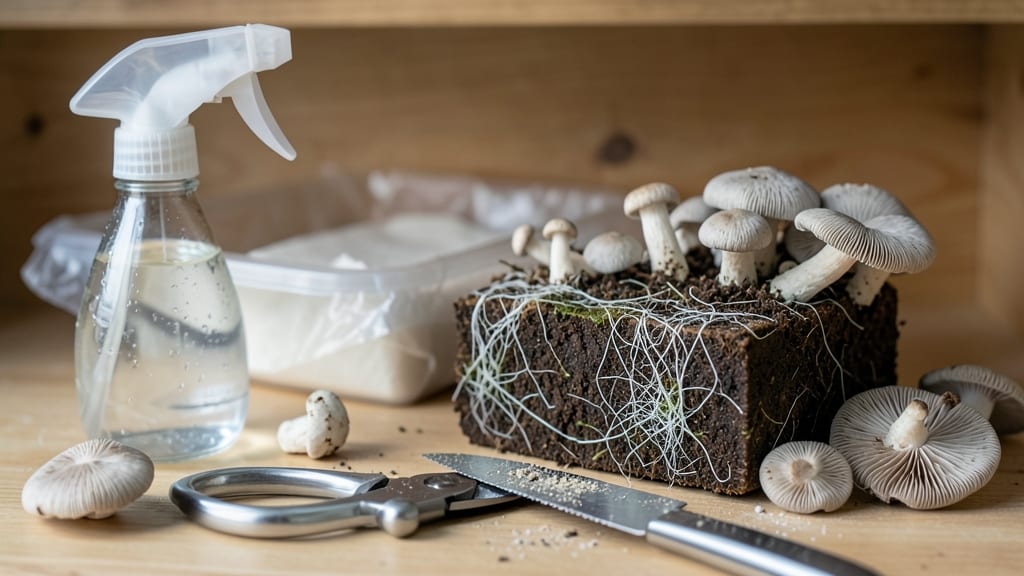
In Grow a Garden on Roblox, mushrooms do not grow back after being harvested—they vanish from your plot permanently unless you replant them manually using seeds or spores. This design forces players to actively manage resources, unlike real-world fungi that respawn naturally under the right conditions.
Roblox’s game mechanics treat mushrooms as a finite resource, mimicking how real-world gardeners must replant crops—but with a twist. 🌱 Unlike in nature, where mycelium networks can regenerate under ideal conditions, the game simplifies this to a manual process.
Players must strategically replant spores to maintain yields, which adds a layer of planning similar to real gardening but with a more controlled, game-specific approach.
This system also encourages experimentation: some players discover that combining mushroom spores with specific soil types or nearby crops can boost growth rates.
The key difference from real fungi is that Roblox mushrooms don’t rely on environmental factors like moisture or temperature—they’re purely player-driven, making the virtual garden a unique blend of strategy and creativity.
💡 In This Article
- How Roblox’s Mushroom Mechanics Work in Grow a Garden
- Tips for Maximizing Mushroom Yields in Roblox Gardens
How Roblox’s mushroom mechanics work in grow a garden
The game’s mushroom system operates on a non-renewable resource model, meaning each harvest permanently removes the fungi from your plot.
This design choice mirrors real-world agriculture where crops must be replanted, but with a critical difference: in nature, mycelium networks can regenerate under optimal conditions, while Roblox mushrooms require explicit player intervention.
When you harvest a mushroom, the game’s code triggers a deletion event that removes the visual and data representation of that specific growth cycle from your garden’s memory.
To restore mushrooms, players must use spores or seeds obtained through in-game progression or trading. These items contain the genetic blueprint for regrowth, but they don’t automatically replant—they must be manually placed in prepared soil plots.
The game tracks this through an internal growth timer system, typically requiring 3-7 in-game days for full maturation, depending on soil quality and nearby crops.
Unlike real fungi that respond to environmental cues like humidity, Roblox mushrooms follow a fixed algorithm where proximity to water sources or fertilizer boosts only accelerate the timer by 10-30%, not the yield.
What makes this mechanic fascinating is how it contrasts with real-world mycology. In nature, mushrooms emerge from mycelium networks that spread underground, often resurfacing when conditions are right. Roblox simplifies this to a binary system: either you’ve planted seeds (mushrooms exist) or you haven’t (they’re gone).
This creates a satisfying challenge for players who enjoy strategic resource management, as it forces them to think like farmers planning rotations rather than simply harvesting what appears.
Visually, the game enhances this mechanic through subtle animations. When you harvest a mushroom, you’ll notice a brief particle effect showing spores dispersing—this isn’t just for show. It’s a visual cue that these spores can be collected and replanted, reinforcing the game’s loop.
The absence of these effects after harvest is what signals the permanent removal until replanting occurs. This design choice makes the mechanic feel more intentional and less like an oversight.
For players curious about the science behind this, consider how real mushrooms grow: they’re the fruiting bodies of fungi whose primary growth occurs in the mycelium below ground.
Roblox’s approach flips this by making the above-ground growth the only visible component, which aligns with how many gardeners interact with crops—focused on what they can see and harvest rather than the hidden processes beneath.
One interesting observation is how this mechanic encourages experimentation. Some players report that planting mushroom spores near certain crops (like tomatoes or carrots) can slightly increase growth rates, though the game doesn’t officially document these interactions.
This creates a community-driven layer where players share "best practices" that go beyond the game’s basic rules, adding depth to the virtual gardening experience.