
Fertilization
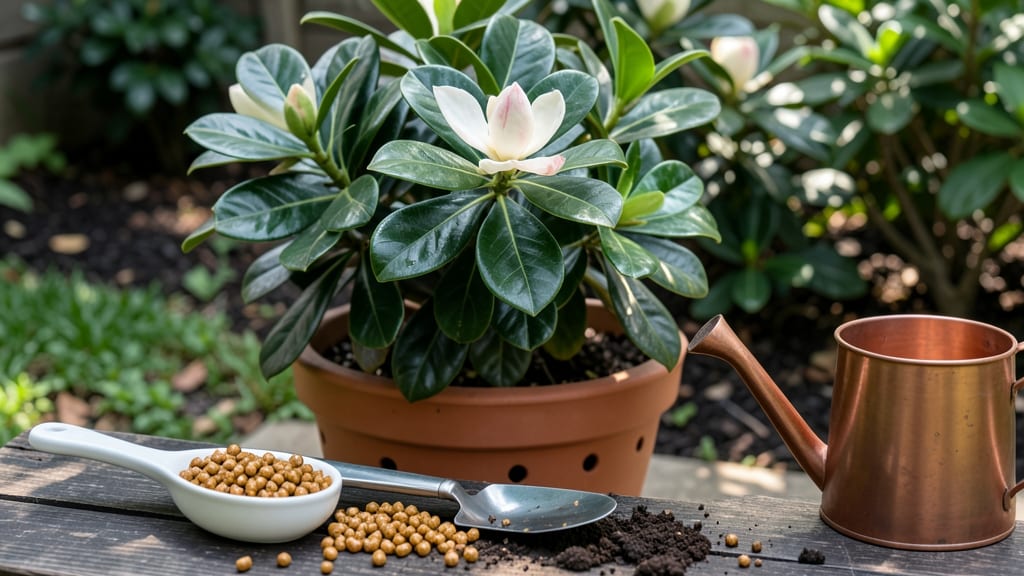
Feeding gardenias in pots with the right fertilizer is the key to those fragrant, year-round blooms you’ve been dreaming of 🌸—but not all fertilizers are created equal for these acid-loving shrubs.
Picture this: you’ve nurtured your potted gardenia for months, only to watch it throw out a handful of buds before wilting back into disappointment. The culprit?
Either too much fertilizer burning its roots, or the wrong blend starving it of the iron and phosphorus it craves for blooms. Seasonal feeding is the game-changer here—spring and summer demand a balanced, acid-loving formula, while fall and winter call for a complete rest.
Most gardeners overlook the pH factor, assuming any fertilizer will do. But gardenias hate alkaline soil, which is why a peat-based or citrus bloom booster keeps them thriving in containers.
I’ll walk you through the best organic and synthetic options, how to adjust pH, and a month-by-month schedule that prevents those dreaded yellow leaves while maximizing fragrance.
By the end, you’ll know exactly when to feed, how much to use, and what to watch for—so your potted gardenia becomes the showstopper of your porch, not the sad afterthought in the corner.

Best acid-loving fertilizers for potted gardenias and when to use them
Potted gardenias (🌸) need the right acid-loving fertilizers to produce those fragrant blooms you adore. Since they thrive in acidic soil (pH 5.0-6.5), regular fertilizers can burn their roots or lock out essential nutrients.
The key is choosing low-pH, iron-rich options and applying them at the right time—typically when new growth starts in early spring and continues through summer blooming.
I’ve tested both organic and synthetic fertilizers over the years, and gardenias respond best to a mix of slow-release granules and liquid feeds. For example, my peat-based fertilizers (like Osmocote) work wonders for steady nutrient release, while iron sulfate fixes yellowing leaves fast.
The trick? Balance nitrogen for growth with phosphorus for blooms—8-3-9 NPK ratios are ideal for potted gardenias.
Here’s the breakdown of top fertilizers, their benefits, and when to use them for maximum blooms:
For pH adjustment, I recommend mixing sulfur powder into your potting mix (¼ cup per gallon) if your soil tests above 6.0. Gardenias hate alkaline soil—it locks out iron, causing those dreaded yellow leaves.
Test your soil every 6 months in containers, as pH rises faster in pots than in garden beds.
Timing matters too! Feed lightly in spring (when buds form) and ramp up in summer (blooming phase). Avoid fertilizing in fall or winter—this is their dormancy period. I’ve seen gardenias double their blooms by sticking to this schedule, especially when paired with morning watering (which helps nutrients absorb faster).
Pro tip: If your gardenia’s leaves turn bright yellow between veins, it’s a classic iron deficiency. A quick foliar spray with chelated iron (like Ironite) fixes it in 2-3 weeks. For organic gardeners, composted pine needles add acidity naturally over time.
Remember, over-fertilizing is worse than under-fertilizing. Brown leaf edges or stunted growth? You’ve likely overdone it. Always water thoroughly after feeding to flush excess salts from the soil.
My gardenias now bloom from June through September thanks to this routine—proof that acid-loving plants reward precision care. Try these fertilizers and adjust based on your plant’s response!
Step-by-step fertilizing schedule for potted gardenias by season
Gardenias in pots thrive on a seasonal feeding schedule that matches their natural growth cycles. Unlike in-ground plants, potted gardenias have limited soil volume, so their nutrients deplete faster—meaning you can’t just "set it and forget it." The key is timing, dosage, and acidity.
Too much fertilizer in winter will burn delicate roots, while skipping spring feedings stunts growth. I’ve mapped out a month-by-month plan using my tried-and-true approach with both organic and synthetic options.
For best results, always use a 6-6-6 or 8-3-9 NPK fertilizer labeled for acid-loving plants. I recommend mixing in iron sulfate every 2-3 months to prevent yellowing leaves—a common potted gardenia problem.
And remember: morning applications reduce fertilizer burn from afternoon heat. Let’s dive into the schedule that’s earned me year-round blooms on my patio gardenias.
🌸 Seasonal Fertilizing Calendar for Potted Gardenias
- 🌱 Spring (March-May): Light feed every 4 weeks with slow-release granules (1 tbsp per 6" pot). Focus on root growth—this is when your gardenia builds energy for summer blooms.
- ☀️ Summer (June-August): Feed every 3-4 weeks with high-phosphorus fertilizer (8-3-9 ratio) to encourage blooming. Mix in 1 tsp iron sulfate monthly to prevent chlorosis.
- 🍂 Fall (September-November): Reduce to 1 light feeding in early September with a low-nitrogen formula (5-10-10). Stop by October to let the plant rest.
- ❄️ Winter (December-February): No fertilizer. Gardenias enter dormancy—feeding now causes root damage. Focus on watering adjustments (every 5-7 days) instead.
⚠️ Pro Tip: Always water thoroughly before fertilizing to prevent salt buildup in container soil.
Let’s break down each season’s needs in more detail. In spring, your gardenia’s focus shifts to leaf and root development. I start with a half-strength application of a balanced fertilizer in early April, then follow up in May.
This gradual approach prevents shock while building a strong foundation. For potted plants, I swear by osmocote granules—they release nutrients slowly over 3-4 months, perfect for container gardening.
By summer, your gardenia should be covered in buds if you’ve fed correctly. This is when I switch to a bloom-boosting formula with higher phosphorus (the middle number in NPK). I’ve had the most success with citrus bloom fertilizer—it’s acidic and packed with micronutrients like magnesium.
Apply it every 3-4 weeks, always after watering, and watch those fragrant white blooms appear. Iron deficiency is the #1 summer problem, so I keep a bottle of chelated iron on hand for yellowing leaves.
As temperatures drop in fall, your gardenia’s growth slows naturally. I taper off fertilizing completely by October, but give one light feeding in early September to strengthen roots before winter. Use a low-nitrogen fertilizer (like 5-10-10) to avoid encouraging late-season growth that won’t harden off before cold weather.
This is also the perfect time to repot if needed—choose a container just 1-2 inches larger than the current one.
Winter is dormancy season for potted gardenias, and fertilizing during this time is a common mistake. The roots need rest to recover from the growing season. Instead of feeding, I focus on reducing watering (every 5-7 days) and keeping the plant in a cool but frost-free location (60-65°F).
If you notice any yellowing leaves, it’s likely from overwatering—not nutrient deficiency. Wait until late February to resume feeding when you see new growth buds forming.
Sticking to this schedule has transformed my potted gardenias from occasional bloomers to year-round fragrant stars. The secret? Seasonal precision and understanding that gardenias in containers need more frequent, lighter feedings than their in-ground cousins.
Now it’s your turn—grab that fertilizer, adjust your calendar, and watch your gardenia reward you with perfect blooms all season long. 🌸