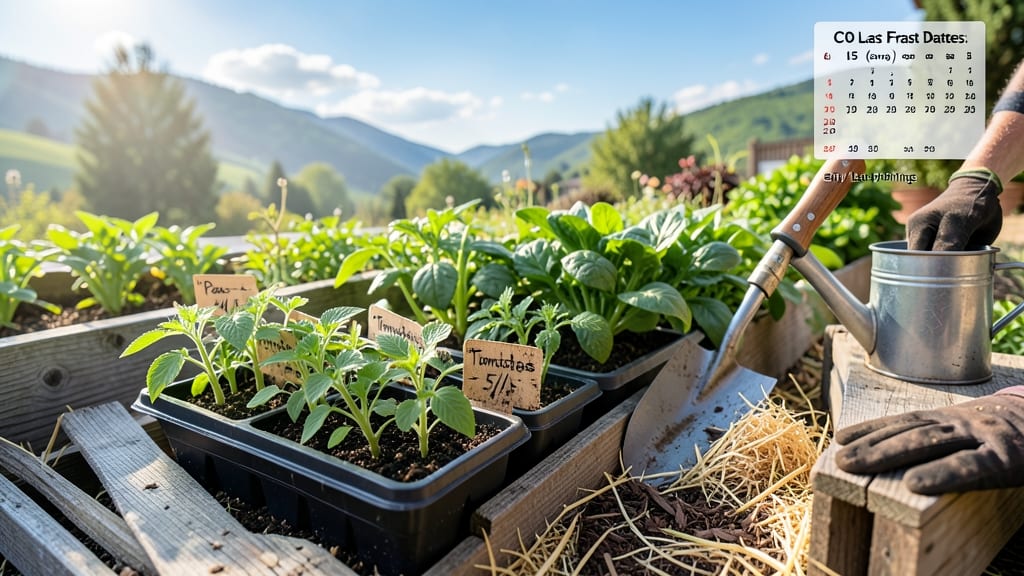
To plant a garden in Colorado, time your sowing with the last frost date for your elevation—typically mid-April in the Front Range but weeks later in the high country.
Colorado’s diverse elevations—from high mountain valleys to arid plains—create a gardening puzzle where timing makes all the difference between thriving harvests and wasted seeds. A single late frost can turn a promising spring into a disaster, while a heatwave in July might scorch tender seedlings if you’re not prepared.
This isn’t just about calendar dates—it’s about understanding your microclimate. Denver’s urban heat islands warm up faster than rural areas, while high-altitude gardens like those in Zone 4 need a longer growing season.
Whether you’re planting cold-hardy peas or heat-loving tomatoes, getting the timing right means the difference between a bountiful harvest and a frustrating flop.
In this guide, I’ll break down the exact windows for starting seeds indoors, transplanting outdoors, and even late-summer planting strategies so you can maximize your Colorado garden’s potential—no matter where you live in the state.
🌱When to Plant Garden
Jan❄️
Feb❄️
Mar🌱
Apr🌱
May🌱
Jun🌱
Jul☀️
Aug☀️
Sep🍂
Oct🍂
Nov🍂
Dec❄️
Ideal Time
Also Good
Colorado planting zones by elevation: when to start seeds indoors vs outdoors
Colorado’s dramatic elevation changes—from the Front Range valleys at 5,000 feet to mountain meadows above 10,000 feet—mean your last frost dates can vary by weeks. Understanding these elevation-based zones helps you avoid planting tomatoes too early in Denver or kale too late in Aspen.
The key? Matching your seed-starting timeline to your USDA hardiness zone and microclimate.
Most Colorado gardens fall between USDA zones 5-8, but the 1,000-foot rule applies here: for every 1,000 feet you climb, temperatures drop 3.5°F and growing seasons shorten by 5-7 days.
This means a Colorado Springs gardener (zone 6) has 2-3 weeks longer to plant than someone in Leadville (zone 4). Let’s break it down by elevation bands so you can plan with confidence.
⚠️ NON-NEGOTIABLE: Always check your local last frost date—even within the same city, urban heat islands can delay frost by 1-2 weeks compared to rural areas. Use Colorado State University Extension frost maps as your guide.
Elevation Zone
USDA Zone
Avg Last Frost
Indoor Start (Weeks Before)
Outdoor Plant (After)
Cold-Hardy Crops
Heat-Lovers
2,000–4,000 ft (Pueblo)
Zone 7b-8a
May 5–15
Feb 15–Mar 1 (Peppers)
May 15–25
Peas, Spinach, Kale
Tomatoes, Basil, Cucumbers
4,000–6,000 ft (Denver)
Zone 6a-7a
May 10–20
Feb 20–Mar 15 (Tomatoes)
May 20–Jun 1
Potatoes, Carrots, Lettuce
Peppers, Eggplants, Okra
6,000–8,000 ft (Fort Collins)
Zone 5b-6b
May 15–25
Mar 1–15 (Broccoli)
Jun 1–10
Swiss Chard, Radishes, Beets
Bush Beans, Zucchini, Melons
8,000–10,000 ft (Estes Park)
Zone 4b-5a
Jun 1–10
Apr 1–15 (Cold Frames)
Jun 15–25
Peas, Spinach, Cabbage
Bush Beans, Lettuce, Herbs
10,000–12,000 ft (Leadville)
Zone 3b-4a
Jun 10–20
May 1–15 (Greenhouses)
Jul 1–10
Potatoes, Turnips, Kale
Radishes, Bush Beans, Herbs
Notes: Adjust for micro
Elevation-specific planting calendar: month-by-month guide for Colorado gardens
Colorado’s diverse elevations mean your planting timeline in Denver (5,280 ft) won’t match Aspen (7,800 ft) or Colorado Springs (6,035 ft). While lowland gardens can start warm-season crops by mid-May, high-altitude areas often wait until late June.
Microclimates add complexity—urban heat islands in Denver may let you plant two weeks earlier than rural areas, while windy plains demand extra protection for young seedlings.
To simplify, I’ve created a month-by-month guide tailored to Colorado’s three key regions: Front Range (Denver/Colorado Springs), high country (Fort Collins/Aspen), and western slope (Grand Junction). Each month includes soil prep tips, seed-starting windows, and companion planting strategies to extend your harvest.
Pro tip: Use row covers or cold frames to push limits in shorter seasons.
🌱Key Adjustments: High-altitude gardens (above 7,000 ft) need 4–6 weeks longer for frost-free soil. Western slope areas (like Grand Junction) can plant 2–3 weeks earlier thanks to lower elevations and desert-like conditions.
📅 Colorado Planting Calendar by Elevation
March: Start cool-season crops (peas, spinach, lettuce) indoors. Test soil pH—aim for 6.0–7.0. In Zone 5 (high country), wait until late March.
April: Transplant hardy greens (kale, Swiss chard) outdoors after last frost (typically April 15–May 1). Direct-sow radishes and carrots in warmer microclimates (Denver urban areas).
May: Plant warm-season crops (tomatoes, peppers, basil) after soil reaches 60°F. Use black plastic mulch to warm soil faster in high-altitude gardens. Companion plant basil with tomatoes to deter pests.
June: Sow fast-maturing crops (bush beans, zucchini) for late-summer harvests. Succession plant lettuce every 2 weeks to avoid bolting. Protect seedlings with floating row covers if frost threatens.
July–August: Plant fall crops (broccoli, cabbage, beets) for harvest before first frost (typically October 15–November 1). Use shade cloth in western slope areas to prevent bolting.
September: Direct-sow garlic and hardy onions for next year. Mulch perennials with straw to protect roots. In Zone 4, cover tender plants with burlap as temps drop.
October–November: Plant winter rye as a green manure cover crop. Harvest frost-tolerant crops (kale, carrots) before ground freezes. Store tools and empty garden beds for spring.
For Denver and Colorado Springs, aim to have warm-season crops in the ground by May 15.
In high-country areas like Fort Collins, wait until June 1 to avoid frost damage. Western slope gardens (e.g., Grand Junction) can start two weeks earlier thanks to warmer microclimates and longer growing seasons.
🌿Pro Tip: Use companion planting to extend harvests—pair carrots with onions to deter pests and plant basil near tomatoes to improve flavor and yield. In windy plains, create windbreaks with corn or sunflowers to protect delicate seedlings.
Adjust timelines based on microclimates: South-facing slopes warm up faster, while north-facing areas stay cooler. Monitor local frost forecasts (check Colorado State University Extension) and be ready to cover plants if frost threatens after June 1 in high-altitude zones.