
Light Requirements
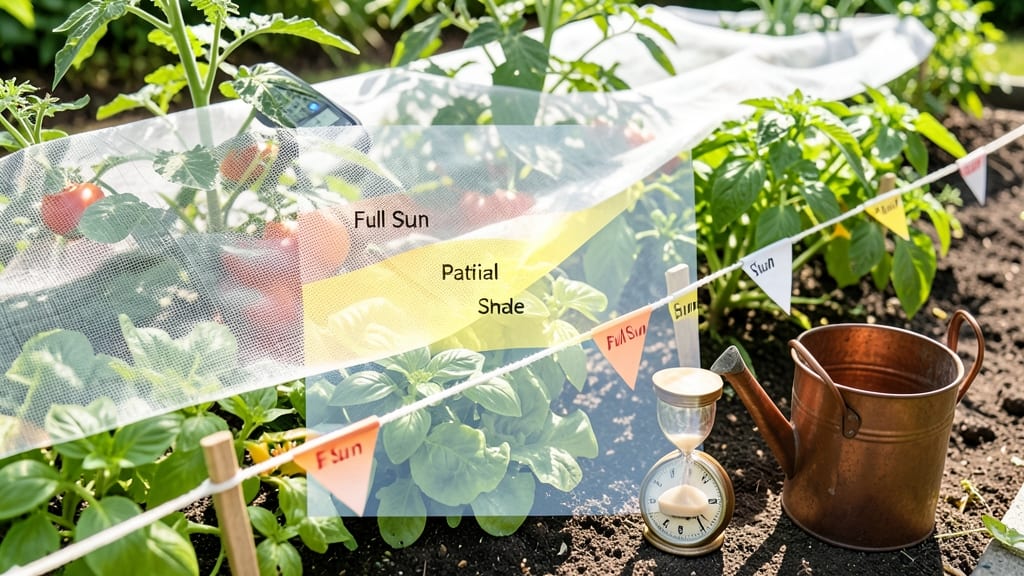
To get your vegetable garden thriving, how much sun does a vegetable garden need—most plants require 6 to 8 hours of direct sunlight daily—but many gardeners guess wrong, leading to stunted growth or wasted space.
Struggling to decide where to plant your tomatoes or lettuce? Sunlight is the #1 factor determining whether your vegetable garden 🥬 thrives or withers—but most gardeners get it wrong by overestimating or underestimating their plants' needs.
Some vegetables, like peppers and cucumbers, demand full sun to produce flavorful fruit, while others, such as leafy greens, can handle partial shade. Without the right light, you might end up with bitter lettuce or no tomatoes at all.
In this guide, I’ll break down exactly how much sun each plant needs, how to measure sunlight in your garden, and how to adjust for shade or intense afternoon heat—so you can maximize your harvest every season.

Sunlight requirements for vegetable gardens: full sun vs partial shade explained
Sunlight is the lifeblood of your vegetable garden, but not all plants crave the same amount. Full sun means 6+ hours of direct sunlight daily, while partial shade offers 3-6 hours, and full shade provides less than 3 hours.
Getting this wrong can mean the difference between a bountiful harvest and stunted, bitter vegetables. Let’s break down what each category really means for your garden’s success.
Most warm-season vegetables like tomatoes, peppers, and cucumbers thrive in full sun, but cooler-season crops such as lettuce and spinach often prefer partial shade to avoid bolting.
Even within these categories, there’s nuance—afternoon shade can protect delicate leaves from scorching, while morning sun helps dry dew quickly, reducing fungal risks. Understanding these distinctions will help you optimize your garden layout.
Full sun doesn’t mean all-day baking—it’s about intensity and duration. Plants like zucchini and eggplants need 8+ hours of direct light to produce well, while basil and oregano can handle 6-8 hours but may lose flavor if pushed to extremes. Overestimating sun exposure can lead to heat stress, while underestimating it results in poor yields and weak stems.
| Sunlight Category | Hours of Sunlight | Ideal Vegetables | Risks of Incorrect Exposure |
|---|---|---|---|
| Full Sun | 6+ hours | Tomatoes, Peppers, Cucumbers, Corn, Zucchini | Poor fruit set, weak stems, heat stress |
| Partial Shade | 3-6 hours | Lettuce, Spinach, Kale, Swiss Chard, Green Onions | Bolting, bitter flavors, slow growth |
| Full Shade | <3 hours | Rhubarb, Some Herbs (e.g., Cilantro), Microgreens | Leggy growth, poor yield, weak flavor |
| Morning Sun | 3-6 hours (AM only) | Basil, Oregano, Some Lettuce Varieties | Stunted growth if afternoon shade missing |
| Afternoon Shade | 3-6 hours (PM only) | Peppers, Eggplants, Some Tomatoes | Sunburn on leaves, reduced fruit production |
Partial shade is often misunderstood—it’s not just about reducing sunlight but also about timing. For example, leafy greens like spinach can handle morning sun followed by afternoon shade, which prevents them from bolting prematurely.
Meanwhile, herbs like basil need bright light but can suffer if exposed to intense afternoon heat. Observing your garden’s microclimate will help you fine-tune these conditions.
Climate plays a huge role in sunlight requirements. In hot, dry regions, plants may need afternoon shade to prevent wilting, while in cooler climates, full sun exposure can extend the growing season.
For instance, tomatoes in Zone 5 might thrive with 6-8 hours of sun, but in Zone 9, they may need partial shade during peak summer to avoid stress. Always adjust based on your local conditions.
Container gardening adds another layer of complexity. Potted vegetables like peppers or herbs can be moved to sunnier spots as needed, but root vegetables such as carrots or radishes struggle in containers with limited sunlight.
If your balcony or patio only gets 3-4 hours of sun, focus on partial-shade-tolerant crops like bush beans or radishes, which can still produce decent yields.
One common mistake is assuming that more sun is always better. While tomatoes and cucumbers love full sun, too much can lead to blossom-end rot or bitter flavors. Similarly, leafy greens left in full sun will bolt quickly, turning tough and bitter.
The key is matching the plant to its ideal light conditions, not forcing it into an extreme.
To optimize your garden, start by mapping your sunlight for at least a week. Note which areas get morning sun, afternoon shade, or full sun all day. Then, group plants with similar needs together.
For example, place tomatoes and peppers in the sunniest spot and lettuce and spinach where they get dappled shade. This simple strategy maximizes your garden’s potential and minimizes wasted space.
Remember, flavor
Top 10 vegetables ranked by sunlight needs (from most to least demanding)
Not all vegetables are created equal when it comes to sunlight. Some, like tomatoes and peppers, practically beg for full sun, while others like spinach and kale can thrive in partial shade.
Getting this wrong can mean the difference between a bountiful harvest and wasted space in your garden.
I’ve ranked these 10 essential vegetables by their sunlight needs, from the most demanding to those that can handle less intense light. This ranking helps you match plants to your garden’s sunlight hotspots and shadier corners—so you can grow more without stress.
Tomatoes and peppers top the list, needing 8+ hours of full sun to produce sweet, flavorful fruit. Without enough light, they’ll grow leggy and produce sour, underdeveloped produce. On the other hand, leafy greens like spinach and arugula can handle just 3-4 hours of sun, making them perfect for shadier garden beds.
Surprisingly, bush beans and carrots fall in the middle, thriving with 5-6 hours of sun. This flexibility makes them great for container gardens or spots with morning sun and afternoon shade. Meanwhile, cucumbers and squash are sun-hungry but can tolerate partial shade if given enough space to sprawl.
If your garden has limited sunlight, focus on partial-shade lovers like lettuce and radishes. These plants not only survive with 3-4 hours of sun but also bolt less quickly in cooler weather.
For maximum productivity, though, prioritize full-sun spots for your tomatoes, peppers, and eggplants—they’ll reward you with bigger, tastier harvests.
Pro tip: Use reflective mulch or light-colored containers to bounce extra light onto shade-loving plants. This trick can boost their growth by up to 20% in low-light areas.