
Pruning
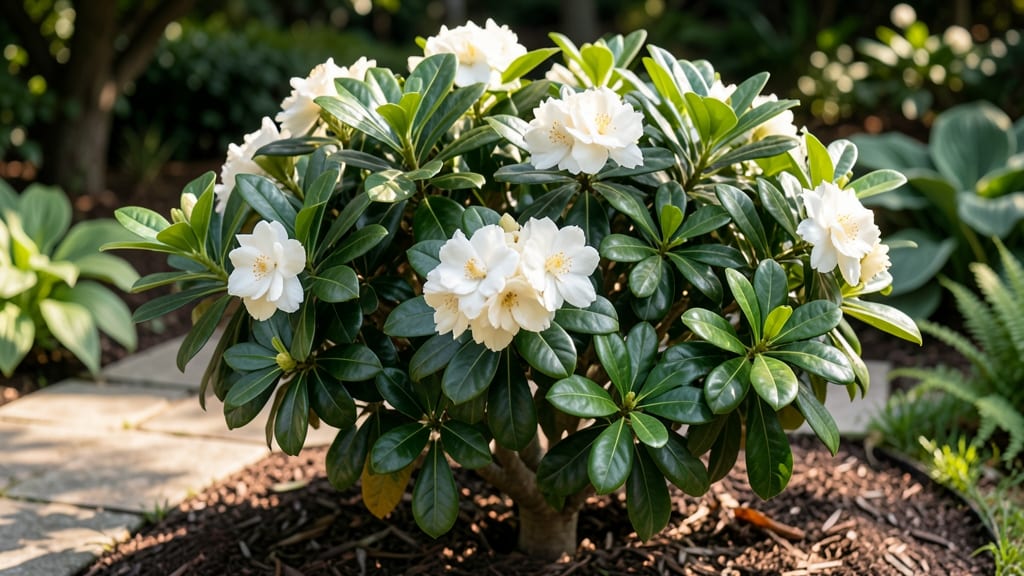
A gardenia bush height of 3 to 6 feet is typical for mature plants, but that doesn’t mean you’re stuck with a towering shrub that crowds your patio or blocks your view.
If your gardenia bush is growing taller than your fence—or refusing to bloom—controlling its height without stunting its beauty is the key to a thriving plant.
Most gardeners assume pruning means hacking away at branches, but the real secret lies in timing and technique. A little strategic trimming in spring can keep your gardenia 🌸 compact while encouraging more blooms, not fewer.
Below, I’ll show you exactly when to prune, how much to cut back, and which varieties stay shorter naturally—so you can enjoy those fragrant white flowers without sacrificing your garden’s layout.

Natural gardenia bush height range: what to expect by variety and age
Understanding your gardenia bush height starts with knowing the variety you’re growing. Most gardenias, like the popular Gardenia jasminoides, naturally grow between 3 to 6 feet tall at maturity, but dwarf varieties can stay as short as 2 to 3 feet.
The key difference? Genetics and pruning habits. Even within the same species, a standard gardenia might tower over a dwarf gardenia planted just a few feet away.
Climate plays a surprising role too. Gardenias in warmer USDA zones (8-10) grow faster and reach their maximum height sooner than those in cooler zones (6-7).
For example, a standard gardenia in Florida might hit 6 feet by year 3, while one in Southern California could take 4-5 years to reach the same height. Your local frost patterns also influence growth—fewer frost days mean more vigorous spring growth.
Here’s how height progresses by age for the most common varieties:
| Variety | Height by Age | Mature Height | Climate Notes |
|---|---|---|---|
| Gardenia jasminoides (Standard) | Year 1: 1-2 ft Year 2: 2-3 ft Year 3: 3-4 ft |
4-6 ft | Faster in zones 8-10; slower in zones 6-7 |
| Gardenia jasminoides (Dwarf) | Year 1: 6-12 in Year 2: 1-1.5 ft Year 3: 1.5-2 ft |
2-3 ft | Ideal for containers; prune to control spread |
| Gardenia augusta (Radicans) | Year 1: 1-1.5 ft Year 2: 2-2.5 ft Year 3: 2.5-3 ft |
3-4 ft | Trailing habit; great for hedges |
| Fortuniana (Hybrid) | Year 1: 1-2 ft Year 2: 2-3 ft Year 3: 3-4 ft |
4-5 ft | Cold-hardier; slower early growth |
If you’re growing gardenias in containers, expect their height to be 20-30% shorter than their in-ground counterparts. Root-bound conditions force the plant to focus on bushier growth rather than vertical expansion.
For example, a standard gardenia in a 15-gallon pot might only reach 4 feet instead of 6, but it’ll produce more blooms per square foot.
Your gardenia’s height also depends on whether it’s bush-type or climbing. Varieties like Gardenia radicans (also called crawling gardenia) stay low to the ground but spread widely—up to 6 feet across—while others like Gardenia augusta grow upright but rarely exceed 4 feet.
Always check the plant tag for growth habits before purchasing.
One common misconception is that over-pruning will stunt a gardenia’s height permanently. In reality, gardenias are highly resilient and will bounce back with proper care. The key is to prune after blooming season (late summer or early fall) to avoid cutting off next year’s flower buds.
A light pruning in spring can also encourage denser foliage without sacrificing height.
For gardeners in cooler climates (zones 6-7), winter dormancy can slow height growth significantly. If your gardenia loses leaves in winter, it’s not dead—it’s conserving energy. Resume fertilizing in early spring (when new growth appears) to jumpstart height growth for the season.
In warmer zones, gardenias grow year-round, so expect steady height increases every 6-8 weeks with proper care.
Pro tip: If your gardenia is too tall for your space, focus on topping it back by 1/3 of its height in late winter. This encourages lateral branching and a fuller shape without sacrificing overall height.
Just avoid cutting into old wood, as gardenias struggle to regrow from mature stems.
Finally, remember that soil quality affects height just as much as genetics. Gardenias thrive in acidic, well-draining soil (pH 5.0-6.5). Amend heavy clay with peat moss or pine bark to improve drainage, and add compost to boost nutrient availability.
Well-fed gardenias grow 1-2 feet taller per year than those in poor soil.
🌿
When and how to prune for height control: step-by-step timing and technique
Pruning gardenia bushes for height control isn't just about cutting branches—it's about strategic timing and precise cuts that encourage bushier growth while preserving those prized blooms. The best time to prune is late winter to early spring, just as new growth begins, or right after flowering in summer.
Avoid pruning in fall or winter when the plant is dormant, as this can damage tender new growth.
Your pruning tools matter just as much as your technique. Use clean, sharp bypass pruners for larger branches and hand pruners for smaller stems. Sterilize tools with rubbing alcohol to prevent spreading disease.
Never use dull tools—they crush stems instead of making clean cuts, which invites infections and weakens the plant.
Step-by-Step Pruning Guide for Gardenia Height Control
- Step 1: Identify overgrown branches—look for stems longer than 12 inches or those growing inward. These are your targets for height reduction.
- Step 2: Cut back 1/3 of the branch length at a 45-degree angle, just above a leaf node or outward-facing bud. This promotes bushier growth.
- Step 3: For vertical height control, trim the topmost 6-12 inches of the tallest stems. Avoid cutting into old wood—focus on current season's growth.
- Step 4: Remove dead, diseased, or crossing branches first—they compete with healthy growth and reduce air circulation.
- Step 5: After pruning, apply mulch around the base to retain moisture and protect roots. Water deeply to help the plant recover.
Pro Tip: Prune on a dry, cloudy day to reduce stress on the plant.
To encourage bushier growth instead of leggy stems, focus on cutting just above outward-facing buds. This redirects energy to lateral branches, creating a fuller shape.
For dwarf varieties like 'Radicans,' you can prune more aggressively since they naturally stay 2-3 feet tall, while standard types need gentler height control.
After pruning, monitor your gardenia for new growth within 4-6 weeks. If you notice sparse blooms the following season, reduce nitrogen-rich fertilizers—too much promotes foliage over flowers. Instead, use a low-nitrogen, high-phosphorus fertilizer to encourage blooming.
Remember, gardenia bushes respond best to gradual pruning. Never cut back more than 1/3 of the plant's height in a single session. Over-pruning stresses the plant and can lead to fewer blooms or even death.
With patience and precision, your gardenia will thrive at your desired height while still gracing you with its signature fragrance.