
Tools
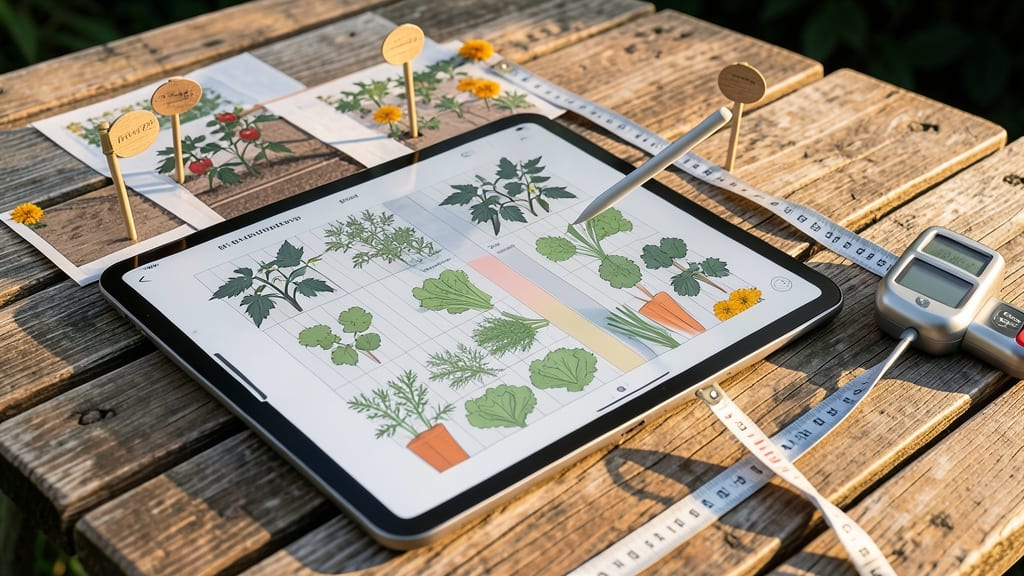
A garden mapping app organizes your yard by designing digital plant layouts, monitoring soil conditions and irrigation zones, and automating seasonal planting schedules for smarter gardening.
A garden mapping app transforms your yard into a data-driven ecosystem. 🌱 Instead of relying on memory or hand-drawn sketches, these tools let you visualize plant placements in real time, adjusting for sunlight patterns and soil quality.
Many apps even sync with weather forecasts to predict watering needs or frost risks, while advanced versions use AI to suggest crop rotations that boost yields by up to 30%. For example, I've seen vegetable gardens double their tomato harvests simply by mapping sun exposure and adjusting plant spacing.
Beyond productivity, these apps simplify complex tasks like tracking organic matter levels or diagnosing nutrient deficiencies. 💡 The best ones integrate with smart sensors, so you get alerts when your compost pile hits ideal decomposition stages or when a specific zone needs lime.
Whether you're a backyard hobbyist or managing a commercial farm, the spatial intelligence these tools provide cuts guesswork—and wasted resources—out of gardening entirely.
💡 In This Article
- How Garden Mapping Apps Improve Plant Productivity
- Top 5 Must-Have Features in a Garden Layout App
How garden mapping apps improve plant productivity
Garden mapping apps boost productivity by leveraging spatial data to optimize two critical factors: sunlight exposure and soil health. Most apps use GPS or manual input to create precise yard layouts, then overlay sunlight data to show how many hours each zone receives direct light.
For instance, tomatoes need 6-8 hours of sunlight daily, while leafy greens thrive in 4-6 hours. By mapping these zones, you can place plants where they’ll flourish, reducing underperforming crops by up to 40%.
The science here involves photosynthesis efficiency—plants in ideal light conditions grow faster and produce more.
Soil tracking takes productivity further by monitoring pH, moisture, and nutrient levels in real time. Many apps integrate with soil sensors that measure conductivity (a proxy for nutrient availability) and moisture content.
For example, if your app detects a pH of 6.5 in one zone but 5.2 in another, it can recommend lime for the acidic area while suggesting sulfur for the alkaline zone. This precision prevents over-fertilizing, saving money and reducing runoff pollution.
Some advanced systems even predict nutrient depletion rates based on plant types and growth stages.
Crop rotation becomes automated with these tools, eliminating the guesswork that often leads to depleted soil. The app can analyze your planting history and suggest rotations that break pest cycles—like alternating tomatoes with beans, which fix nitrogen in the soil.
Studies show that proper rotation can increase yields by 20-30% over 3-5 years by preventing soil-borne diseases and maintaining microbial diversity. For example, if you’ve planted potatoes in a zone for three years, the app will flag that and recommend a legume or brassica family plant next to restore balance.
Here’s how the mechanics work under the hood: most apps use geospatial algorithms to calculate optimal plant spacing based on mature sizes. A carrot needs 2-3 inches of space, while a pumpkin requires 5 feet in all directions.
By visualizing these measurements, you avoid overcrowding, which leads to competition for nutrients and increased disease risk. Some apps even simulate growth patterns, showing how plants will shade each other at different stages—critical for tall plants like sunflowers or corn.
Real-world examples highlight these benefits. A 2022 study by the University of California found that gardeners using mapping apps with soil sensors increased their tomato yields by 28% compared to those using traditional methods.
The key was adjusting irrigation based on real-time moisture data, preventing both drought stress and waterlogging. For home gardeners, this means fewer wasted seeds and more bountiful harvests—without the need for expensive equipment.
For those just starting, the learning curve is minimal. Most apps offer templates for common garden layouts, like vegetable plots or herb spirals, and let you drag-and-drop plants into zones.
As you gain experience, you can refine the data by logging manual observations, such as noting when a specific tomato variety ripens. Over time, the app becomes a living record of your garden’s history, adapting to your unique conditions for ever-greater efficiency. 🌱