
Light Requirements
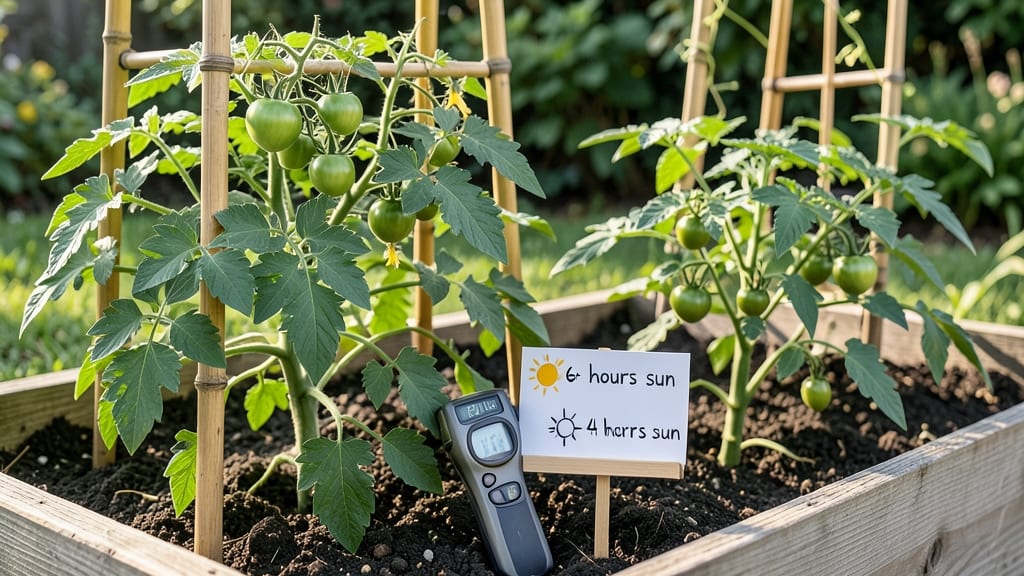
Vegetable gardens need full sun for most crops, but many leafy greens, herbs, and root vegetables like lettuce, spinach, and radishes thrive with just 3–6 hours of sunlight daily. Shade-tolerant varieties and filtered light conditions can still produce excellent yields.
Most vegetables rely on full sun to fuel photosynthesis and maximize growth, but not all crops demand the same intensity. 🌱 Leafy greens and herbs often adapt well to partial shade, especially in hot climates where direct sunlight can stress plants.
The key is matching your garden's light conditions to the right plants—lettuce, Swiss chard, and bush beans, for example, can handle morning sun with afternoon shade, while tomatoes and peppers will struggle without at least 6-8 hours of direct light.
For shade gardens, focus on soil quality and moisture retention since plants compensate for lower light by drawing more nutrients. Mulching helps regulate temperature and conserve water, while regular pruning prevents overcrowding that can block what little light exists.
I've found that container gardening works especially well for shade-loving plants—it gives you control over sunlight exposure and drainage.
💡 In This Article
- Sunlight Requirements for Different Vegetable Types
- Best Shade-Tolerant Vegetables and Gardening Tips
Sunlight requirements for different vegetable types
Photosynthesis is the engine behind plant growth, and sunlight intensity directly impacts how efficiently this process works. Full-sun vegetables like tomatoes and peppers need 6-8 hours of direct sunlight daily to produce optimal yields because their chlorophyll molecules require high-energy photons to split water and create glucose.
Without enough light, these plants become stressed, leading to stunted growth and poor fruit development. The leaves may also develop a pale, yellowish-green hue—a clear sign of insufficient energy production.
On the other hand, leafy greens and herbs adapt differently. Plants like lettuce and spinach thrive with just 3-6 hours of sunlight because their growth priorities shift toward leaf production rather than fruiting. These crops have a lower chlorophyll density and can perform photosynthesis efficiently even in lower light conditions.
The trade-off? Their growth rate slows, and they may become more susceptible to pests and diseases without proper care. For example, Swiss chard grows slower in full sun but produces more tender leaves in partial shade, where it avoids overheating.
The science behind this lies in how plants allocate energy. Full-sun crops invest heavily in reproductive structures (flowers, fruits), while shade-tolerant plants focus on vegetative growth (leaves, stems). This is why radishes and bush beans—both partial-shade favorites—prioritize root and pod development over flowering.
The key is understanding your garden's light environment: morning sun with afternoon shade works perfectly for many greens, while afternoon sun alone can scorch heat-sensitive plants.
Light quality matters too. Sunlight contains different wavelengths, and plants use blue (400-500 nm) and red (600-700 nm) light most efficiently for photosynthesis. Shade cloth filters out some of these wavelengths, forcing plants to work harder to capture energy.
That's why shade-tolerant varieties often have broader leaves—more surface area to absorb whatever light is available. For instance, kale's dark green leaves are packed with chlorophyll to maximize light absorption in low-light conditions.
Temperature plays a hidden role too. In hot climates, full sun can actually stress plants by causing water loss through transpiration. Partial shade helps maintain cooler soil temperatures, which is why many greens bolt (flower prematurely) in full sun during summer.
The solution? Choose heat-tolerant varieties like Malabar spinach or grow in containers where you can move plants to cooler spots during peak heat. This balance between light and temperature is what separates a struggling garden from a thriving one.
What most gardeners don't realize is that even full-sun plants can adapt to partial shade if given enough time. For example, tomatoes planted in 4-6 hours of sunlight will produce smaller fruits but still yield edible tomatoes.
The trick is managing expectations: prioritize leafy greens in shady spots and save your sun-loving crops for the brightest areas. This strategic placement maximizes your garden's productivity regardless of space constraints.