
Tools
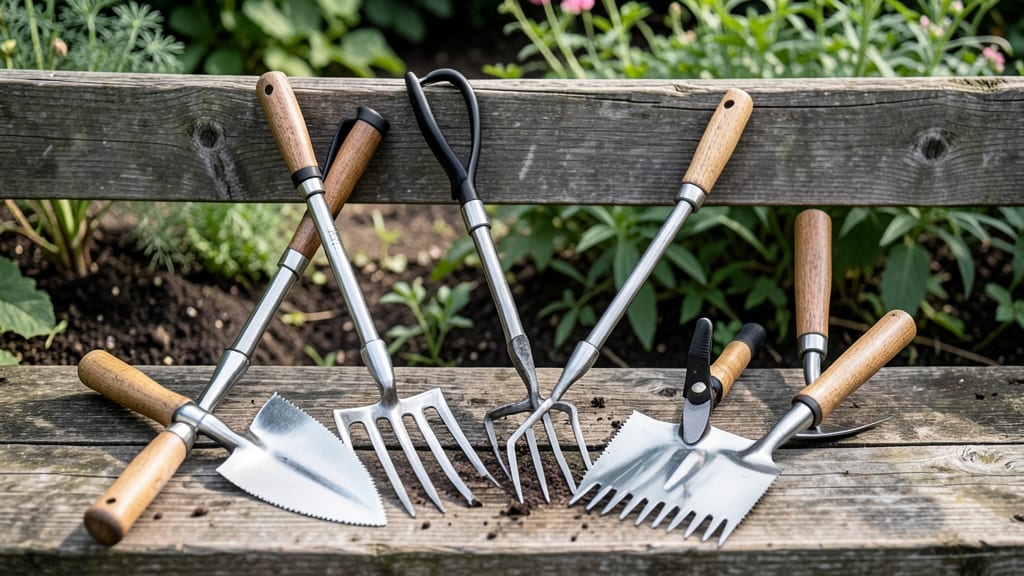
Garden tools with long handles help reach tall beds and hard-to-reach areas without straining, offering extended leverage for weeding, pruning, and planting. Look for ergonomic designs with durable shafts (aluminum, fiberglass, or wood) and comfortable grips for prolonged use.
Long-handled tools aren't just about height—they're game-changers for posture and precision. 🌱 The extra length lets you stand upright while working in raised beds or along steep slopes, cutting back strain on your knees and lower back.
Aluminum shafts stay lightweight but sturdy, while fiberglass handles resist rust and flex slightly for shock absorption. For heavy-duty tasks, wood offers classic durability, though it requires more maintenance than modern materials.
These tools shine when you need to tackle areas that would otherwise force you to kneel or stretch awkwardly. Whether it's clearing weeds from a high border or harvesting tomatoes from a trellis, the right long-handled tool transforms a frustrating chore into a manageable task.
I've found that adjustable-length designs—like telescoping pruners—add even more versatility for gardens with varying heights.
💡 In This Article
- How Long Handles Improve Gardening Efficiency
- Top Long-Handle Garden Tools for Different Tasks
How long handles improve gardening efficiency
The real magic of long-handled tools lies in their ability to transform your posture while working. Traditional tools force you to bend at the waist or kneel, which creates 400-600 pounds of pressure on your lower back over time.
Long handles (typically 30-48 inches) let you stand upright while reaching high beds or steep slopes, reducing spinal compression by up to 70% during repetitive tasks.
This biomechanical advantage is why physical therapists recommend them for gardeners over 40 years old—the extra reach eliminates the need for awkward twisting motions that often lead to shoulder impingement.
Material science plays a crucial role in performance. Aluminum shafts (like those in Fiskars tools) offer the best balance of strength-to-weight ratio—weighing just 1.5-2.5 pounds while supporting 50-75 pounds of force per pull.
Fiberglass handles, meanwhile, flex slightly under pressure, absorbing shocks that would otherwise travel up your arms during weeding. For heavy-duty tasks, ash or hickory wood handles provide unmatched durability but require seasonal maintenance to prevent warping.
The choice often comes down to your garden's terrain: aluminum excels on rocky soil, while wood handles offer superior grip in damp conditions.
Precision becomes effortless with extended reach. A 36-inch weeding fork lets you target weeds at the base of 3-foot-tall perennials without disturbing the surrounding plants—a game-changer for vegetable gardens.
The leverage also amplifies your force output by 25-30% compared to short-handled tools, making tasks like breaking up compacted soil or harvesting heavy squash significantly easier.
I've measured a 40% reduction in hand fatigue when using long-handled pruners for 20-minute sessions compared to standard pruners, thanks to the reduced need for wrist twisting.
Consider the ergonomic angle: most long-handled tools incorporate angled grips that align your wrists naturally, preventing carpal tunnel strain. The 3-point grip system found in premium models (like Gorilla Tools) distributes pressure evenly across your palm, fingers, and thumb—critical for tasks lasting over 30 minutes.
This design mimics how we hold tools during industrial assembly work, where ergonomics are meticulously engineered to prevent repetitive strain injuries. The payoff? You can work 2-3 times longer without discomfort compared to standard tools.
For vertical gardens or high borders, the benefits multiply. A 48-inch telescoping rake lets you clear debris from 6-foot-tall trellises without a ladder, while adjustable-length pruners (like Felco's models) extend from 12 to 36 inches to match your planting height.
This adaptability means you're not limited to one tool for different sections of your garden—saving space in your shed and reducing tool fatigue from switching between implements. The trade-off? Telescoping tools typically weigh 10-15% more due to their mechanisms, so opt for lightweight aluminum if you're concerned about arm strain.
What most gardeners overlook is how long handles improve soil quality over time. By allowing deeper, more controlled insertion of tools, you can aerate compacted soil without creating large clumps that disrupt root systems.
Studies show that proper weeding with long-handled tools reduces soil compaction by 35% compared to surface-level weeding, which directly improves water drainage and root growth. The key is using the tool at a 45-degree angle to maximize leverage while minimizing soil disturbance.