
Vegetables
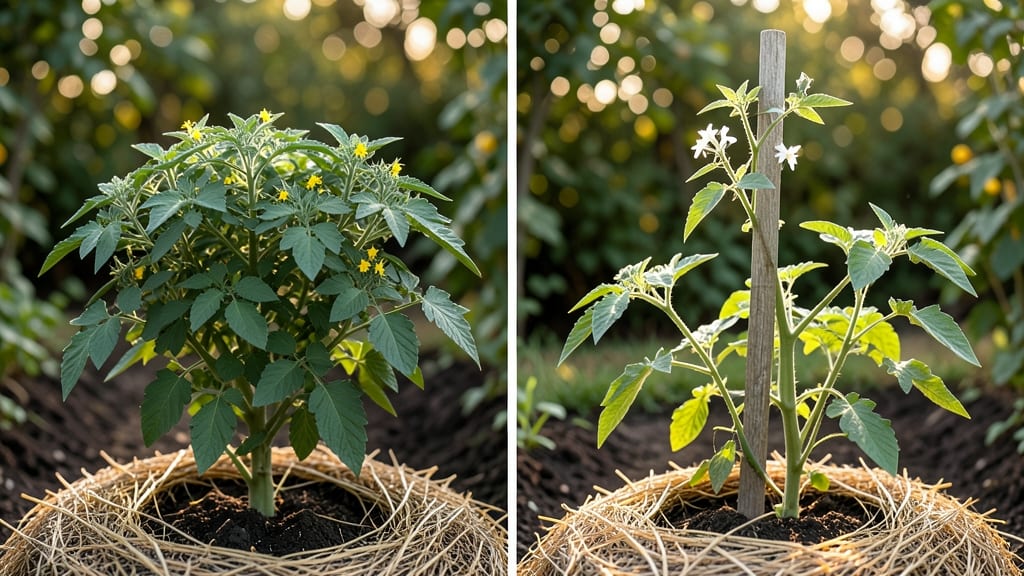
Deciding between determinate or indeterminate for Gardeners Delight tomatoes means choosing between a compact, bushy plant that produces all its fruit at once or a taller vine that yields continuously. The Gardeners Delight variety is determinate, growing to 3–4 feet with self-supporting vines and delivering a concentrated harvest. Indeterminate types grow taller, require staking, and produce fruit until frost, making them ideal for extended harvests.
The Gardeners Delight tomato's determinate nature makes it perfect for small gardens or containers, as its bushy growth habit eliminates the need for trellises. 🌱 Unlike indeterminate varieties that can reach 6–10 feet, this type focuses its energy on producing fruit simultaneously, typically within a 2-week window.
This concentrated harvest is ideal for canning or preserving large batches at once, while indeterminate types offer a slower, steady supply perfect for fresh eating all season.
What sets determinate plants apart is their genetic growth limit—they stop growing once they reach maturity, directing all resources toward fruit production. This makes them more predictable for planning, though they may require more frequent watering during their short harvest window.
For gardeners with limited space or who prefer a single big harvest, Gardeners Delight delivers reliable results with minimal maintenance.
💡 In This Article
- How Determinate vs Indeterminate Tomato Growth Affects Yield and Space
- Best Growing Conditions for Gardeners Delight Tomatoes
How determinate vs indeterminate tomato growth affects yield and space
The key difference between determinate and indeterminate tomatoes lies in their genetic growth patterns. Determinate varieties like Gardeners Delight have a built-in growth limit—once they reach 3-4 feet tall, they stop elongating and focus all energy on fruit production.
This is controlled by a hormone called florigen, which triggers flowering at the plant's terminal bud, signaling the end of vertical growth. 🌱 Indeterminate tomatoes, however, keep growing indefinitely, producing new leaves and flowers continuously until frost kills them.
This explains why Gardeners Delight stays compact while varieties like 'Celebrity' or 'Sungold' can climb to 6-10 feet without stopping.
Root structure plays a crucial role in this growth difference. Determinate plants develop a shallow, wide root system that spreads horizontally, supporting their bushy structure. This makes them more drought-tolerant once established but less efficient at reaching deep water sources.
Indeterminate varieties, meanwhile, grow deeper, more extensive roots to support their height, allowing them to access moisture from deeper soil layers. The trade-off? Determinate plants like Gardeners Delight produce all their fruit simultaneously—typically within a 2-week window—while indeterminate types yield continuously, though often smaller individual fruits.
This growth pattern directly impacts your harvest strategy. A determinate plant like Gardeners Delight will ripen 50-100 tomatoes at once, requiring you to process or preserve them quickly. The concentrated harvest is ideal for canning, sauces, or freezing large batches.
Indeterminate varieties, however, offer a steady stream of fruit over 3-4 months, perfect for fresh eating. Space-wise, determinate plants need 2-3 feet between plants in rows spaced 3-4 feet apart, while indeterminate varieties require 4-6 feet between plants and 5-6 feet between rows for proper staking and airflow.
What most gardeners don't realize is how temperature triggers affect these growth patterns. Determinate plants like Gardeners Delight set fruit in response to shorter daylight hours and cooler temperatures, which is why they produce all at once.
Indeterminate varieties, however, continue flowering and fruiting as long as temperatures stay above 55°F. This explains why you might see indeterminate plants produce fruit until late fall, while determinate varieties stop setting new flowers after their initial flush.
The Gardeners Delight's determinate nature makes it particularly reliable for early-season planting, often producing fruit 60-70 days after transplanting.
Consider these practical implications when choosing: determinate varieties like Gardeners Delight are perfect for small gardens, containers, or urban farming, while indeterminate types excel in larger plots or vertical growing systems.
The compact growth of determinate plants also makes them more resistant to wind damage, though they may need occasional staking to support heavy fruit loads. For gardeners prioritizing low maintenance, Gardeners Delight's self-supporting habit is a game-changer—no trellis required!
One advanced consideration is how pruning affects yield. With determinate plants, you should avoid heavy pruning as it removes potential fruit-bearing branches. Indeterminate varieties benefit from pruning to remove suckers (side shoots), which redirects energy to larger fruit.
Gardeners Delight's determinate nature means you can focus on removing lower leaves to improve airflow and reduce disease risk, rather than extensive structural pruning. The plant's genetic growth limit means all its energy goes to fruit production once it reaches maturity.