
Aphids
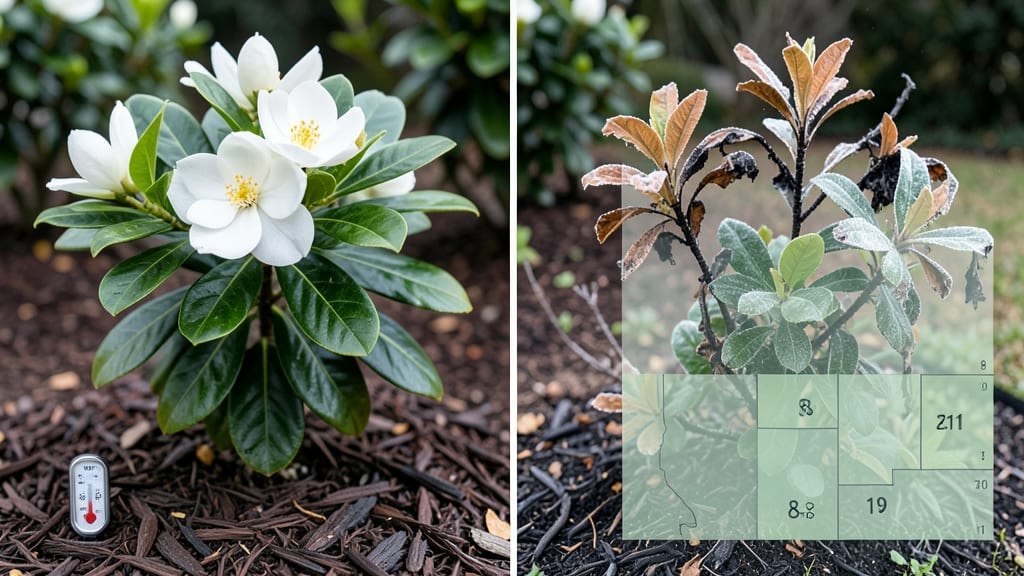
Gardenia cold hardiness only thrives in USDA Zones 8-11, where temperatures stay above 10°F (-12°C). Outside these zones, gardenias need winter protection like mulch, frost cloth, or moving potted plants indoors before frost hits. Young plants and fresh growth suffer the most from cold exposure.
Gardenia plants struggle when temperatures dip below their comfort zone, especially since their delicate leaves and stems freeze at 32°F (0°C). 🌱 The damage starts with cell walls rupturing from ice crystal formation, turning leaves black and causing buds to drop.
While mature gardenias might recover from light freezes, new shoots often die back completely. Even in Zone 8, gardeners should monitor forecasts and act fast—delaying protection by even a day can mean the difference between survival and loss.
For gardeners in colder regions, creating a sheltered microclimate makes all the difference. I’ve seen gardenias thrive in Zone 7 by planting them against south-facing walls or using thick mulch layers (at least 4-6 inches) to insulate roots.
Potted gardenias do best moved to unheated garages or basements, where they can rest through winter before returning outdoors in spring.
💡 In This Article
- Understanding Gardenia Freeze Damage Mechanics
- Winter Protection Strategies for Gardenias in Cold Climates
Understanding gardenia freeze damage mechanics
When gardenias face freezing temperatures, the damage begins at the cellular level. Ice crystals form within plant cells, expanding and rupturing cell membranes—a process called intracellular ice formation. This disruption severs vital pathways, cutting off nutrient flow and causing tissues to blacken within hours.
The threshold for damage kicks in at 32°F (0°C), but sustained exposure below 28°F (-2°C) often proves fatal to leaves and buds.
New growth is particularly vulnerable because younger cells contain more water, making them more prone to ice crystal formation.
Mature gardenias may survive brief dips to 20°F (-6°C) if roots are insulated, but their foliage will likely suffer. 🌿 Species like Gardenia jasminoides (common gardenia) handle cold slightly better than Gardenia augusta (cape jasmine), which is tropical and far less tolerant.
The key difference lies in their natural habitats—jasminoides evolved in subtropical regions where occasional freezes occur, while augusta thrives only in frost-free climates.
Moisture levels dramatically worsen freeze damage. Wet leaves act like ice nuclei, accelerating crystal formation and increasing tissue rupture. This is why gardeners in marginal zones must avoid overhead watering before frost warnings.
The roots also suffer if soil moisture freezes, creating an insulating layer that traps cold. In contrast, dry soil allows better heat dissipation from the ground, protecting roots during brief cold snaps.
What most gardeners don't realize is that gardenias can't recover from freeze damage to their leaves—they simply drop off. The plant may push new growth from protected buds, but the energy cost weakens overall vigor.
This is why protecting young plants (2 years old) is critical: they lack the energy reserves of mature specimens to bounce back from winter stress.
Comparing gardenia species reveals fascinating hardiness variations. For example, Gardenia radicans (a climbing variety) shows slightly better cold tolerance than Gardenia thunbergia, which is more heat-sensitive. The difference comes down to leaf structure—thicker, waxier leaves resist moisture loss better during cold snaps.
However, none of these species can handle prolonged sub-freezing temperatures without protection.
Here's what happens step-by-step during a freeze event:
- First 30 minutes: Cell membranes begin to stiffen as water starts converting to ice
- 1-2 hours: Ice crystals form in leaf tissues, causing visible wilting
- 4+ hours: Cell walls rupture completely, leading to blackened foliage
- 24+ hours: Buds and new growth die back permanently
The good news? With proper protection, gardenias can survive winters in Zone 7 with minimal damage. The secret lies in preventing that initial ice crystal formation through insulation and microclimate control. 💫