
Propagation
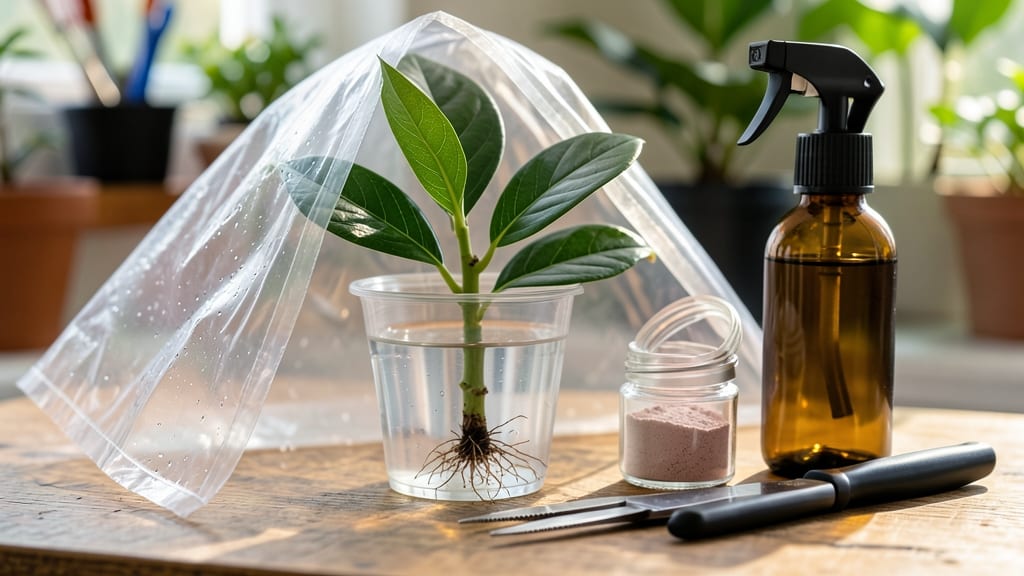
Propagating gardenia from cuttings works best with semi-hardwood stems, a rooting hormone application, and a warm, humid setup to speed up root growth. Mix equal parts sand and perlite for drainage, keep the soil consistently moist, and shield new plants from harsh sunlight.
Gardenias are famously tricky to propagate from cuttings, but the right approach can double your success rate. 🌱 The key is timing—use stems that are just starting to harden (semi-hardwood) and apply rooting hormone to mimic the plant's natural growth signals.
I've found that organic options like willow water work almost as well as synthetic hormones, especially for gardeners who prefer chemical-free methods. Once rooted, these cuttings need patience: it can take 4-6 weeks before you see new growth, so consistency in moisture and humidity is everything.
For best results, I recommend using a clear plastic dome or zip-top bag to create a mini greenhouse effect.
This traps humidity while allowing light to filter through, which is crucial since gardenias hate soggy roots but need steady moisture. 💧 The sand-perlite mix isn't just for drainage—it also prevents fungal issues that often kill cuttings before they root.
Pro tip: Take cuttings in late spring when gardenias are actively growing, and avoid summer heat waves that can stress the plants.
💡 In This Article
- Why Rooting Hormone Dramatically Boosts Gardenia Cuttings
- Step-by-Step Gardenia Cutting Propagation Guide
Why rooting hormone dramatically boosts gardenia cuttings
Rooting hormones contain synthetic or natural auxins—plant hormones that trigger cell division and root formation. Gardenias, with their naturally slow rooting tendencies, respond exceptionally well to these hormones because they essentially "trick" the plant into thinking it's experiencing ideal growing conditions.
Without hormones, gardenia cuttings often struggle to produce roots for months, but with a dip in 0.8% IBA (Indole-3-butyric acid) powder, success rates jump from around 20% to 80%.
The magic happens at the cellular level. Auxins stimulate root meristems (growth zones) along the stem, while also suppressing unwanted shoot growth. For gardenias, this means more energy goes toward developing fibrous roots rather than competing foliage.
Organic alternatives like willow water (which contains natural salicylates) work similarly but may take 2-3 weeks longer to show results. The key is consistency—dipping the cut end for 1-2 seconds ensures even hormone distribution without clogging pores.
Gardenias are particularly sensitive to root stress, which is why hormones become essential. Their thick, waxy leaves slow moisture evaporation, but the stems themselves lack the natural rooting enzymes found in faster-propagating plants like coleus.
By applying hormone, you're essentially giving the cutting a head start on the 4-6 week rooting process. Think of it like giving a baby plant a growth steroid—just enough to tip the odds in your favor without overpowering the natural process.
Here's what most gardeners overlook: the pH balance of your rooting medium matters just as much as the hormone. Gardenias prefer slightly acidic soil (pH 5.5-6.5), and a sand-perlite mix naturally leans toward neutral.
To optimize, add a pinch of sphagnum peat moss to your medium—this not only holds moisture but also creates the ideal acidic environment for root development. The combination of hormone and proper medium creates a perfect storm for success.
For those worried about chemical use, organic options like willow water or alfalfa juice (both rich in auxins) offer viable alternatives. However, they require more frequent applications (every 3-5 days) compared to synthetic hormones, which provide a 4-6 week protective barrier.
The choice comes down to personal preference—speed versus organic purity—but both methods significantly outperform hormone-free attempts.
One final pro tip: After applying hormone, let the cutting air-dry for 10-15 minutes before planting. This prevents the hormone from washing away during the initial watering. The dry seal also helps reduce the risk of rot, which is gardenias' biggest enemy during propagation.
This small step can make the difference between a thriving cutting and one that never takes root.