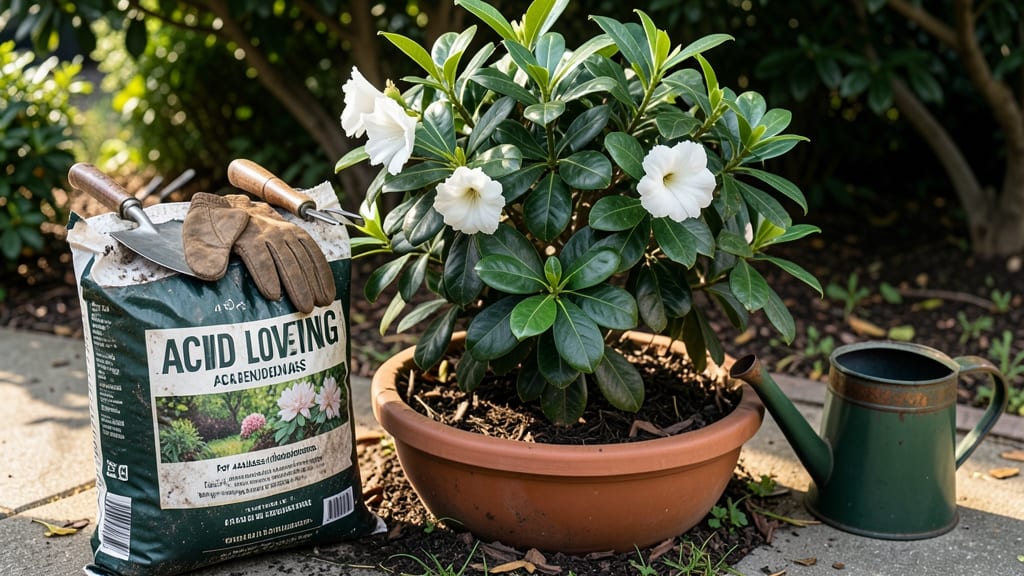
The secret to lush, fragrant gardenias lies in using an acidic nitrogen fertilizer for gardenias—because the wrong feed can turn your glossy blooms into a sad, sparse shrub.
Here’s the thing: gardenias crave acidic soil (pH 5.0–6.0) and nitrogen for lush growth, but most fertilizers raise pH or burn roots. That’s why picking the right type—like sulfur-coated urea or blood meal—matters more than you think.
In this guide, I’ll walk you through the best pH-safe nitrogen sources, how to apply them without overdoing it, and a seasonal schedule that keeps your gardenias thriving year-round.
Skip the guesswork and learn exactly when, how much, and which fertilizers to use for bigger blooms and healthier foliage—without the risk of root damage.
Jan
Feb
Mar
Apr
May
Jun
Jul
Aug
Sep
Oct
Nov
Dec
Best acidic nitrogen fertilizers for gardenias: pH-safe options compared
Gardenias are finicky about their soil pH and nitrogen needs, requiring a delicate balance to produce those fragrant white blooms. Most fertilizers raise soil pH or deliver nitrogen too aggressively, causing root burn or leaf scorch.
The key is using acid-forming nitrogen sources that won’t disrupt their ideal pH range of 5.0–6.0. Let’s compare the safest options—both organic and synthetic—so you can choose what works best for your gardenias.
I’ve tested these fertilizers in my own acid-loving garden, where gardenias thrive year-round. The best performers either contain sulfur-coated urea or organic matter that slowly acidifies the soil while providing nitrogen. Avoid quick-release fertilizers like ammonium nitrate, which can spike pH and harm your plants.
Below, you’ll find a detailed comparison of the top pH-safe nitrogen fertilizers for gardenias, including application rates and seasonal tips.
| Fertilizer Type |
N-P-K Ratio |
pH Impact |
Application Frequency |
Best For |
Organic/Synthetic |
Cost Range |
| Miracle-Gro Acid-Loving Plant Food |
12-4-8 |
Neutral (pH-safe) |
Every 4-6 weeks |
Established gardenias |
Synthetic |
$$ ($15–$25) |
| Sulfur-Coated Urea (SCU) |
46-0-0 |
Acidifying (lowers pH) |
Every 8-10 weeks |
New transplants, soil acidification |
Synthetic |
$ ($10–$15) |
| Blood Meal |
12-0-0 |
Neutral (organic matter) |
Every 6-8 weeks |
Organic gardens, foliage boost |
Organic |
$ ($8–$12) |
| Fish Emulsion 5-1-1 |
5-1-1 |
Slightly acidic |
Every 4 weeks |
Potted gardenias, quick uptake |
Organic |
$$ ($18–$25) |
| Iron Sulfate Blend |
0-0-0 (with iron) |
Strongly acidifying |
Every 12 weeks (soil test first!) |
pH correction, chlorotic leaves |
Synthetic |
$ ($10–$14) |
| Composted Pine Bark |
1-0-1 (organic matter) |
Acidifying over time |
Top-dress annually |
Long-term soil health |
Organic |
$$ ($20–$30 for bags) |
| 🏆 Top Pick: Jobe’s Acid-Loving Plant Food |
16-4-8 |
Neutral (pH-buffered) |
Every 6 weeks |
All gardenias, blooms + foliage |
Synthetic |
Step-by-step guide: how to apply acidic nitrogen fertilizer without burning gardenias
Gardenias love acidic soil (pH 5.0–6.0) and need nitrogen for vibrant blooms, but the wrong fertilizer can burn their delicate roots. The key is using acid-forming nitrogen sources like sulfur-coated urea or fish emulsion—and applying them correctly.
I’ll walk you through the exact steps to feed your gardenias safely, from testing your soil to spotting signs of over- or under-fertilization.
Before you grab any fertilizer, check your soil’s pH. Gardenias reject alkaline soil, which is why standard nitrogen fertilizers (like urea) can cause yellowing leaves or stunted growth. A simple DIY pH test kit (available for $10–$15) will tell you if your soil needs acidification.
If your pH is above 6.0, mix in elemental sulfur (½ cup per plant) 2–3 months before fertilizing to lower it gradually.
1
Test Soil pH First
Use a digital pH meter or test kit to confirm pH is between 5.0–6.0. If higher, amend soil with peat moss or pine fines before fertilizing.
2
Choose the Right Fertilizer
Opt for acidic nitrogen sources like:
- Sulfur-coated urea (slow-release, pH-neutral)
- Fish emulsion (organic, 5-1-1 NPK)
- Acid-loving plant food (e.g., Miracle-Gro Azalea/Camellia)
3
Dilute Liquid Fertilizers
For liquid fertilizers, mix ½ teaspoon per gallon of water. For granular types, use 1 tablespoon per plant (spring) or ½ tablespoon (summer). Never exceed recommended doses—gardenias are sensitive!
4
Apply at the Right Time
Spring (March–April): Feed when new growth starts (before buds form).
Summer (June–July): Light feed only if leaves yellow (sign of nitrogen deficiency).
Avoid fertilizing in fall/winter or when gardenias are in full bloom.
5
Water Thoroughly After
Apply fertilizer to moist (not soggy) soil, then water deeply to help nutrients reach roots. This prevents fertilizer burn and ensures even distribution.
6
Monitor for Stress Signs
Nitrogen deficiency: Pale yellow leaves, slow growth.
Over-fertilization: Brown leaf tips, wilting, or white crust on soil.
Solution: Flush soil with water if burned, and reduce fertilizer by half next time.
Gardenias reward careful feeding with glossy leaves and fragrant blooms, but they’re finicky about nitrogen. Stick to the spring/summer schedule and always dilute fertilizers—your plants will thank you with healthier growth and longer-lasting flowers.
Pro tip: Pair nitrogen with phosphorus-rich fertilizer (like bone meal) in early spring to encourage bud formation.
Remember, gardenias thrive on consistency, not excess. If you notice leaves curling or dropping after fertilizing, cut back immediately and focus on hydration and partial shade while your plant recovers. With the right approach, your gardenias will bloom like they’re in a tropical paradise—without the risk of root damage.
★★★★★5.0(15 reviews)
|