
Size
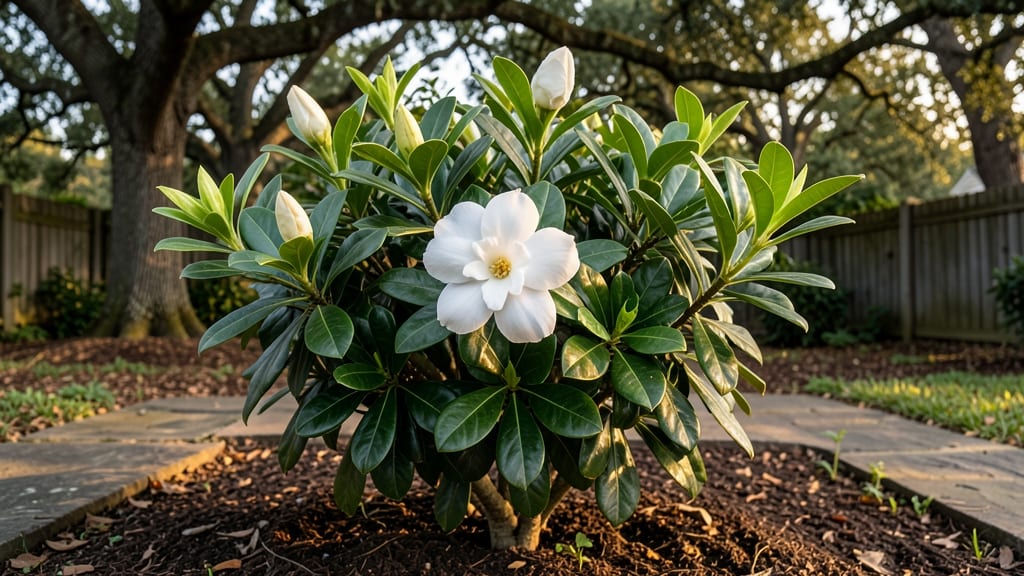
Understanding gardenia growth rate reveals that most varieties grow 6 to 12 inches per year when given optimal conditions, though cooler climates or shade can slow this down significantly. Peak growth happens in spring and summer with proper moisture and well-draining soil.
Gardenia growth speed isn't just about the numbers—it's about the right conditions. 🌱 Different varieties like Gardenia jasminoides (the most common) and Gardenia augusta (taller varieties) respond differently to sunlight, soil acidity (aim for pH 4.5–6.0), and temperature.
For instance, gardenias in USDA zones 8–11 thrive year-round, while those in cooler areas may slow dramatically in winter. The key is spring and summer's active growth phase, where consistent watering (but never soggy soil) and occasional pruning can encourage faster, bushier development.
What many gardeners overlook is how seasonal care directly impacts growth.
A well-timed spring pruning right after flowering removes dead wood and encourages new shoots, while summer's heat demands extra attention to hydration. Balanced fertilizers (like 10-10-10) applied every 6–8 weeks provide the nutrients gardenias crave, but too much can burn roots.
Pests like aphids or spider mites also sap energy—regular inspections help maintain that 6–12 inch annual gain.
💡 In This Article
- Factors Affecting Gardenia Growth Speed by Variety
- Pruning and Care Tips to Boost Gardenia Growth
Factors affecting Gardenia growth speed by variety
Gardenia growth rates aren't one-size-fits-all—they depend heavily on the specific variety you're growing. Gardenia jasminoides, the most common type, typically grows 6–10 inches annually under ideal conditions, while larger varieties like Gardenia augusta can reach 12–18 inches per year.
The difference comes down to genetics: G. augusta has a naturally taller growth habit and thicker stems designed for tropical climates. Even within the same species, dwarf varieties like 'Radicans' may only add 3–6 inches per year, making them perfect for containers or small gardens.
The growth mechanism involves a delicate balance of hormones.
Gardenias produce auxin—a plant growth regulator—that promotes cell elongation during their active growing season (spring to early fall). Sunlight exposure directly influences auxin production: plants in full sun (6+ hours daily) can grow 30–50% faster than those in partial shade, where growth slows to just 2–4 inches annually.
The reason? Sunlight triggers chlorophyll production, which fuels photosynthesis—the energy engine behind new stem and leaf development. In shaded areas, gardenias often become leggy as they stretch toward light, a condition called etiolation, which weakens structural growth.
Soil pH plays an equally critical role in nutrient uptake. Gardenias thrive in acidic soil (pH 4.5–6.0), where essential micronutrients like iron and manganese become available. In alkaline soils (pH 7.0+), these nutrients bind and become inaccessible, stunting growth by up to 40%.
For example, a gardenia in USDA zone 10 with optimal pH might grow 12 inches per year, while the same plant in zone 8 with slightly alkaline soil could struggle to reach 4–6 inches. The solution?
Amend soil with sulfur or peat moss to maintain the ideal acidity range.
Seasonal growth cycles explain why gardenias seem to "take off" in spring. After winter dormancy, new shoots emerge when soil temperatures rise above 60°F. This spring flush accounts for 60–70% of annual growth, while summer maintains steady development.
Cooler climates (zones 7 and below) may see growth halt entirely in winter, while tropical zones (10–11) continue slow, steady growth year-round. Even in warm climates, gardenias enter a dormant-like state during extreme heat (above 95°F), which can reduce growth by 25–30% until temperatures moderate.
Consider these variety-specific growth benchmarks for context:
- Gardenia jasminoides: 6–10 inches/year (compact, bushy growth)
- Gardenia augusta: 12–18 inches/year (taller, faster vertical growth)
- 'Radicans' (dwarf): 3–6 inches/year (ideal for containers)
- 'Kleim's Hardy' (cold-tolerant): 4–8 inches/year (slower but more resilient)
The takeaway? Match your variety to your climate and sunlight conditions. A Gardenia jasminoides in full sun and acidic soil will outpace the same plant in partial shade or alkaline soil by nearly 50%. Paying attention to these factors transforms guesswork into predictable, lush growth. 🌿