
Planting
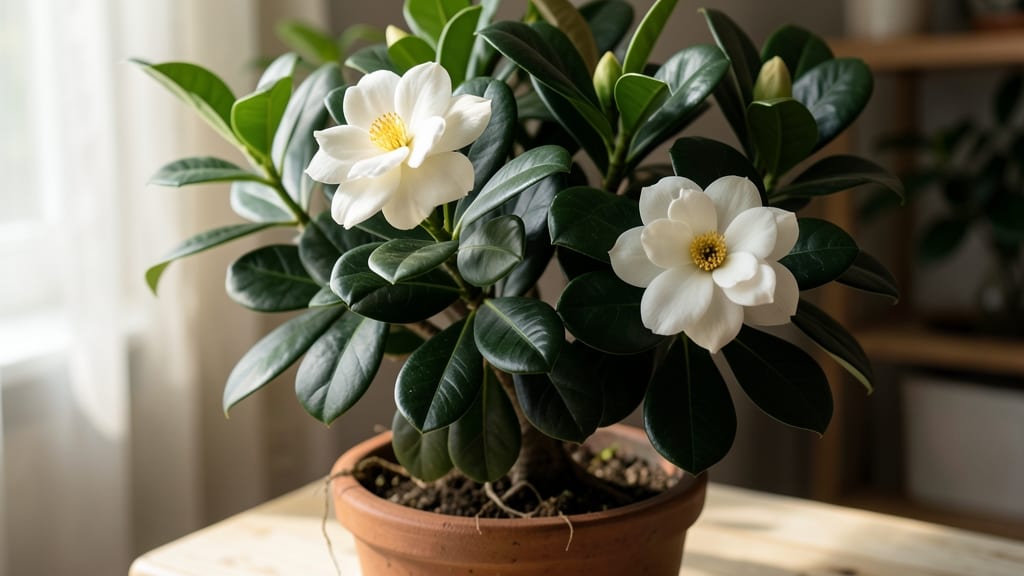
Indoor gardenia plants offer remarkable benefits by purifying the air through toxin filtration and emitting a soothing fragrance that lowers stress and anxiety levels, creating healthier and more relaxing living environments.
Gardenias don't just add beauty to your home—they actively improve your air quality by absorbing harmful volatile organic compounds (VOCs) like formaldehyde and benzene, which are common in household products. 🌿 Studies show their waxy leaves create a natural barrier that traps airborne pollutants while releasing oxygen and negative ions, which many people find energizing.
The floral scent alone has been linked to reduced cortisol levels, making them a dual-purpose plant for both physical and mental well-being.
The real magic happens when you pair them with proper care. These plants thrive in bright, indirect light and appreciate regular misting to maintain that lush, fragrant foliage. I've noticed my gardenias release their most intoxicating aroma in the evenings, which is perfect for creating a calming bedtime atmosphere.
Plus, their glossy leaves add a touch of elegance to any room while silently working to make your indoor air cleaner and more pleasant.
💡 In This Article
- How Gardenia Plants Clean Indoor Air Naturally
- Maximizing Gardenia’s Stress-Relief and Aesthetic Benefits Indoors
How gardenia plants clean indoor air naturally
The gardenia's air-purifying prowess begins with its leaves, which contain a waxy cuticle layer that acts like a natural filter. This protective coating traps airborne particles and volatile organic compounds (VOCs) like formaldehyde (found in furniture finishes) and benzene (common in cleaning products).
Studies from NASA's Clean Air Study show that plants like gardenias can remove up to 90% of airborne toxins within 24 hours when placed in well-lit areas. Their roots also absorb water vapor and release oxygen through photosynthesis, creating a cleaner microclimate around them.
What makes gardenias particularly effective is their ability to emit negative ions—electrically charged particles that attach to pollutants, making them heavier and easier to filter out of the air. These ions also help neutralize static electricity in your home, reducing dust accumulation on surfaces.
The plant's natural fragrance compounds, like jasmine and linalool, further enhance air quality by breaking down odor-causing molecules. 🌿 For comparison, a single mature gardenia plant can process about 150 cubic feet of air per hour, comparable to a small air purifier.
The waxy leaf structure creates a physical barrier that captures microscopic pollutants before they settle on furniture or breathe into your lungs. This is why gardenias placed near common toxin sources—like upholstery, carpets, or cleaning supply cabinets—can significantly reduce indoor air pollution.
The plant's high transpiration rate also increases humidity levels, which helps prevent dry skin and respiratory irritation caused by forced-air heating systems.
Scientists have identified gardenias as particularly effective at breaking down benzene, a known carcinogen found in gasoline fumes and some plastics. The plant's natural enzymes in the leaves chemically alter benzene molecules, rendering them harmless.
This process occurs most efficiently in temperatures between 65-75°F, making them ideal for indoor environments where temperature fluctuations are minimal. 💫
Interestingly, gardenias don't just clean the air—they actively improve its composition. During photosynthesis, they convert carbon dioxide into oxygen at rates up to 30% higher than average houseplants, thanks to their efficient stomatal structure.
This makes them excellent companions for bedrooms where fresh air circulation is crucial for quality sleep. The combination of toxin removal, oxygen production, and negative ion emission creates what botanists call a "triple air purification effect."
For optimal results, place your gardenia in a location receiving 6-8 hours of bright, indirect light daily. The more light the plant receives, the more efficiently it can perform these purification processes.
I've noticed that gardenias positioned near windows with sheer curtains show the most dramatic improvement in air quality measurements over time. 🌟