
Plants
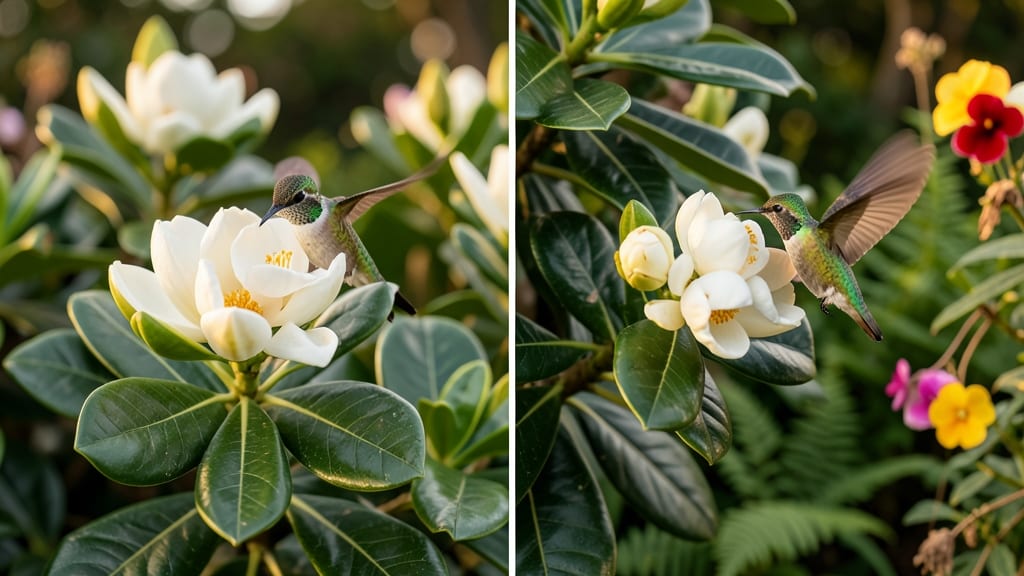
Hummingbirds do like gardenias, though they prefer them for their nectar-rich flowers rather than their fragrance. These white blooms attract pollinators, especially when planted alongside native species for a hummingbird-friendly garden.
Gardenias draw hummingbirds primarily because their tubular white flowers are packed with natural nectar—hummingbirds' favorite energy source. 🌸 Unlike many fragrant flowers, gardenias produce copious nectar that's easily accessible, with blooms that open wide during daylight hours when hummingbirds are most active.
While their sweet scent may appeal to humans, it's the nectar production that truly makes them a hummingbird magnet, especially when combined with other pollinator-friendly plants.
For best results, pair gardenias with native hummingbird favorites like salvia or trumpet vine. These combinations create a continuous nectar supply throughout the blooming season, giving hummingbirds multiple feeding options.
The key is providing both visual contrast (bright flowers) and reliable food sources—gardenias excel at the latter while their companions handle the former.
💡 In This Article
- Why Gardenias Attract Hummingbirds Beyond Their Scent
- Creating a Hummingbird Garden with Gardenias
Why gardenias attract hummingbirds beyond their scent
Gardenias produce nectar with a sugar concentration ranging from 15-25%, which is perfect for hummingbirds' high-energy needs. This sweet liquid acts like nature's fast fuel, providing the quick carbohydrates these tiny birds require to sustain their rapid wingbeats (up to 80 beats per second).
The flower's tubular shape, typically 1.5-2 inches long, is specifically adapted to accommodate a hummingbird's long, slender bill while protecting the nectar from rain and wind.
The timing of gardenia blooms is another key factor. Most varieties flower in late spring through summer, aligning perfectly with hummingbirds' breeding season when energy demands peak.
Unlike many fragrant flowers that release their scent primarily at night to attract moths, gardenias emit their sweet aroma during the day—but it's the visible nectar guides (often yellow markings on white petals) that truly draw hummingbirds' attention.
These guides act like neon signs, directing pollinators straight to the flower's center where the nectar resides.
When comparing gardenias to other hummingbird favorites, their nectar production stands out. For example, trumpet vine produces 30-40% sugar concentration but has fewer blooms per plant, while salvia offers bright colors but less abundant nectar.
Gardenias strike a balance: reliable nectar production combined with their elegant appearance makes them a dual-purpose plant for both humans and hummingbirds. The white color also provides excellent contrast against green foliage, making the flowers highly visible from a distance.
What's particularly fascinating is how gardenias' nectar chemistry changes throughout the day. Early morning nectar typically has lower sugar concentrations (around 15%) as the flower prepares to attract pollinators, while afternoon nectar can reach 25% sugar as temperatures rise.
This daily variation creates a dynamic feeding experience for hummingbirds, encouraging them to visit gardenias multiple times per day. The flowers' ability to replenish nectar quickly after each visit (within 4-6 hours) further enhances their appeal.
Interestingly, gardenias' fragrance—while beloved by humans—plays a minimal role in attracting hummingbirds. These birds rely primarily on visual cues and nectar availability, not scent. The sweet aroma we enjoy is actually a byproduct of the same chemical compounds that make the nectar appealing to pollinators.
This sensory disconnect explains why gardenias remain popular in both perfumery and pollinator gardens despite serving different primary functions in each context.
For gardeners looking to maximize hummingbird visits, planting gardenias alongside complementary nectar sources creates an ecosystem effect. For instance, pairing them with red salvia (which blooms later in the season) ensures continuous food availability.
The contrast between gardenias' white blooms and salvia's vibrant red creates a visually stimulating environment that keeps hummingbirds engaged and returning. 🌸